

"NATURE HAS FORMED
CREATURES ONLY, ART HAS MADE MEN"; Friedrich Schiller
"..and Cortés with certain captains entered first inside and saw so many gold jewels and plates, and many tiles, and chalchiuis stones (jade) and other very great riches, they were elevated and did not know what to say about so much wealth." ;
Bernal Díaz del Castillo; "Historia Verdadera de la Conquista de la Nueva España".
•
The archaeological remains that were practically ignored by the Spanish for centuries, gained singular importance from the 19th century onwards when incipient archaeologists such as John Lloyd Stephens, Alfred P. Maudslay, Ian Graham, Teobert Maler, Edward H. Thompson, Alfred Marston Tozzer, Sylvanus G. Morlay, Tatiana Proskouriakoff and Catherine Breton, among others, began to study diligently and draw the ancient glyphs and Mayan constructions. All those investigations would bear their best fruits throughout the 20th century.
One of the most important heritages of those cultures are the masterpieces of carved jade.
The carving of jade, the most precious ancient stone of the primitive Mesoamerican people; a symbol of power, fertility and the afterlife, exclusive to royalty and the priestly class, reached its greatest splendor in the Classic Maya period (200-900 AD).
The most important discoveries of the carved jade masterpieces of Olmec, Maya and Zapoteca civilizations were accomplished in last 120 years:
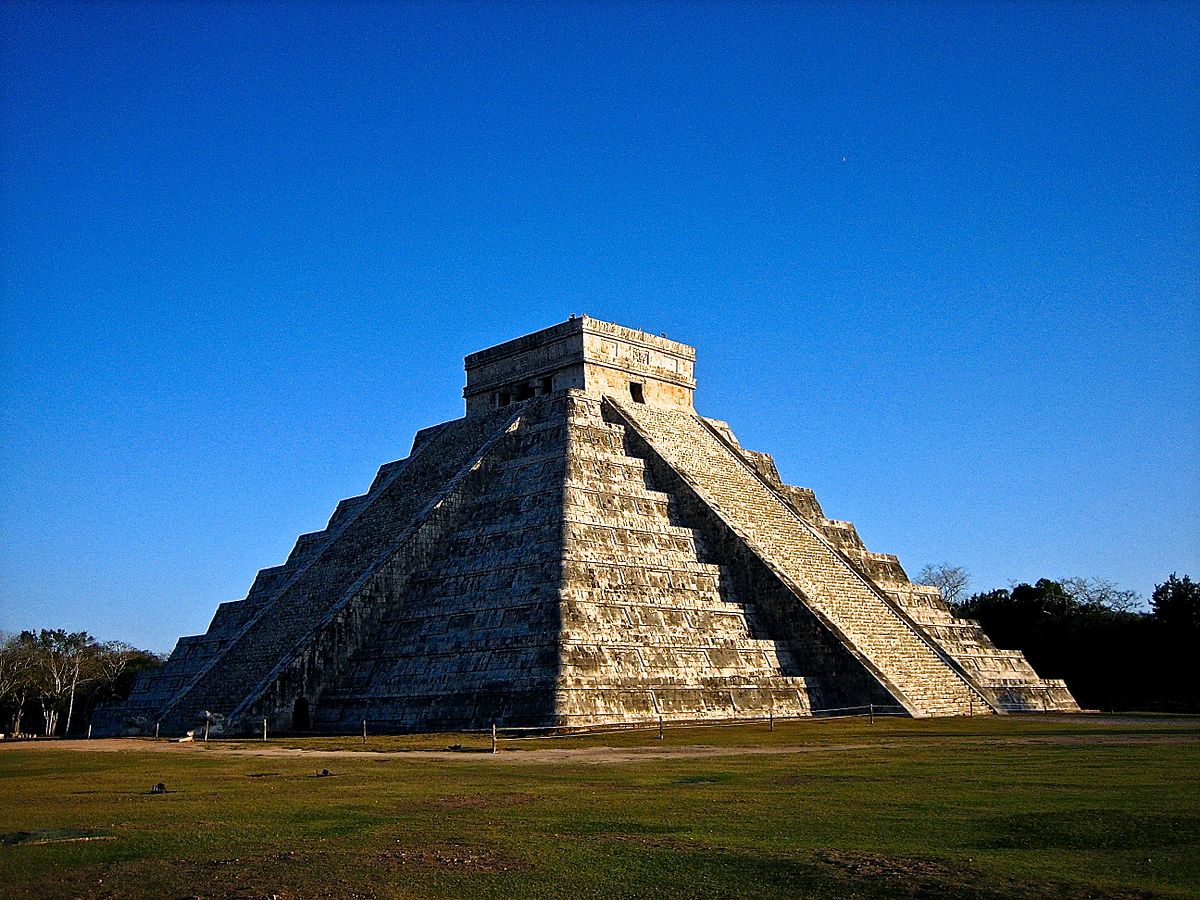
1.- In 1904-1911 Edward Hebert Thompson discovered the Jaguar Throne of Chichen-Itzá, which shows beautiful jade inlays:

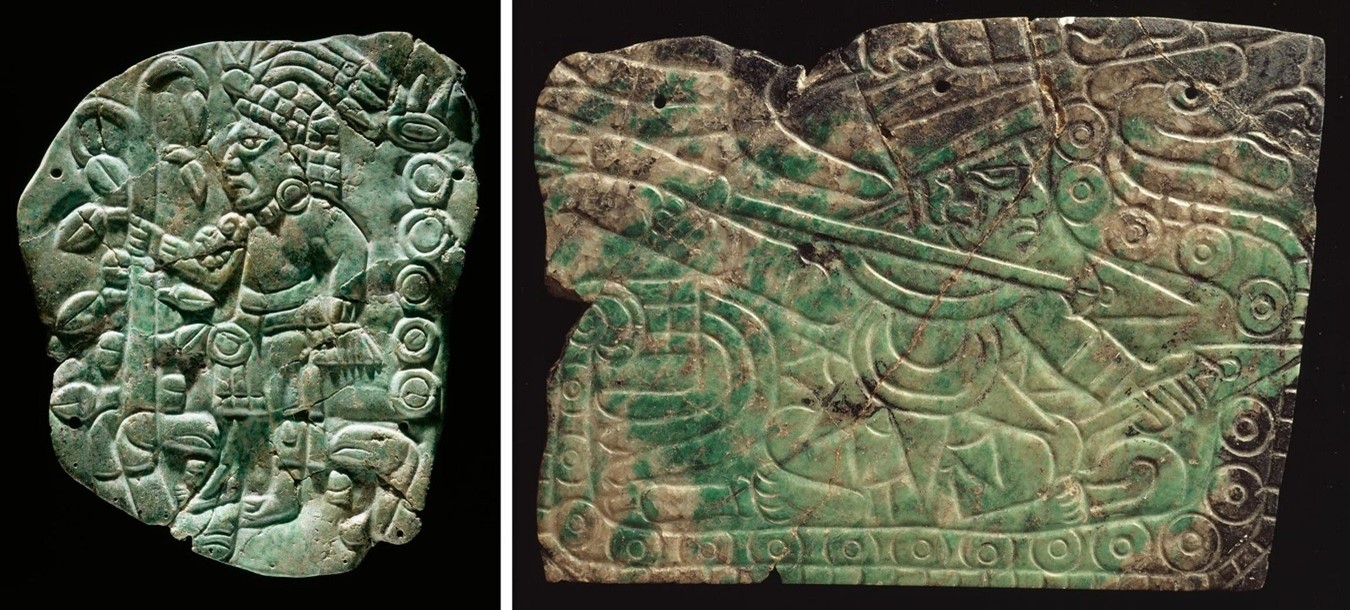
In addition, Thompson dredged the Sacred Cenote of Chichen-Itzá from which hundreds of objects were extracted; a few were made of gold, many of them were "fragments of jade"; some of them, like these pendants, endowed with great beauty:

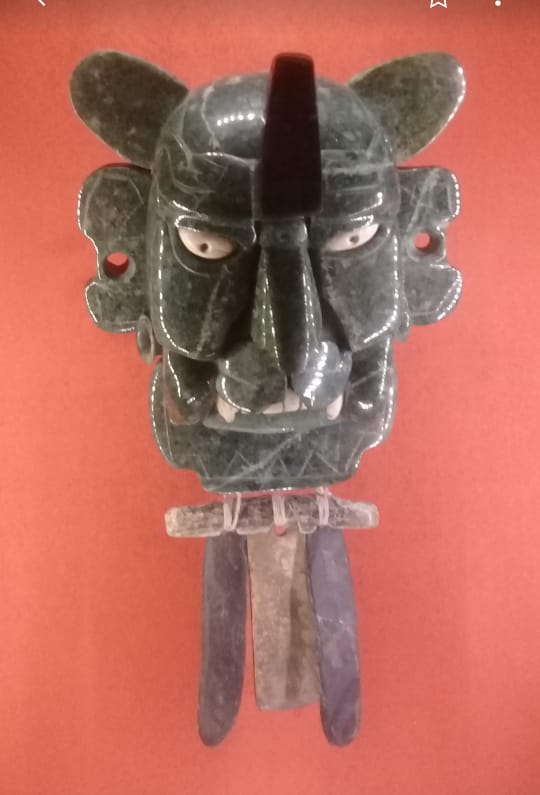
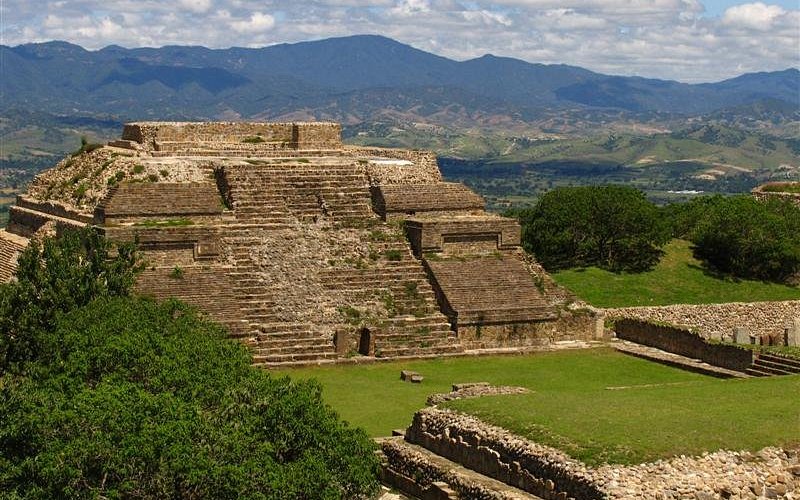
2.- The Jade mask of the zapoteca bat god from Monte Albán México (200 BC- 200 AD) discovered in 1946, currently exhibited in the Museum of Anthropology and History in Mexico City,
consists of 25 pieces of jade and measures aproximatly 6.5 inches high and 5 inches wide.
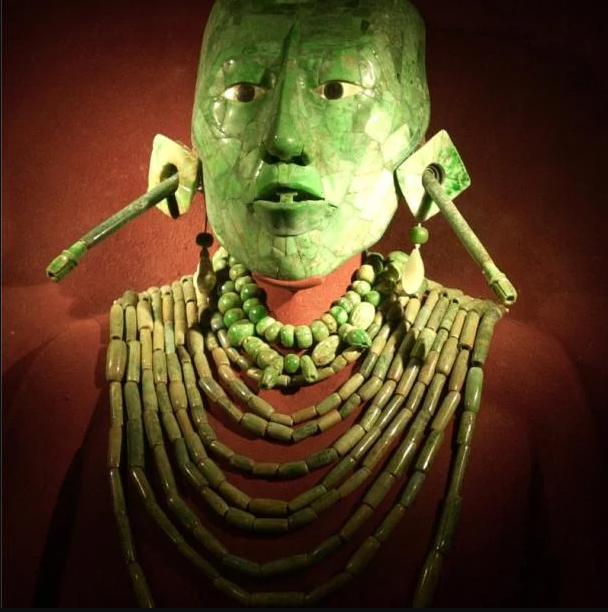
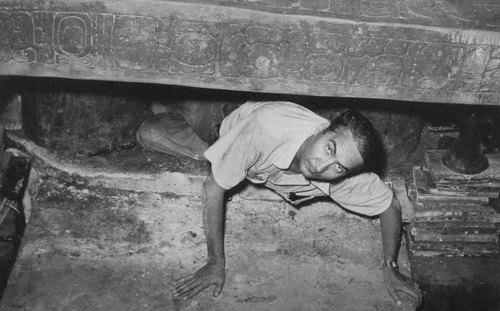
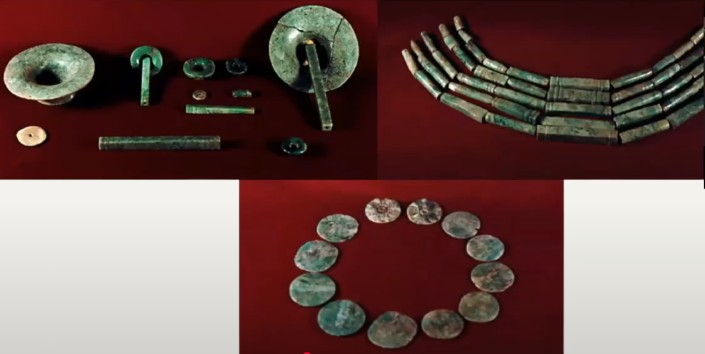
3.- In 1952 the Franco-Cuban archaeologist Alberto Ruz L'Huillier discovered in Palenque, Chiapas the Mask of Pakal II, along with tubular pectorals, wrist straps, bracelets and rings that weigthed 26 pounds (11.7 kilograms) (click to see historical video) currently exhibited in the Museum of Anthropology and History in Mexico City.
The mask is made up of
more than 118 jade tesserae.
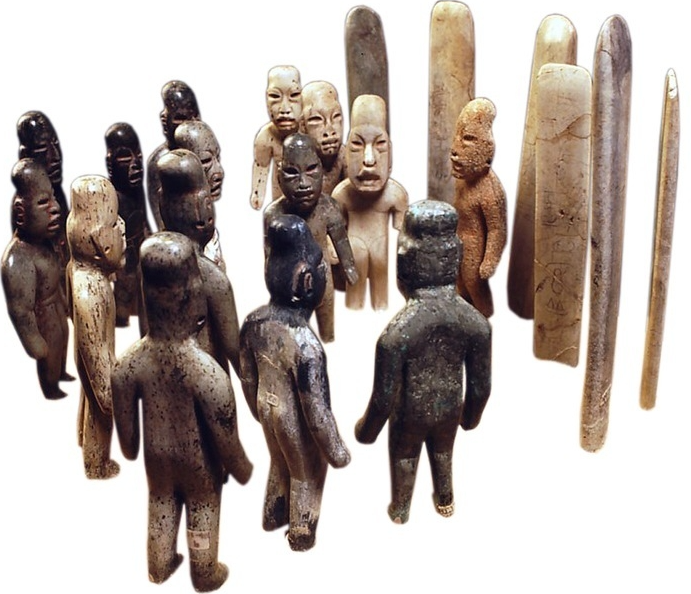
4.- In 1955 was discovered the Offering 4 of La Venta, Tabasco, with an interesting set of Olmec relics which consisted of 16 anthropomorphic figurines, only one of them was made of jade; in addition, of six beautiful longitudinal axes only five of them were made of that precious stone: jade.
5.- In march 5 of 1959 an outstanding Jade Mask was discovered in Tikal in structure 5D-34 of the North Acropolis, very close to The Great Jaguar's Temple.
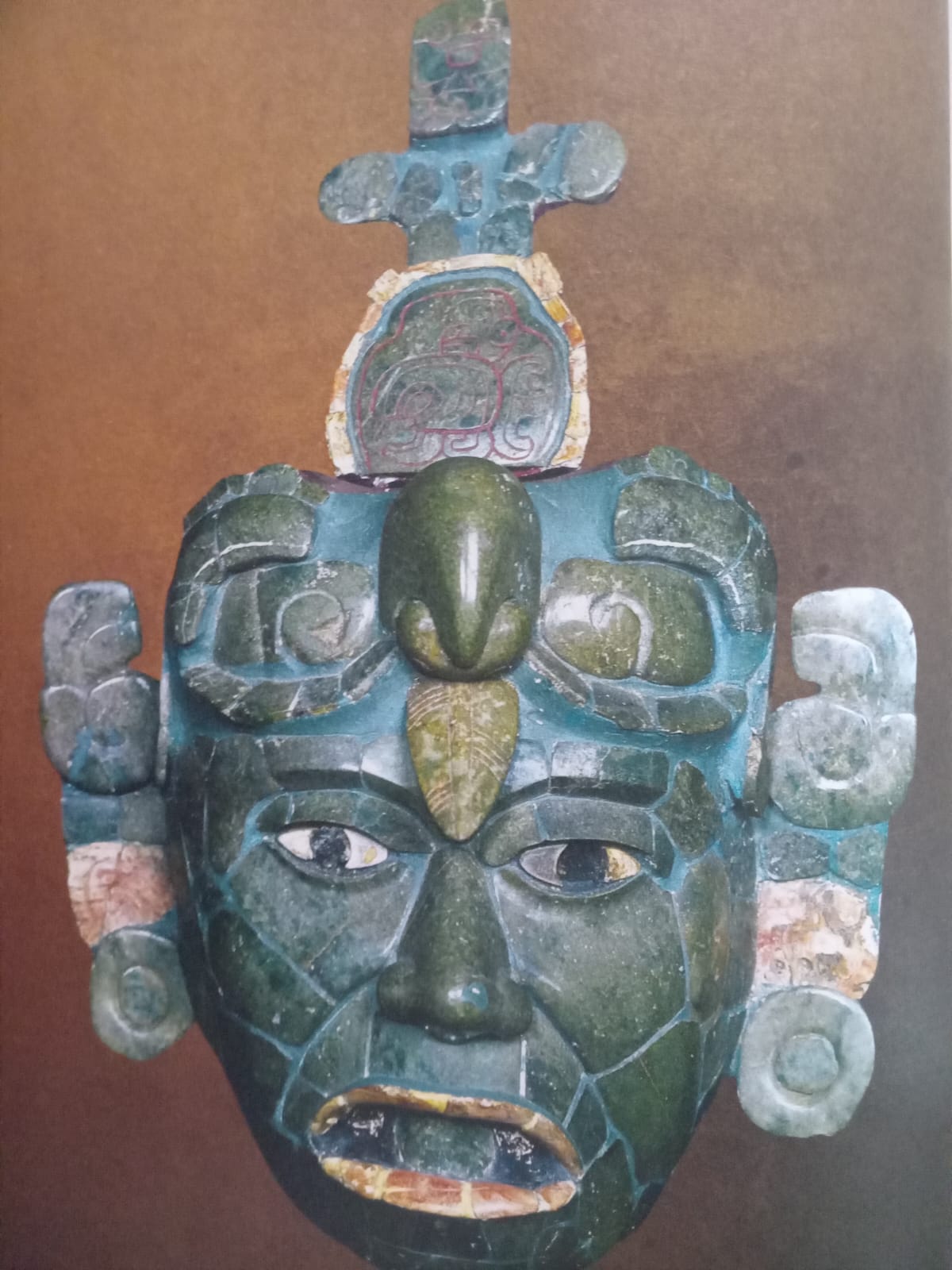
"The mosaic mask from structure 5D-34 is only
one among many extraordinary objects
that make up the ancient Maya universe
of iconographic and ritual art in the form
of censers, figurines, pottery, jewelry,
stucco modeling, mural painting, sculpture, and more"
Stuart D. Scott ; "Mrs. Scaife and the jade Mask", "A memoir of Tikal".
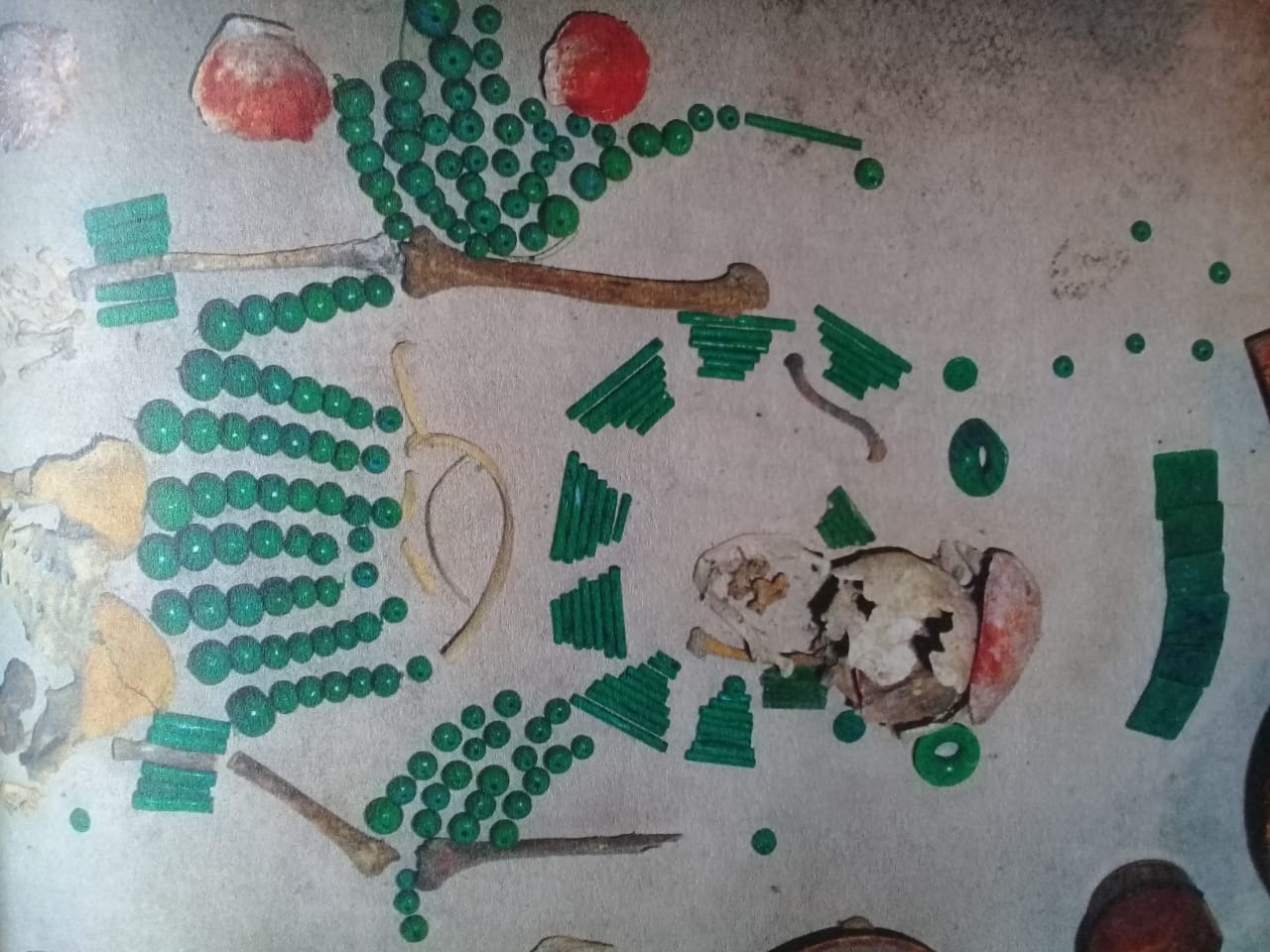
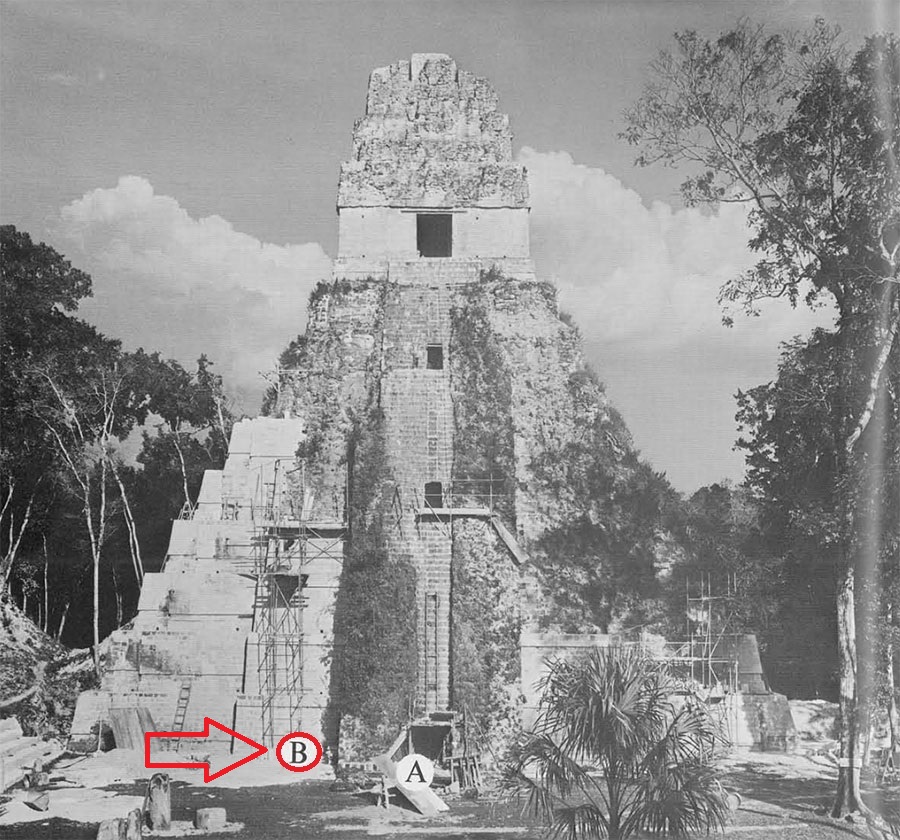
6.- In 1962, the burial 116, one of the richest of Tikal, of KING HASAW CHAN K'AWIIL I, was discovered under the Temple I of "The Great Jaguar" (point B) in the Great Plaza of Tikal, containing 114 square, spherical and cylindrical jade pieces with other fragments weighing 3.9 kilograms (8.6 pounds).
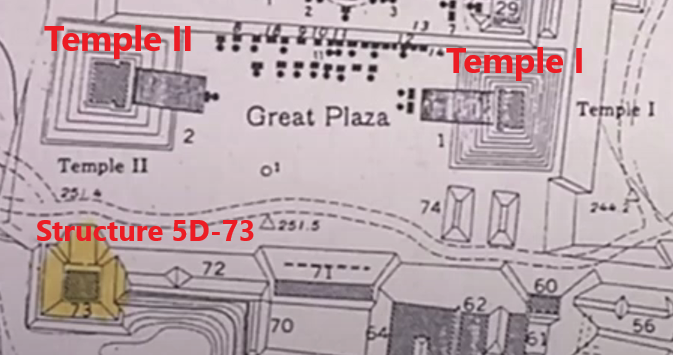
7.- The 5th of November of 1965 was discovered in structure 5D-73 one the most astonishing tombs of Tikal (Burial 196), finding out an "unusual size" jade jaguar measuring 16 inches long and 10 inches wide (wich makes it the most voluminous jade carved piece found "in situ") along with a rich trousseau formed by many small artifacts of the same material, just 25 meters south of the Temple II of the Great Plaza.
It is currently exhibited in the Sylvanus G. Morley museum in Tikal.

"It took about four weeks to dig the tunnel to the tomb,
about ten days to remove the large fallen stones, and then
over five weeks to clean and record the artifacts in situ"; Dr. Nicholas Hellmuth.
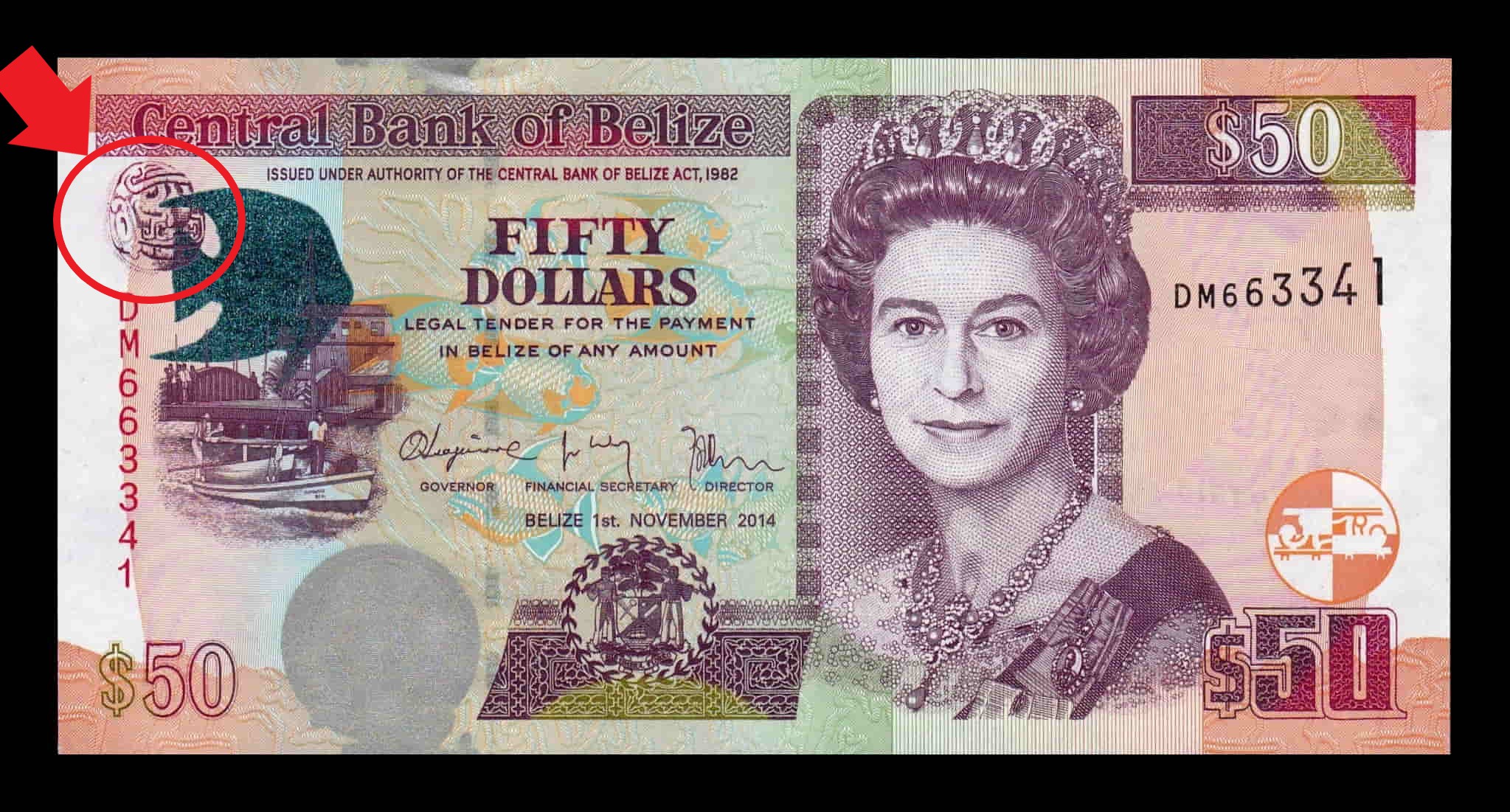
8.- In 1968, the head of the sun god (Belizean Head) Kinich-Ahau, found in Haltún Ha in Belize, is considered by themselves "the largest piece of carved jade in the Mayan world"; it is almost 6 inches tall, weighing 9.75 pounds (4.42 kilograms).

This gorgeous mesoamerican piece of art has become the most precious jewel of Belize, proudly displayed on their current dollar bills:
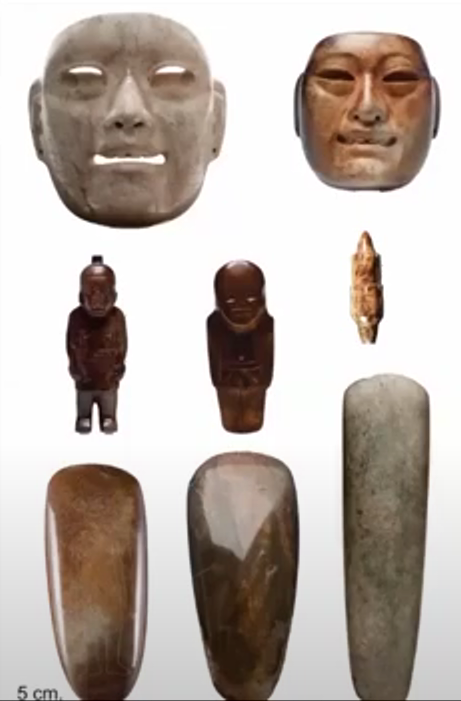
9.- The quality of the jade of various artifacts of the Olmec culture can also be seen in the discoveries of the site called Arroyo Pesquero in the state of Tabasco, México in 1969:
10.- From the investigations initiated in 1987 in Takalik Abaj; 74 jade beads from the Late Preclassic period (190 B.C. to 10 B.C.) , located very close of the south coast of Guatemala; additionally, 7 miniature jade mosaic heads from the Early Maya Classic period (300-500 A.D.) were found:


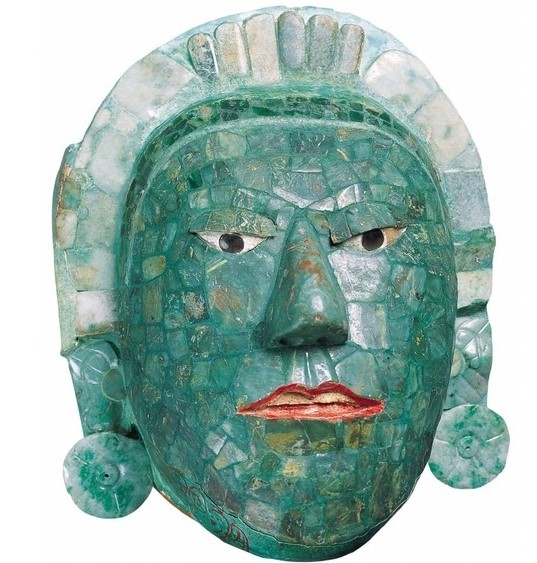
11.- In 1984 the Mask of Calakmul was found in Campeche, México; a magnificent mortuary piece made of 57 jade tesserae.
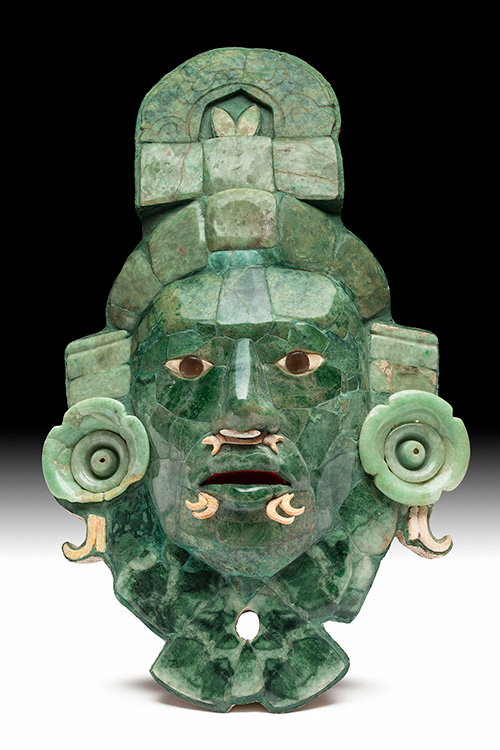
Furthermore, it was found in tomb 4 at Calakmul, substructure II B, an incredible mask made of jade, shell and obsidian; the mask belonged to the Mayan ruler Yuknom Yich' ak k'ak' (Jaguar Claw) and was placed on his right shoulder, in his funerary offering. The divine lord Yuknom Yich 'ak k 'ak or Jaguar Claw ruled Calakmul from 686 to 695 A.D.
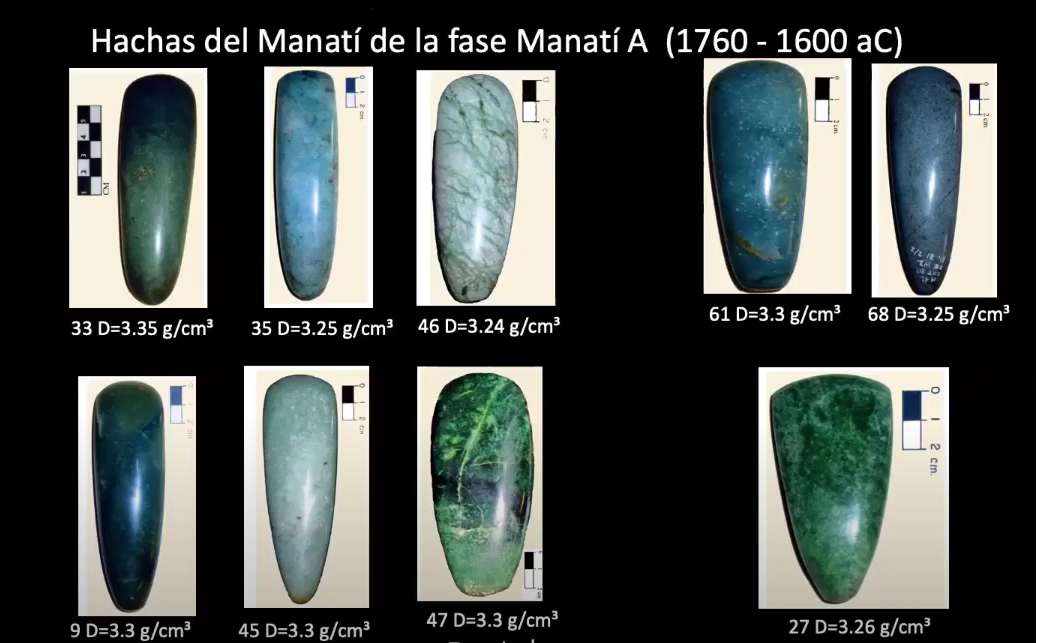
12.- Some of the most important discoveries of the Olmec culture (from 1600 BC to 400 BC) are these beautiful axes found in the Olmec nuclear zone of the hill called El Manatí in the State of Veracruz, Mexico in 1988:
13.- In 1994 the Red Queen of Palenque was found with a diadem made of jade.

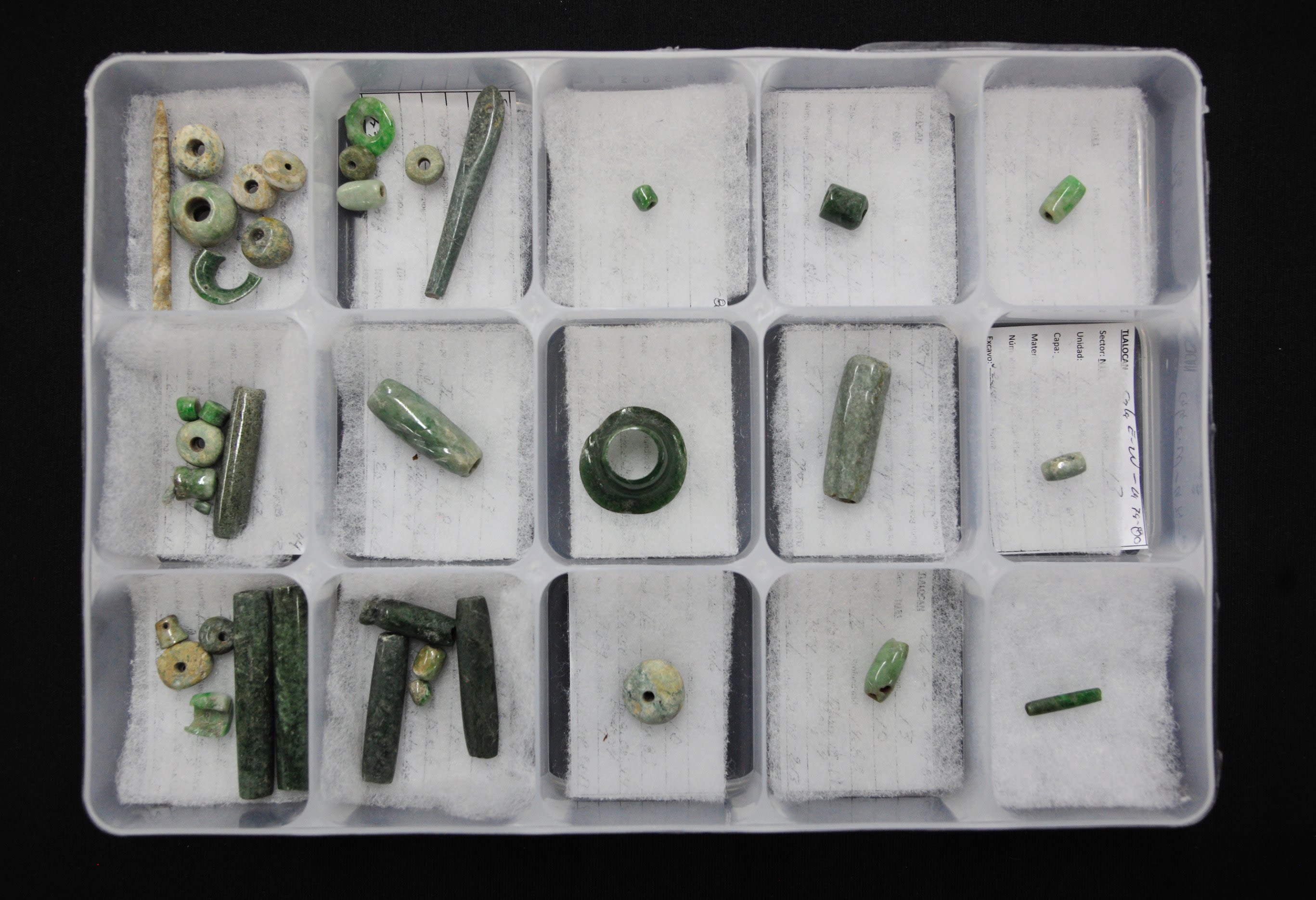
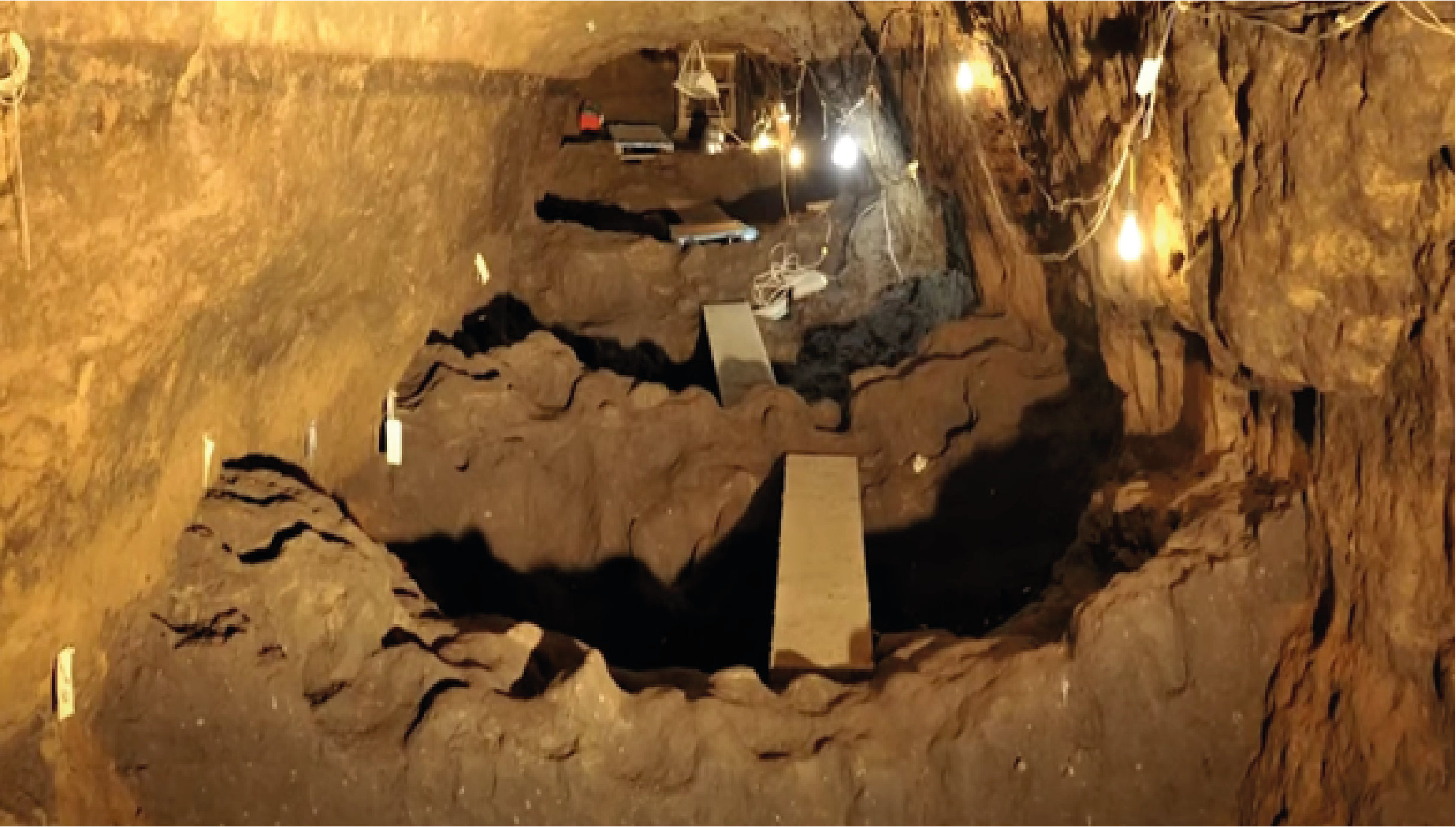
14.- In the year 2003-2009 they discovered in Teotihuacan, México, an underground tunnel, just below the Temple of Quetzalcoatl in which they foud countless of small and tiny pieces of apple, white, and other green colors with some imperial green jade, most of them, of Mayan manufacture (click the YouTube button to see the importance of the Tlalocan project):
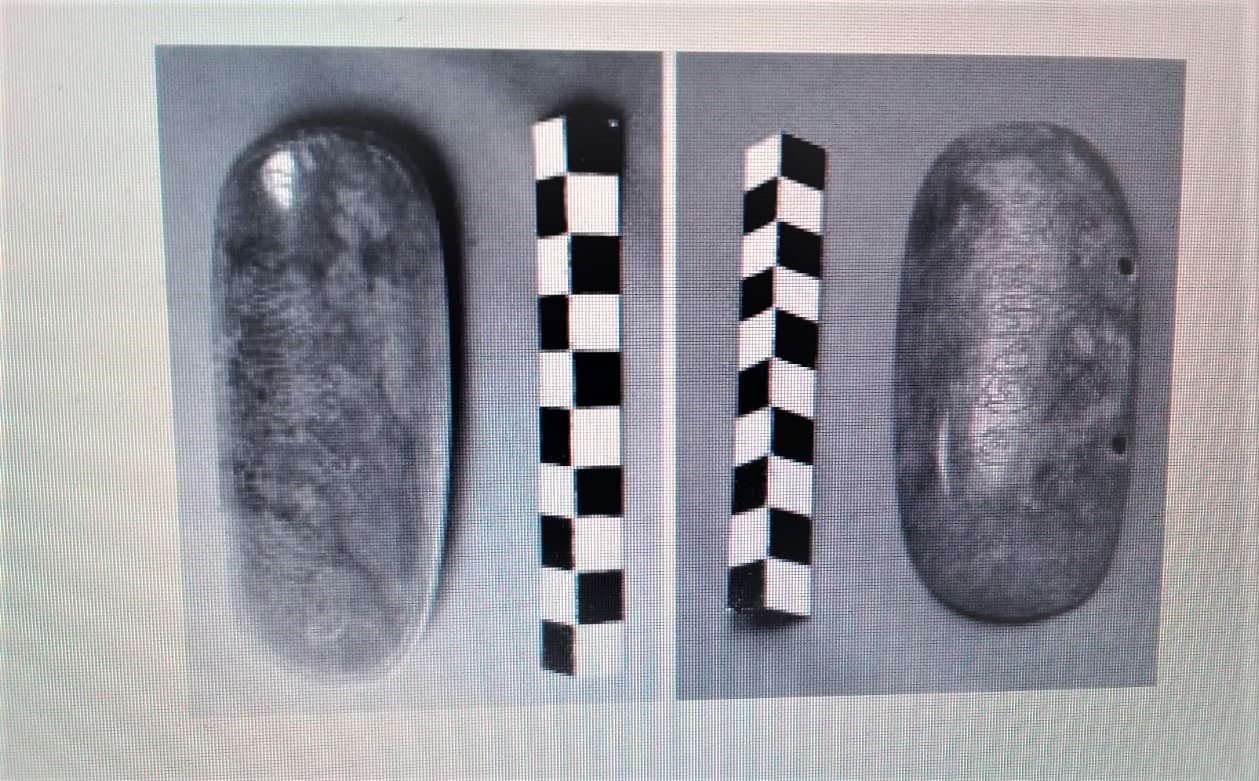
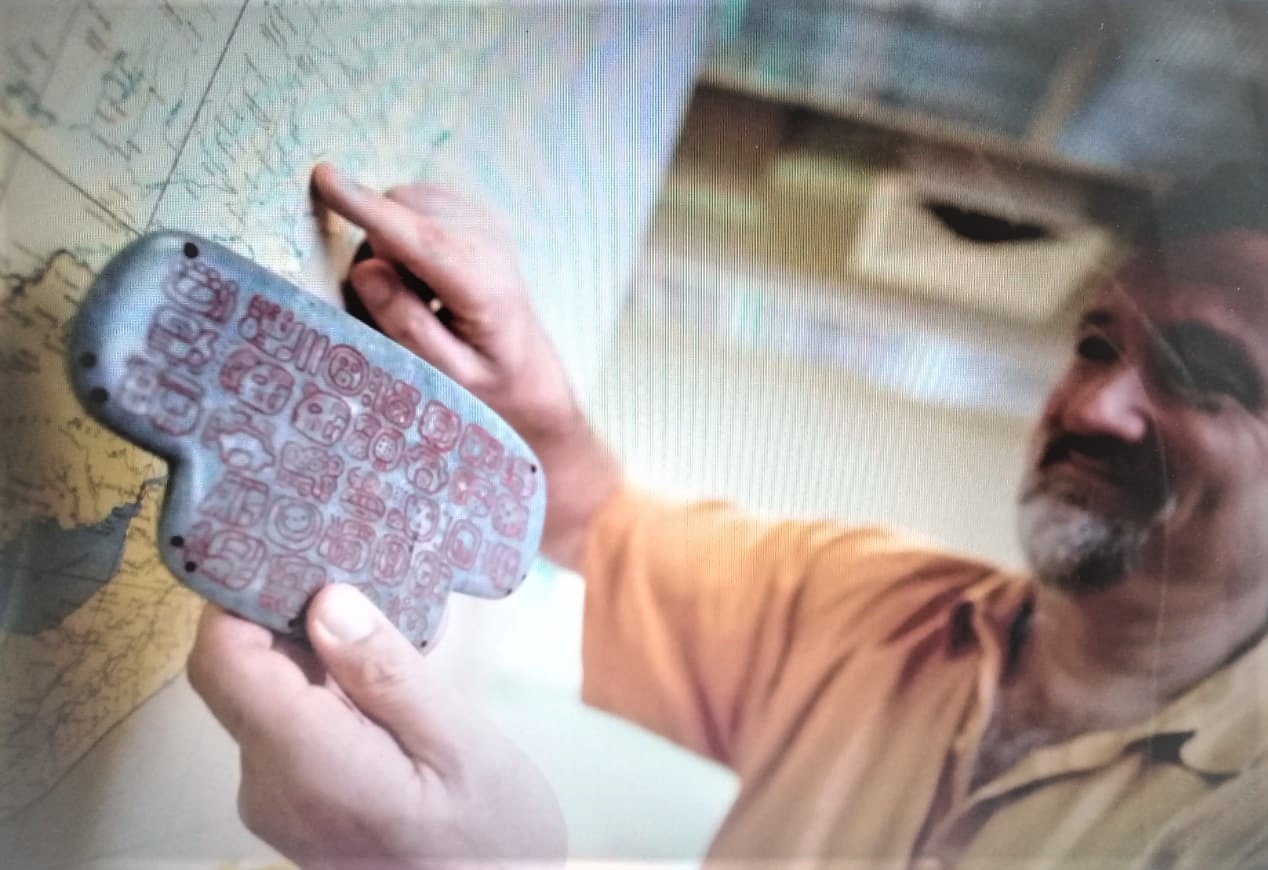
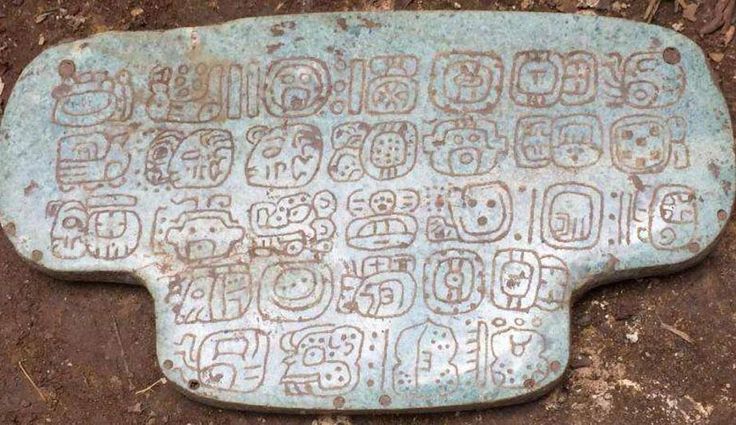
15.- In 2010, in Nakum, Guatemala, dozens small tubular, spherical, circular beads with two zoomorphic earrings were found, but also a beautiful 10 centimeter long blue jade pectoral with glyphs on one face, was found:
16.- In 2015 was found the largest jade pendant in Belize (King´s jade pendant of Belize) with 7.4 inches wide and 4 inches high.
17.- Of the thousands of lapidary objects found in the Templo Mayor of Tenochtitlan in Mexico City since 1978, only a minimal proportion of them are made of jade; found in 2002-2003, most of them are geometric beads; some pieces of great quality and small size presumably of Maya and Mexica manufacture, and we believe that perhaps at least one very interesting comes from Teotihuacan..

The so-called "Quetzalcóatl" pendant is a miniature of imperial green jadeite of only 3.82 x 2.01 x 1.19 centimeters, weighing 14.2 g. :
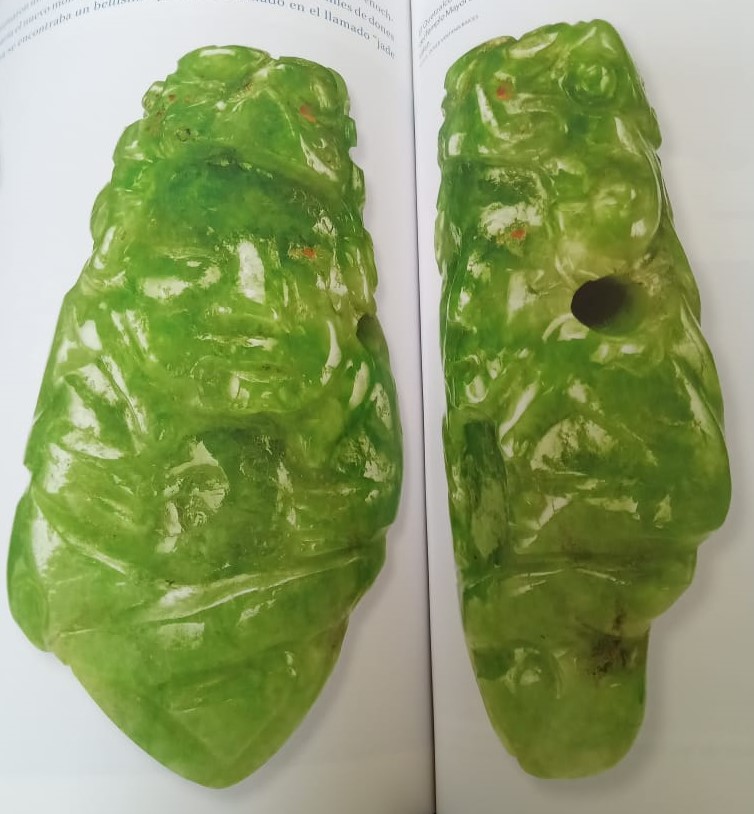
Due to the close relationship the Teotihuacans had with the Maya, we believe the more likely is that they were able to obtain an unworked stone of such rarity and quality directly from Motagua valley. Furthermore, because Quetzalcoatl was a deity of primary importance in Teotihuacan, we believe the more likely is that the Mexica acquired it from there since those latitudes were under their control.
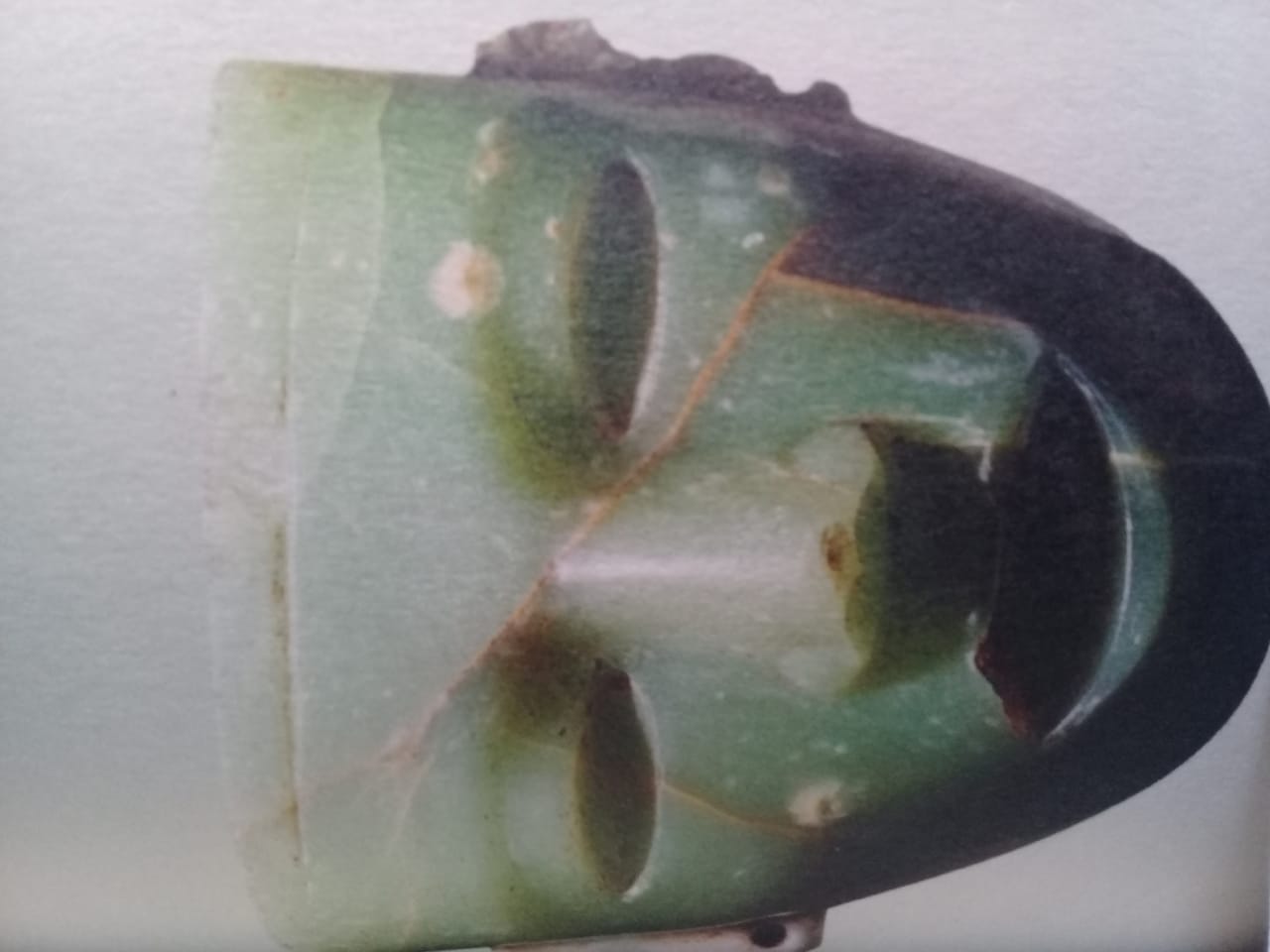
18.- In 2008-2011 a 4.33 inches tall jade mask was found at Teotihuacán in the Pyramid of the Sun.
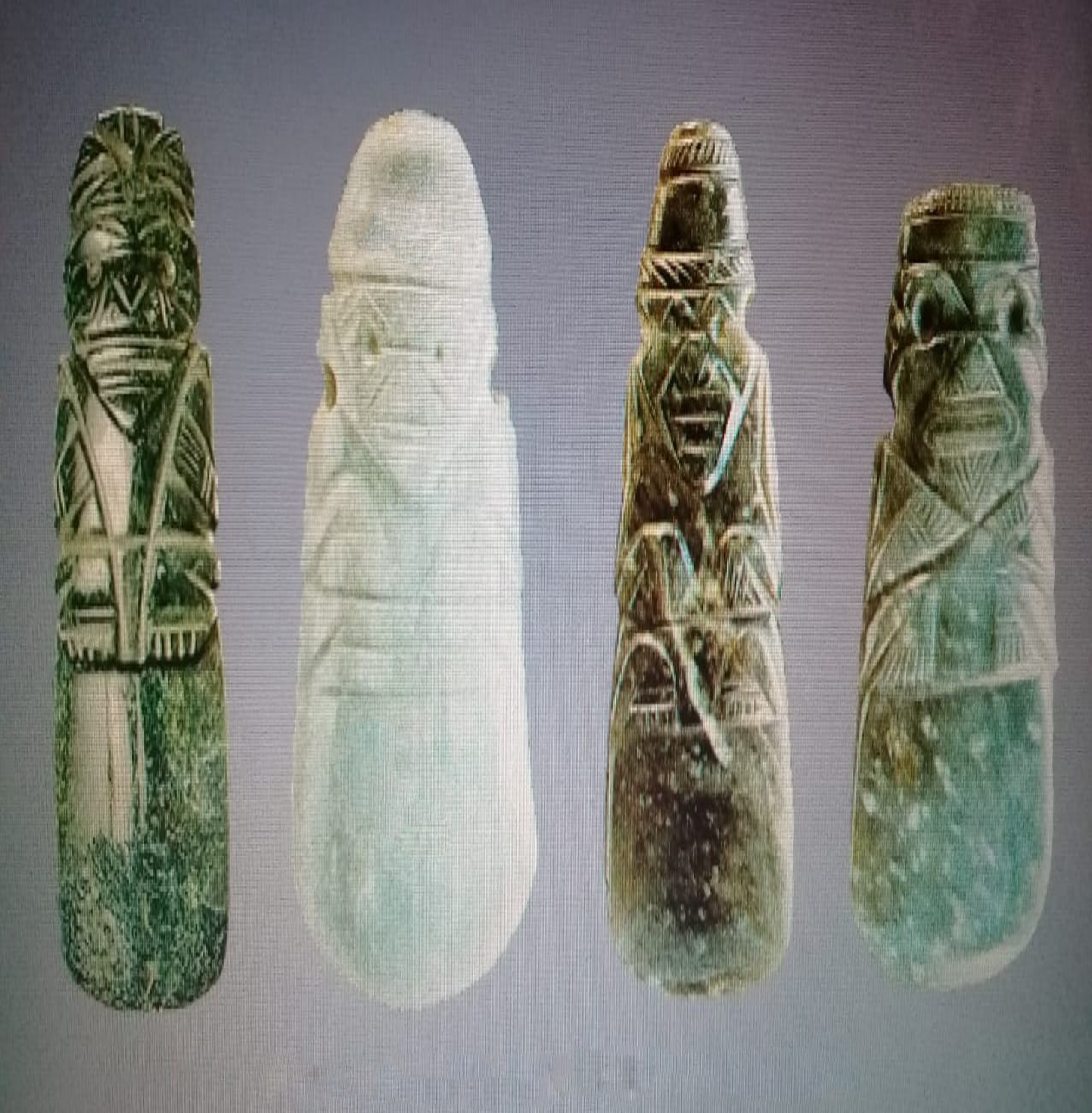
19.- In the territory of the current Republic of Costa Rica, countless jade artifacts have been found, mainly Olmec and Mayan styles and interesting local cultures. Most of them small size items like axes, earrings, pectorals, spoons, and various ritual objects. The Costa Rican authorities decided to build a brand new 21 million dollars jade museum in 2014.

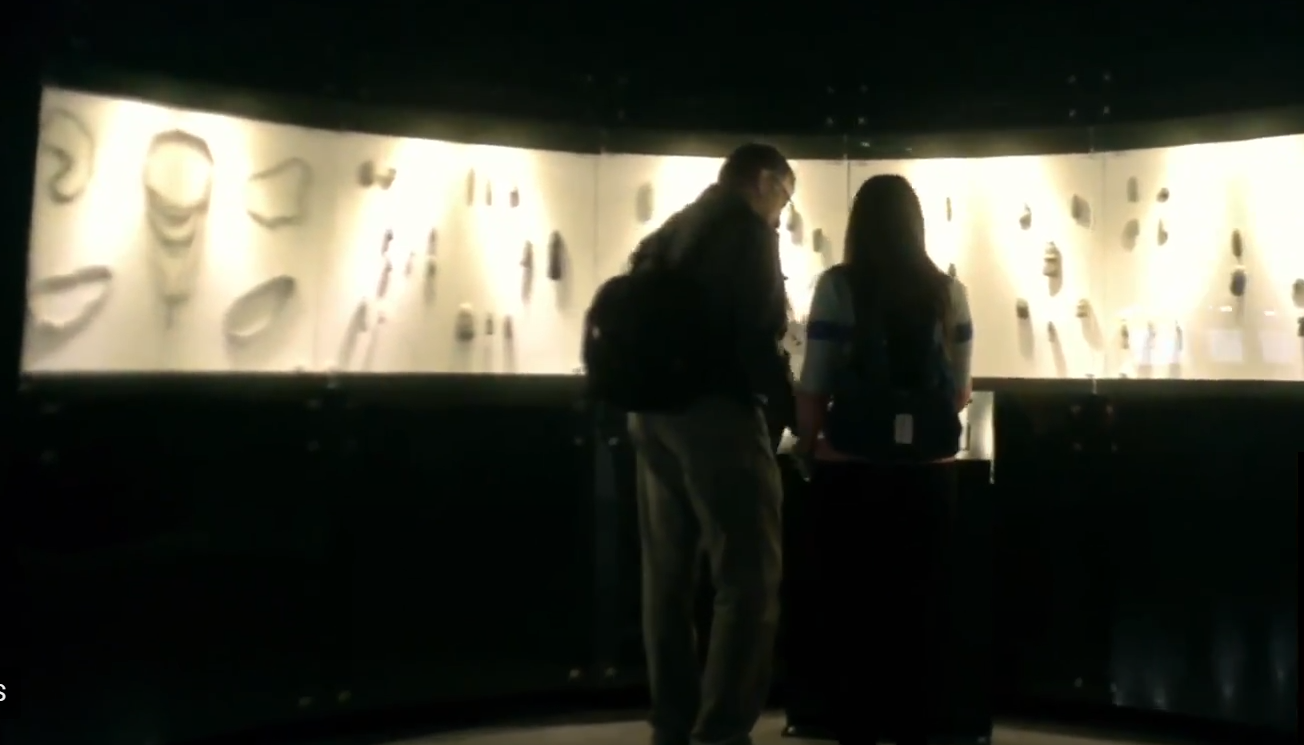
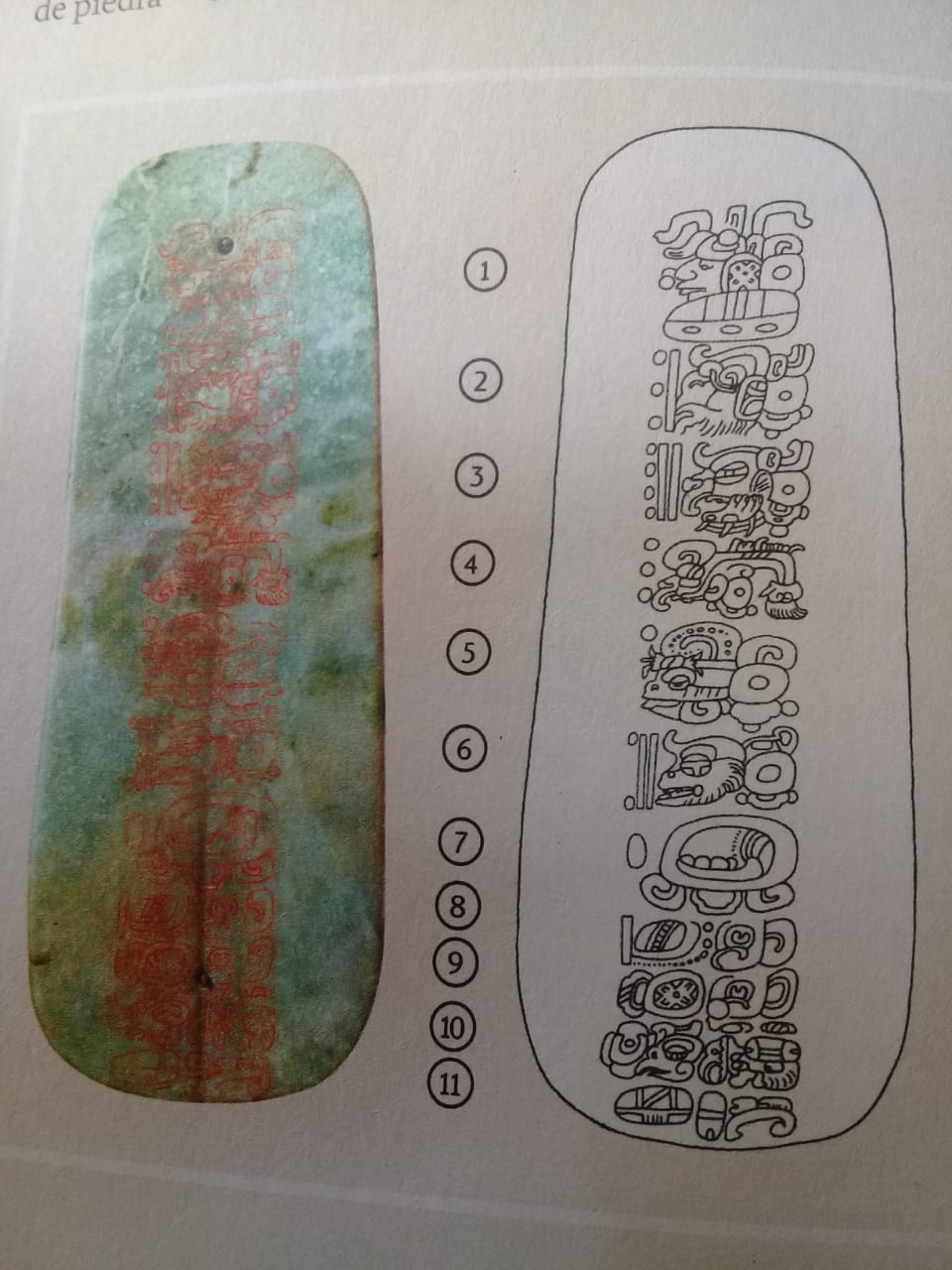
Additionally, we must to say that in between 2007-2012 there were found a dozen of jade axes in Ceibal, Guatemala; some other beautiful ornaments in Perú Waka', and five jade axes in Cival, Guatemala, without forgetting that in 1864 a jade plate of 22 centimeters long and 8 centimeters wide of excellent manufacture from Tikal was discovered in Izabal, Guatemala that fortunately is currently exhibited in the National Museum of Ethnology, Leiden, the Netherlands, known as "THE LEIDEN PLATE":
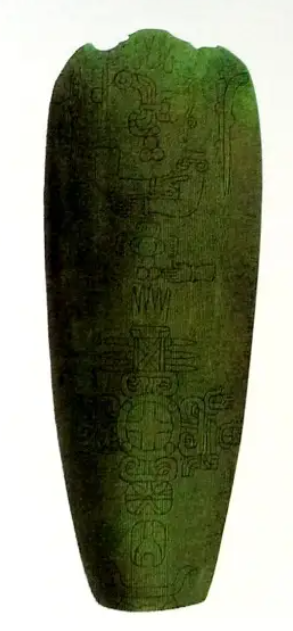
We must to mention that when Alexander von Humbolt visited the New Spain in 1803, he adquired a very interesting jade ax wich was registered for him as an "Aztec ax", unfortunatelly, this magnificent piece of jade was lost in the turmoil of World war II, fortunately, he left us a faithful drawing of the piece:
"Jade was not only the quintessential stone for the Mesoamerican peoples, but the quintessential precious."
Alberto Ruz L'uillier.

"From the beginning men had fear and admiration for an animal that was synonymous with courage and fierceness. Not for another reason, they incorporated it into his myths and considered it the heart of the mountain or the eater of hearts"
Eduardo Matos Moctezuma.
There are also countless pre-hispanic sculptures that recall the Mayan deity of the night and the nocturnal light: the jaguar, but nothing compares to the brightness and beauty of the stone most appreciated by the Mayans: the jade.

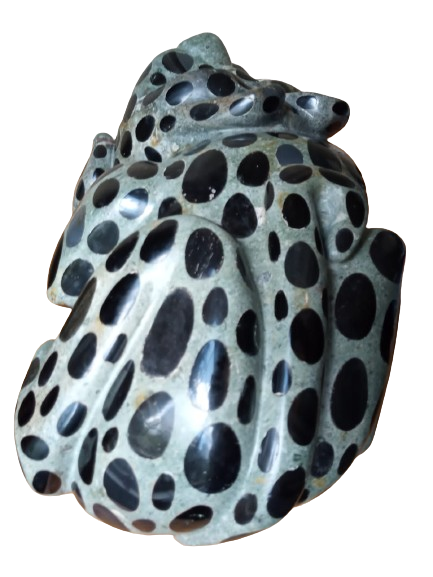
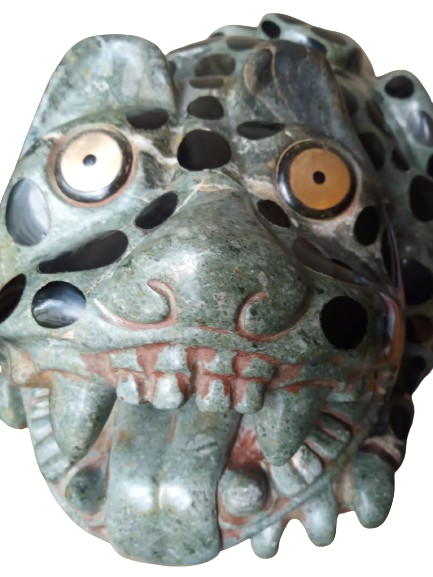
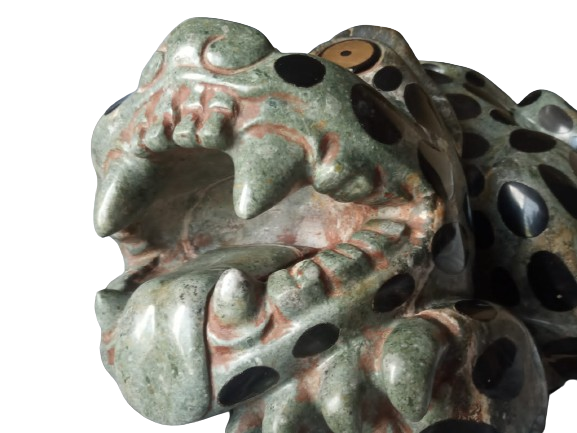
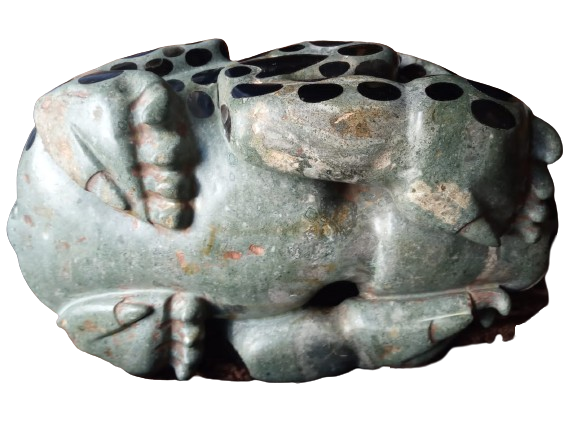
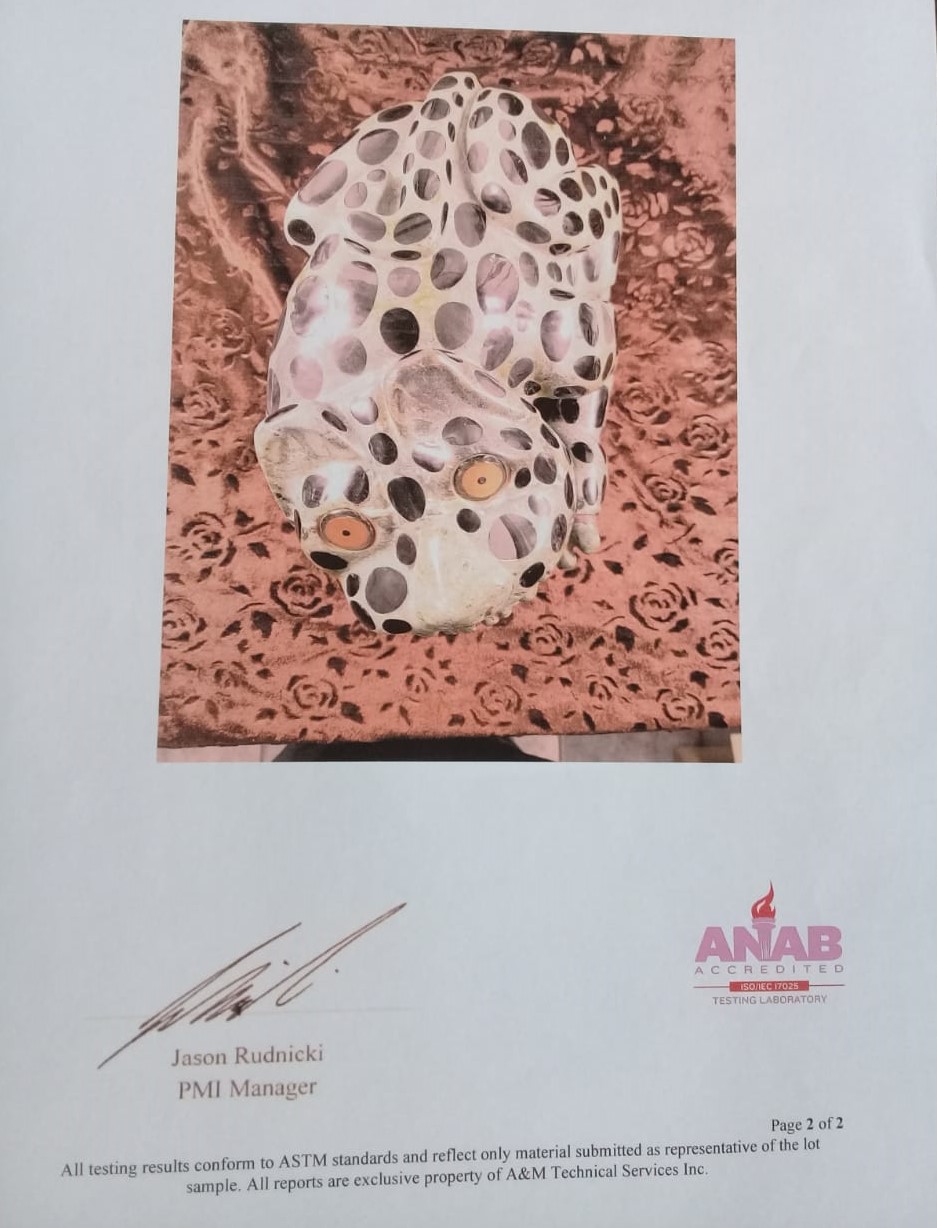
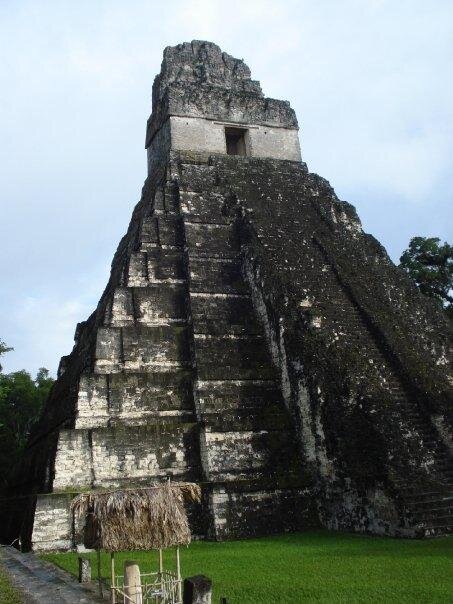
THE GREAT JAGUAR OF TIKAL is a monolith with 57 pounds of weight (27 kilograms), 16 inches long, 10 wide and 8 high, making it by far away the largest piece of carved jade in all Mesoamerica:

It is beautifully decorated with more than 240 black obsidian inlays, surely related to the sacred Mayan calendar, and it also has impressive rounded eyes set in gold. But the most surprising singularity would be to imagine how many bloodied human hearts it would devour before being extracted from its place of origin, which for us cannot be other than Temple I of the Great Jaguar of Tikal, illustrated by Eusebio Lara in 1853:

"The Temple is usually made up of an anteroom or portico and the sanctuary where the representation of the deity was located"
Alberto Ruz L'huillier.
SCENE OF EXTRACTION OF THE HEART IN A CLAY VESSEL FROM MOTUL DE SAN JOSÉ, PETÉN GUATEMALA, VERY CLOSE TO TIKAL.

"The temples are always built on a pyramid that imitates the hill, some very high like those of Tikal, a sacred place par excellence because it is the residence of the gods; the temple usually consists of an anteroom or portico and the sanctuary where the representation of the deity"
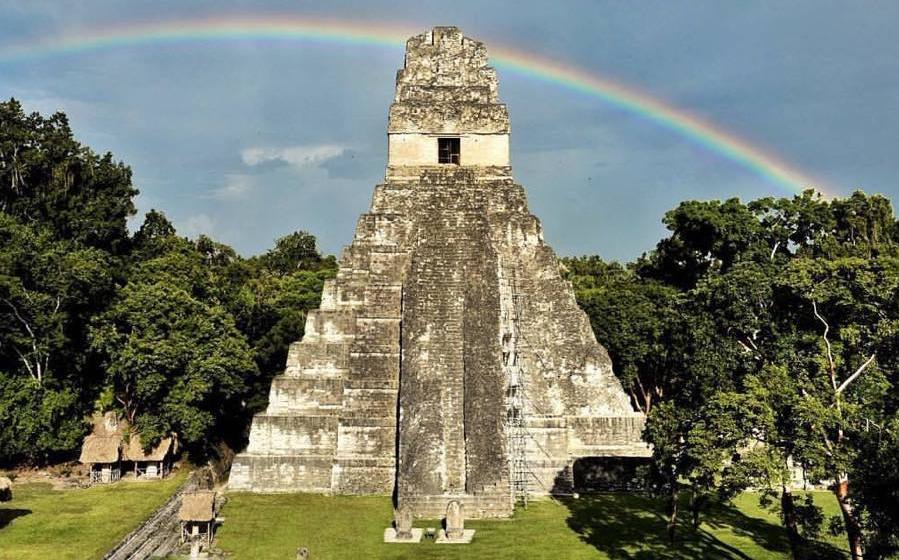
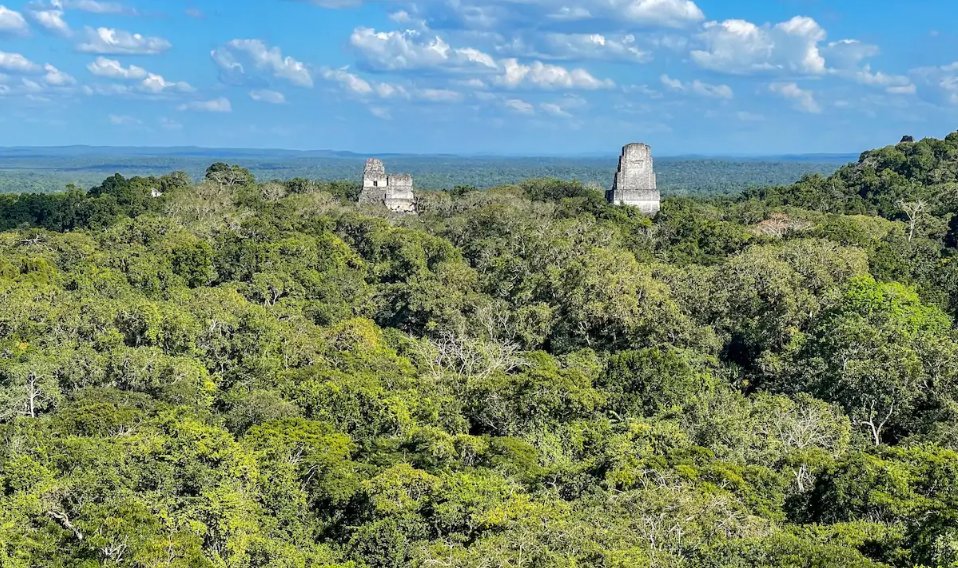
It is important to comment that for the Mayans, the temple of the Great Jaguar represented the entrance to the underworld. Since the jaguar is a nocturnal animal, the Mayans also related it to the underworld and the Night Sun. In addition, they considered it a symbol of power and a symbol of life and fertility. It is, for them, the source from which kings and nobles descended.
Tikal was declared a UNESCO World Heritage Site in 1979.
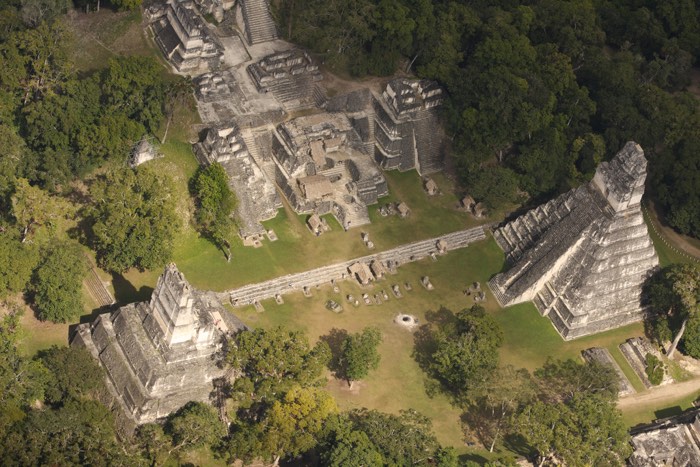
"And what about the stones that judgment is not enough to understand with what instruments it was made so perfect..."
Hernán Cortés; Cartas de Relación.
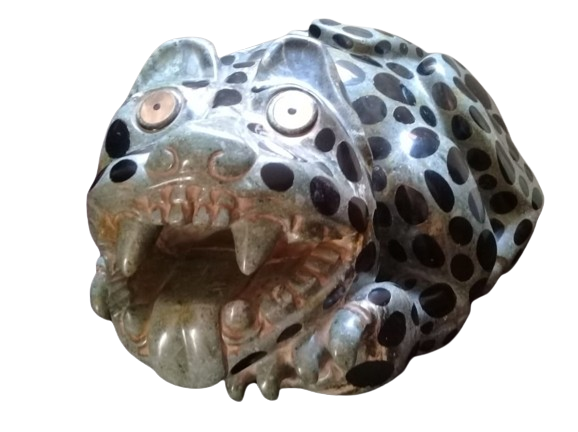
This masterpiece of Mesoamerican art that many archaeologists would have wished to admire, was preserved by the Moctezuma family for more than 200 years in the old Villa de Béjar, present-day San Antonio, the former capital of the Mexican province of Texas. But, how did this magnificent sculpture of exceptional size and beauty came into the Moctezuma's family domain? Thanks to the recent discoveries in the translation of the Mayan glyphs, we know that the ancient Mayan city of Yax Mutul, Tikal, had an important political and commercial relationship with the ancient Teotihuacan city, to the extent that this important city organized a COUP D'ETAT in Tikal in the year 378 AD influencing definitevely the ruling dynasty. This event has been recorded as "The Entrance"
( click to see David Stuart).
For this reason, it is more than likely that in the years following the decline of Tikal, circa 900 A.D., "The Great Jaguar of Tikal" was transferred to the Valley of Mexico, centuries before the Aztec emperor Itzcóatl "the obsidian serpent" along with the leaders of the "Triple Alliance" reconquered the Teotihuacan region in 1430 A.D.

We believe that the only reason why this masterpiece was not taken to Spain is because it was not entirely made of gold, in addition to its excessive weight, due to the density of jadeite; the kilogram per cubic meter (kg/m3) is 3.3 to 3.5, which, combined with its hardness which ranges from 6 to 7 on the Mohs scale, made it extremely difficult to transport or destroy.
There is a text from an eyewitness to the conquest of Mexico that corroborates this theory.
When the spanish conquerors discovered Moctezuma's treasure, the emperor realized the theft of certain gold so he said to Cortés:
"These Christians are mischievous, and while walking through this house they have come across a certain
amount of gold, and they have taken it: do not receive punishment for it"; and he said liberally:
"That belongs to the gods of this people,
leave the feathers and things that are not gold, and take the gold,
and I will give you everything I have; because you must know
that from time immemorial to this part my ancestors have
by the way, …"
“Relation of some things that happened to the very illustrious Mr. Don Hernán Cortés”, Andrés de Tapia; page 198 of Mexican Historical Readings.

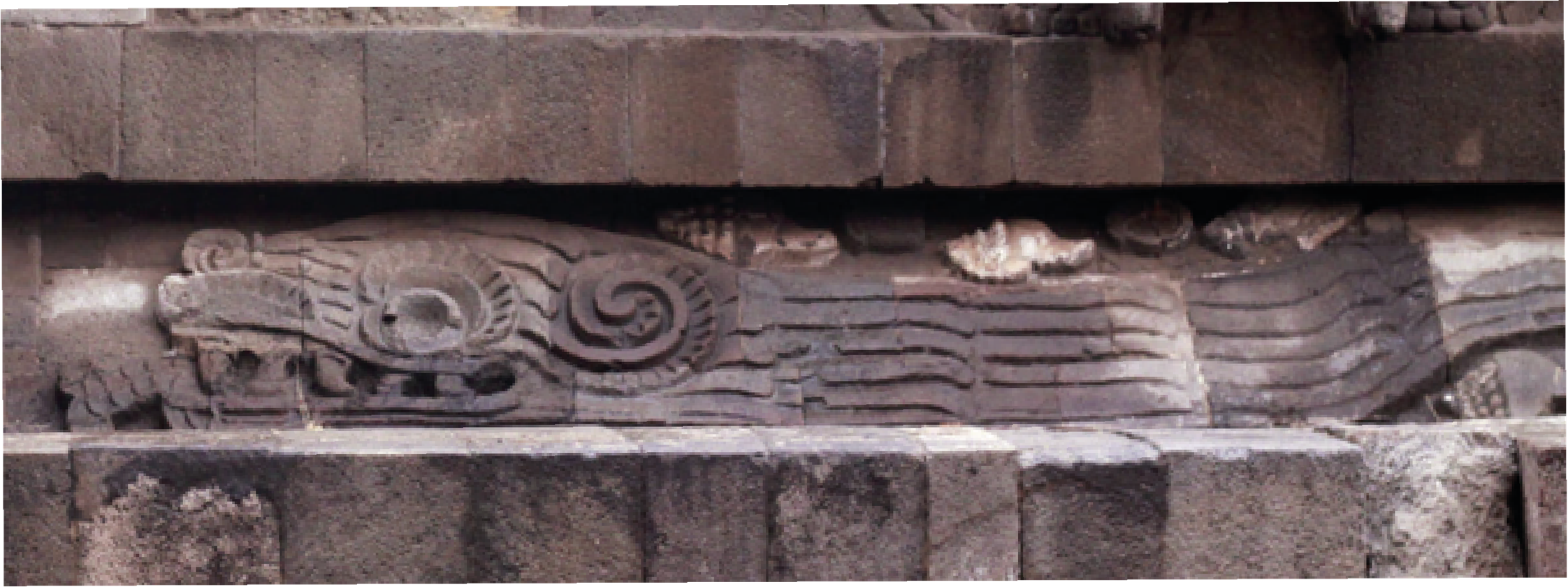
Additionally, there is an important clue that shows us the important connection between the Treasure of Moctezuma deposited in the Palace of Axayacatl, father of Moctezuma, and the Feathered Serpent, Quetzalcoat. It is a high relief of the Feathered Serpent , apparently "guarding" the treasure, as we can see in the next image:
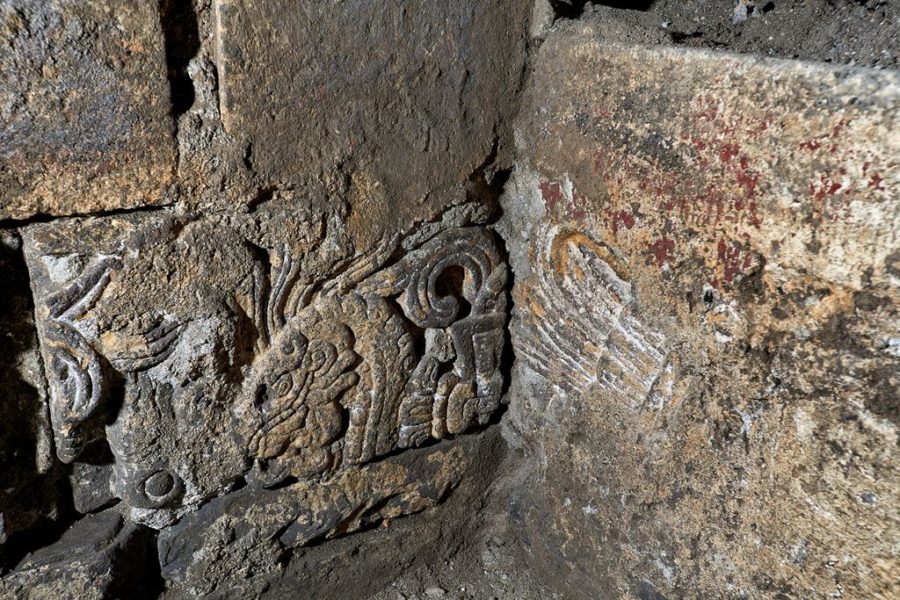

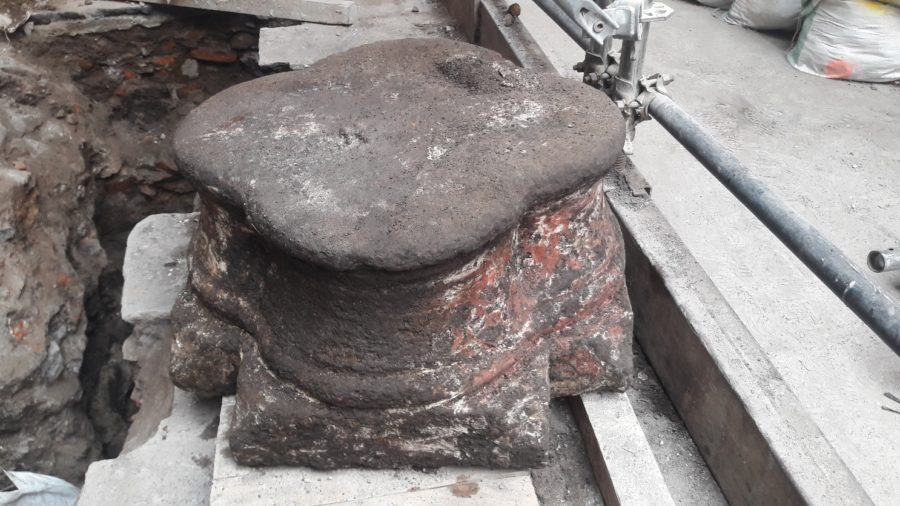
But furthermore, there was found a surprising bas-relief that surely was used to display a very important asset of Moctezuma's treasure.
That beautifully decorated base suggests,because of its exact measurements, that the magnificent piece of ancient art once displayed on it, was "The Great Jaguar of Tikal"; for more information about this matter please visit: "Nueva propuesta interpretativa del mural de los Animales Mitológicos del Palacio de la Agricultura de Teotihuacán" Academia.edu
The good news is that this invaluable piece of ancient art will be revalued and admired thanks to the fact that the Moctezuma's family descendants have decided to bring it to light and share it to the world, on the sole condition that it be promoted by a person or institution morally and financially solvent, interested in fomenting the knowledge of Mesoamerican history.
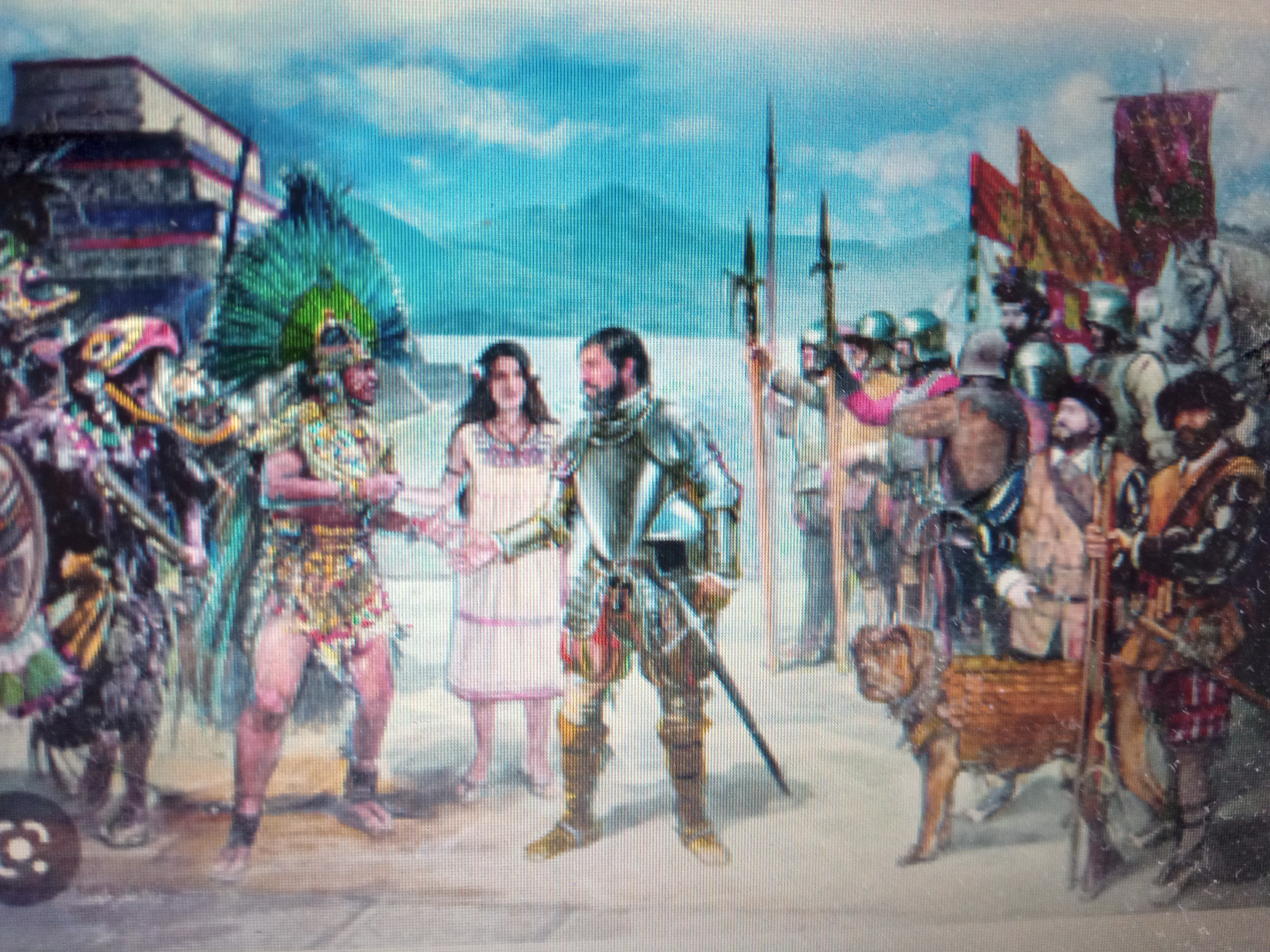
"those things, in addition to their value, were such and so marvelous that, considered for their novelty and strangeness, they had no price, nor is it to be believed that any of the princes of the world of whom there is news could have such and of such quality"
Hernán Cortés; "Cartas de Relación".
 |
 |
 |
 |
 |
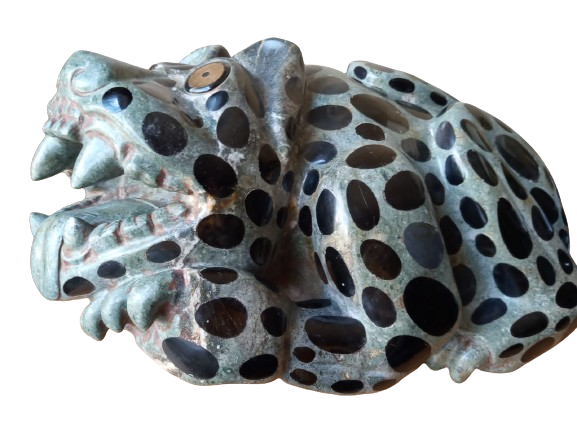 |
If as Dr. Eduardo Matos Moctezuma suggests we get rid of the "western sin", which consists of seeing Mesoamerican art according to the patterns of the Greco-Roman tradition, we can appreciate that each part of this sculpture: tail, ears, claws, eyes, etc., required exhaustive and delicate work that is little less than impossible to imitate.
"THE IGNORANCE, NEGLECT AND INDIFFERENCE OF THE INHABITANTS OF LATIN AMERICA ON THIS MATTER IS THING THAT I ADMIRE"
JOHN LIOYD STEPHENS
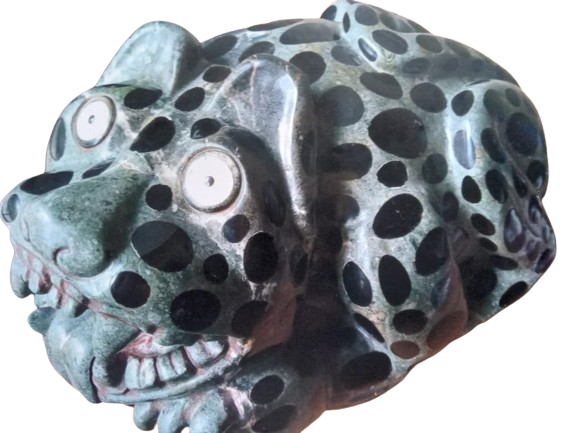
MAIN INDICATORS OF THE EVIDENT MAYAN ORIGIN OF "THE GREAT JAGUAR OF TIKAL":
1.- The rarity of jade in Mesoamerica:
"Despite our long and frequent excursions through
the Cordilleras of both Americas, we have never been able
discover the site of jade…";
Alexander von Humboldt
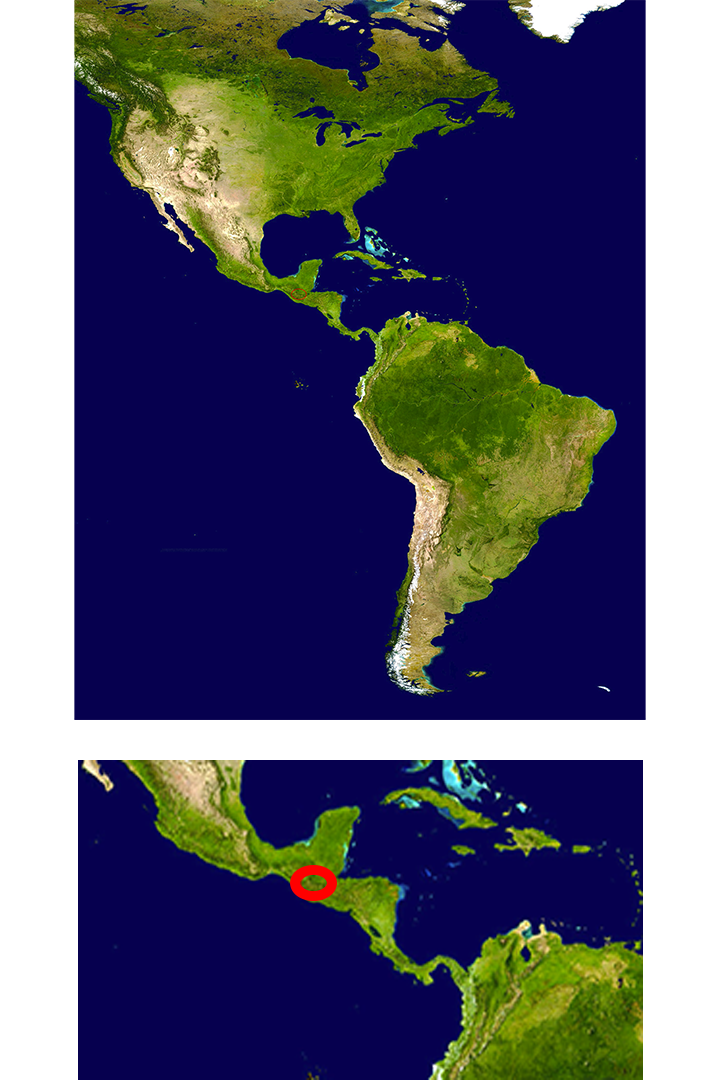
In Mesoamerica, jadeite was only found in the basin of Motagüa river, present-day: Guatemala. Therefore, in all of Mesoamerica there was no other source of this material that did not come from the Maya region. On the other hand, it was not until the 1970s that these mines were exploited again, but using modern tools.
Jadeite is a mineral consisting of pyroxene composed of sodium, aluminum and silicates (NaAlSi2O6), depending on its chemical composition, jadeite can be green, blue, pink, lavender, white, or black in color.
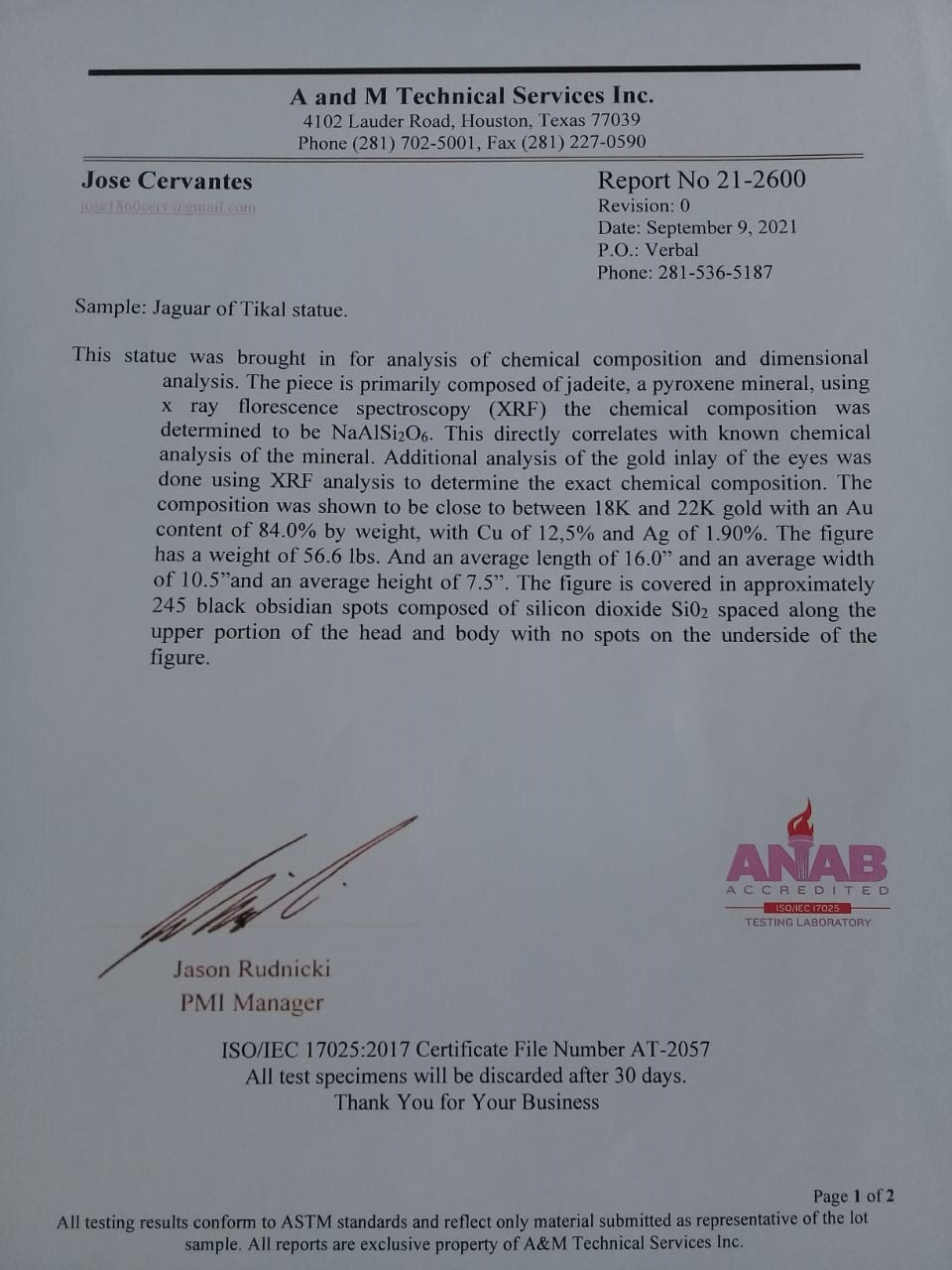
Within the general description of minerals, jadeite has specific characteristics that clearly identify it.
General description of minerals:
Mineral Name, Color, Chem. Composition, Hardness, Gravity
Antigorite: Green Mg3Si2O5(OH)4 2.5-4 2.4-2.79
Brucite: Colorless to white Mg(OH)2 2 2.39
Calcite: Colorless to white CaCO3 3 2.96
Dolomite: White to reddish white CaMg(CO3)2 3.5-4 2.85
Fluorite: White to purple CaF2 4 3.18
Forsterite: Pale yellow Mg2SiO4 6.5-7 3.24
Jadeite: Pale green NaAlSi2O6 6-7 3.24-3.43
Kaolinite: White Al2Si2O5(OH)4 2-2.5 2.60-2.68
Pyrophyllite: White to apple-green Al2Si4O10(OH)2 1-2 2.7-2.9
Quartz: Colorless to white SiO2 7 2.65-2.66
Talc: White Mg3Si4O10(OH)2 1 2.58-2.83
Tremolite: Bright green Ca2Mg5Si8O22(OH)2 5-6 2.89-3.44
"THE JADE STONE IS TO ME NOT ONLY THE MOST MYSTERIOUS BUT THE MOST ROMANTIC OF ALL GEMS...
IT´S SO OLD THAT ITS HISTORY IS INTERWOVEN WITH THE CULTS OF THE SERPENT AND THE SUN, TWO RELIGIOUS BELIEVES THAT WERE BORN WHEN MANKIND WAS YOUNG. IT WAS A GEM SO HIGHLY PRIZED THAT GREAT RULERS GAVE AND RECEIVED SPECIMENS AS PRICELESS TOKENS BEFORE THE DIAMOND WAS EVER KNOWN...
AMERICAN JADE, OR JADEITA IS THE MOST MYSTERIOUS STONE IN THE WORLD, FOR NO MODERN MAN HAS YET BEEN ABLE TO DISCOVER THE DEPOSITS WHENCE ANCIENT MAN OBTEINED IT FOR HIS NEEDS AND PURPOSES. UNLIKE THE SO CALLED CHINESE JADE, NODULES OF WHICH ARE FOUND IN THE RIVER-BEDS OF BURMA AND ELSEWHERE, NO MAN HAS EVER RECORDED THE FINDING OF AMERICAN JADE, EXCEPT AS WORKED PIECES, AMULETS, VOTIVE OBJECTS, AND ORNAMENTS. ONLY AMONG THE RUINS OF ANCIENT AMERICAN CIVILIZATIONS AND AMID THE GRAVES OF THEIR BUILDERS ARE THIS MYSTIRIOUS STONES FOUND, AND THEN BUT RARELY"
EDWARD HEBERT THOMPSON
It is important to comment that when Frayle Diego de Landa wrote his "Relación de las cosas de Yucatán" in 1566, he never mention having seen jade carving workshops; the reason for this is because in century XVI this important manufacture had been abandoned for more than 500 years.
2.- The quality of the carving; remarkably perfected by ancient mayan craftsmen:
The perfection of the carving of jade that can be seen in "The Great Jaguar of Tikal", as well as on the jade jaguar found in structure 5D-73 (shown before at subsection No. 6), is not comparable with that seen in the works of recent manufacture as we can perfectly distinguish in the following photographs of two replicas of the jade jaguar found in the Structure 5D-73 Burial 196 of Tikal. The difference is due to the fact that in ancient times the carving was done
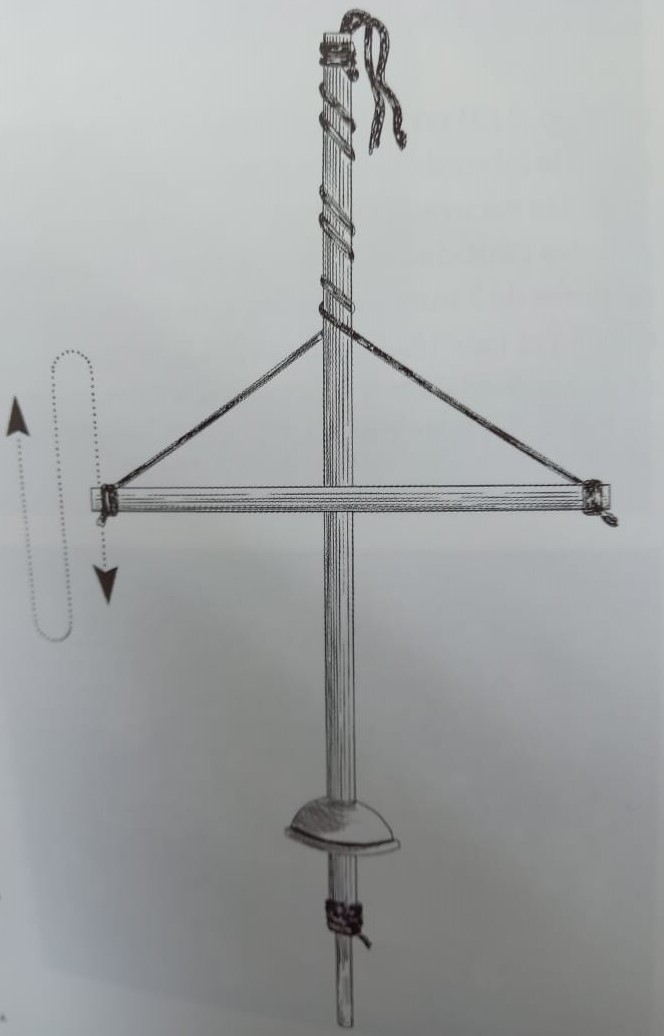
using abrasives and ancestral rustic implements like Lithic tools of flint and obsidian, pedernal and dry burnished with pieces of leather. It took years of hard work to complete the
elaboration of a masterpiece:
"The lapidary masters cut rock crystal, and amethysts, and green stones, and emerald green jade, with abrasive sand and hard metal. And they scraped them
with an elaborate flint tool. And they pierced them; they pierced them with a tubular punch of metal. Then they slowly smoothed the surfaces; they polished them; They gave them a metallic luster. And then they would finish them off with a piece of wood [and a very fine abrasive].
They polished them so much that they shone, they threw rays of light,
they glowed. Or with a piece of fine cane [containing silica], the lapidaries polished, finished, and improved their artifacts"
Brigitte Kovacevich, Anthropologist.
A modern Replica of the jade jaguar found in the Structure 5D-73 of Tikal:
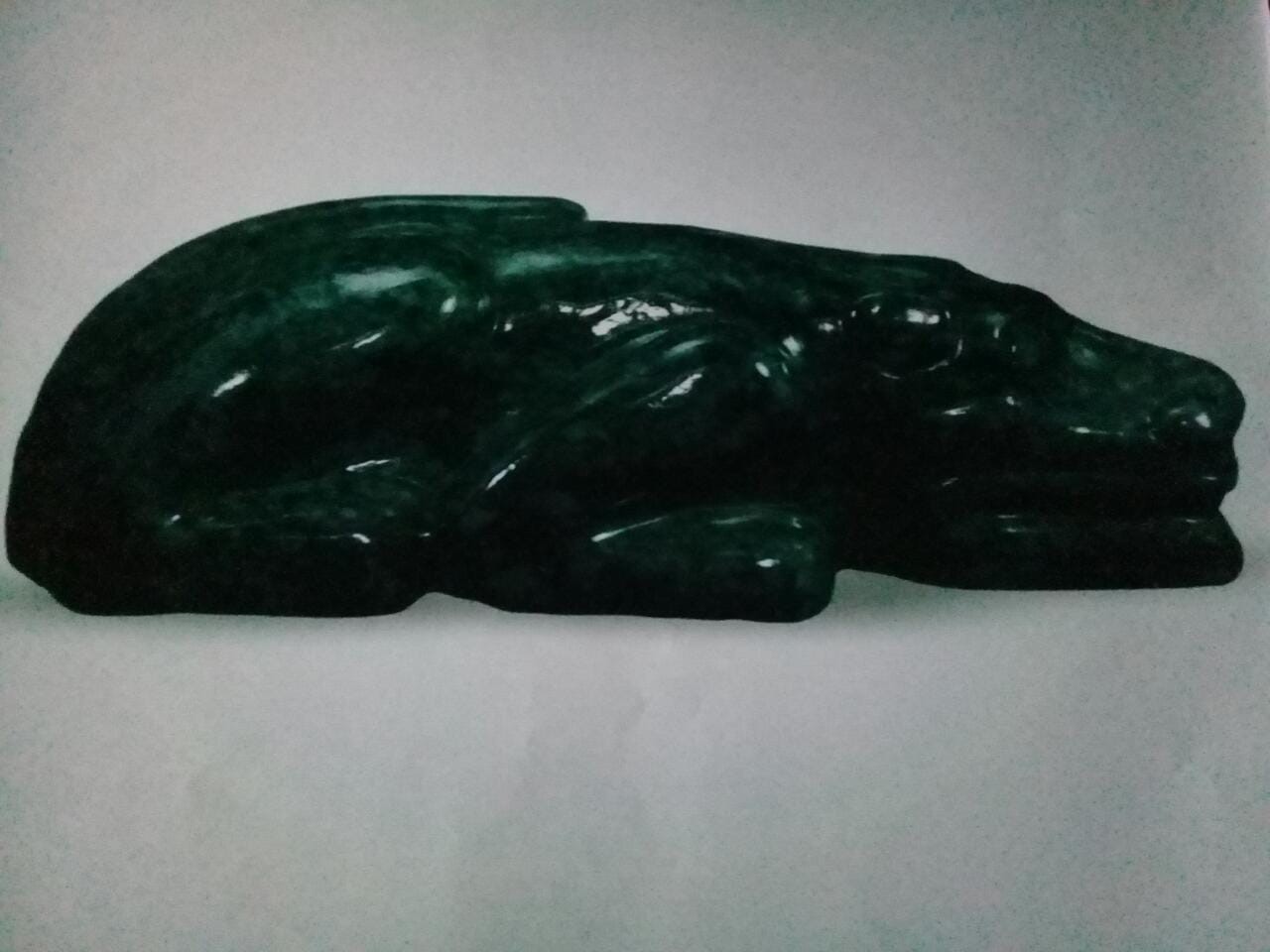
Modern Replica of the jade jaguar found in the Structure 5D-73 of Tikal:

Ancient jade jaguar of structure 5D-73 of Tikal as found "in situ" in 1965:
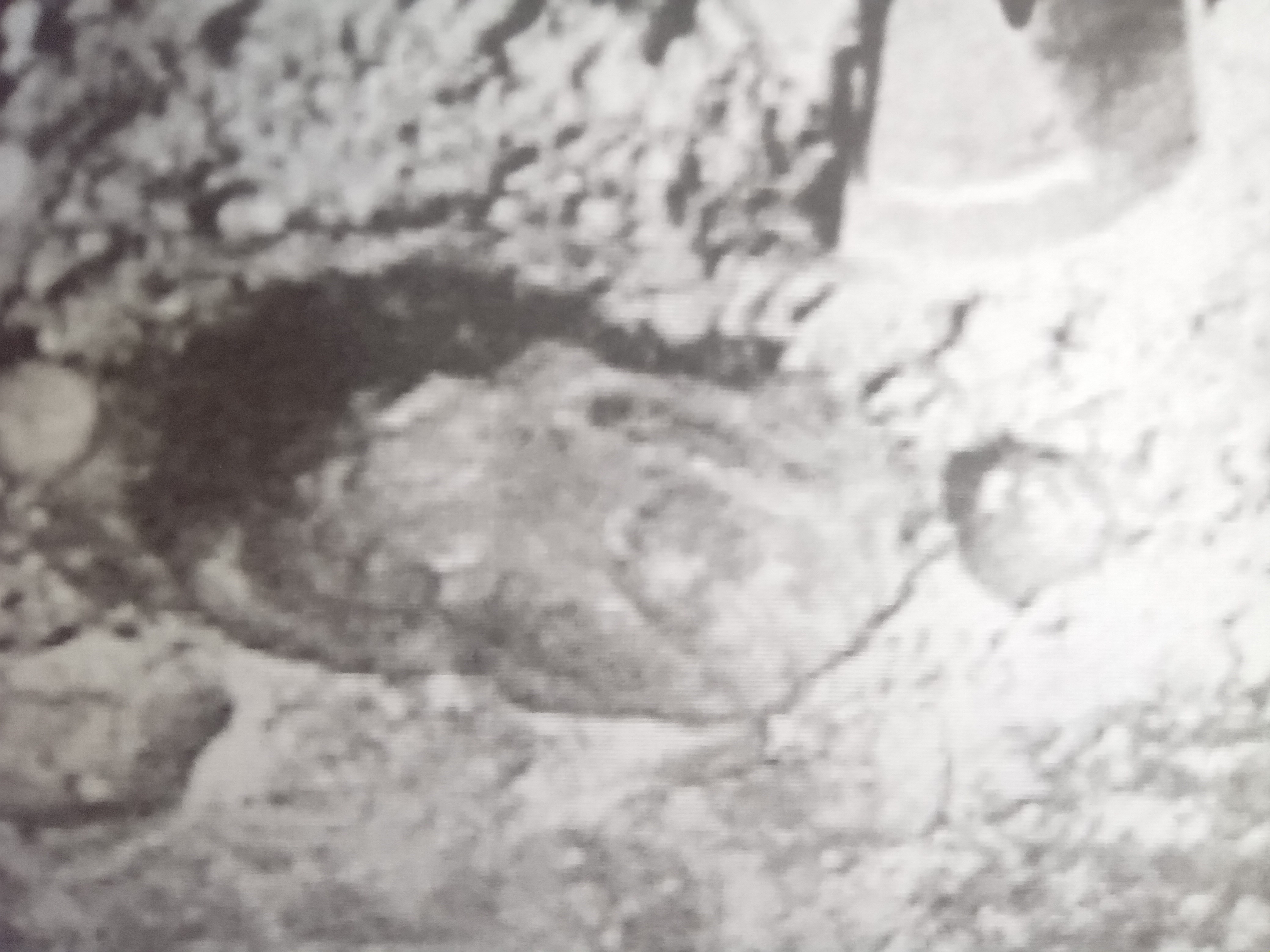
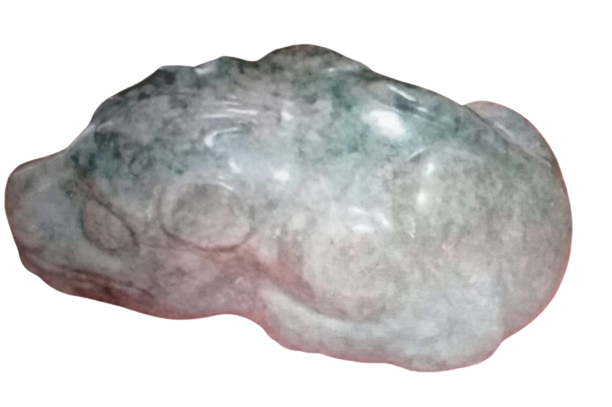
3.- The incredible resemblance of "The Great Jaguar of Tikal" to the drawings found on the wood lintels discovered in the main Temples of Tikal tell us clearly about its ancient origin:
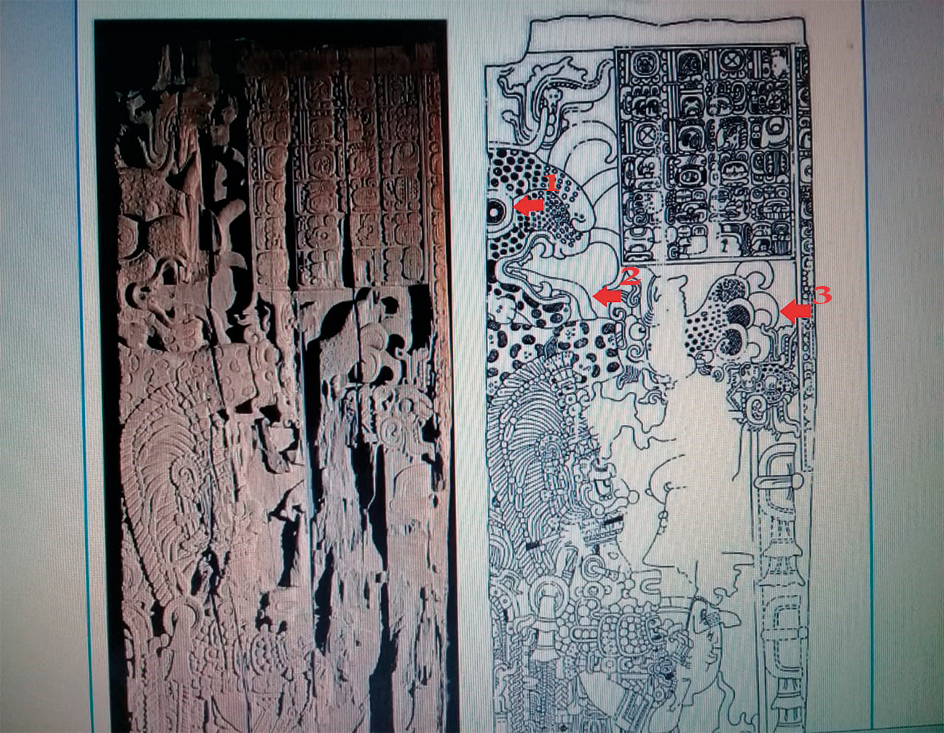
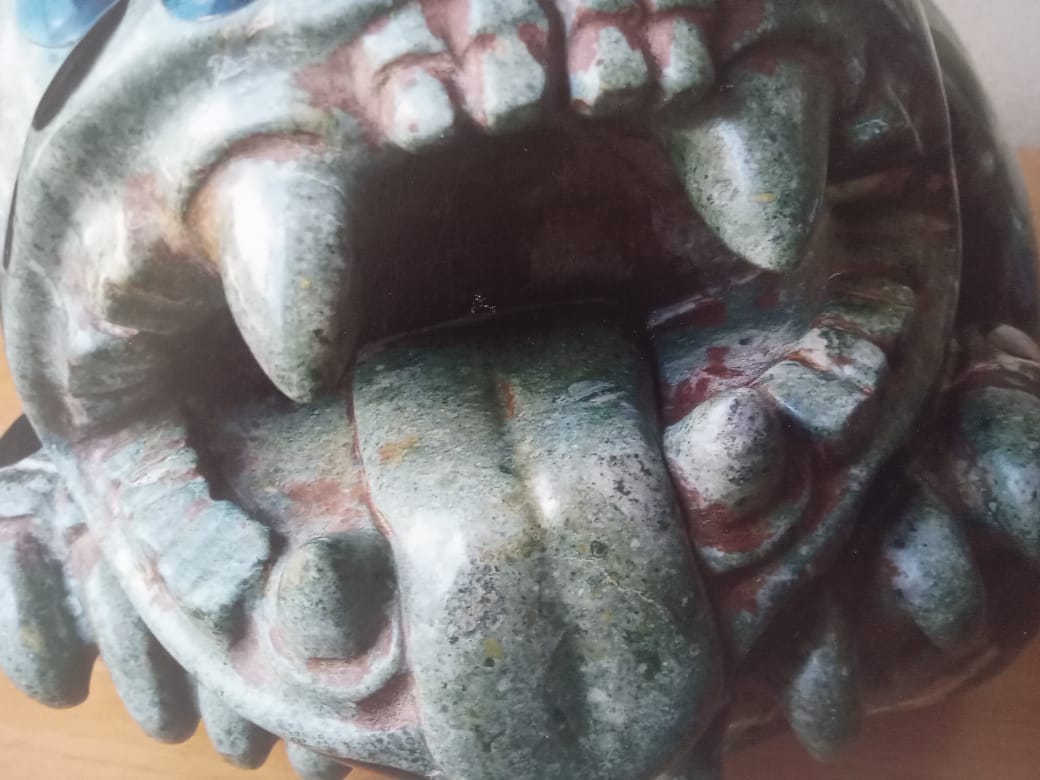
The graphic recreation of "Lintel 3" (image on the rigth below) copied from the original wood of sapodilla from pyramid I of The Great Jaguar of Tikal that shows a great rampant jaguar symbol of the reigning dynasty, which was taken to Switzerland at the end of the 19th century, reproduces a jaguar with round eyes very similar to those of "The Great Jaguar of Tikal"(image 1).
Likewise, the threatening tongue out of the jaws (image 2), the shape of its claws (image 3) and the countless spots, show great affinity with those from our sculpture: "The Great Jaguar of Tikal".
All of this evidence leads us to believe that the wooden lintels were carved inspired by the recently manufactured "The Great Jaguar of Tikal":

It is important to emphasize that the alloy of gold (84%), copper(12.5%) and silver (1.90) described in the chemical analysis of the golden eyes of "The Great Jaguar of Tikal" corresponds superbly to the ternaria composición Au-Ag-Cu of the so-called "tumbaga" that the Spanish identified in the gold objects of precolombine cultures. Goldsmithing was not unknown to the Mayan culture;as James A. Doyle says: "Between 750 and 1150 AD., gold-copper figures began to appear in the Mayan area..."
4.- The exceptional feature of the open jaws of "The Great Jaguar of Tikal" seems to be designed to house a human heart, which defines and determines its important ritual function.

In the Maya imaginary it was perfectly well known that the jaguar-god devoured human hearts, as we can see in the altar panel of the Eagles and Tigers of Chichen-Itzá, Yucatan:
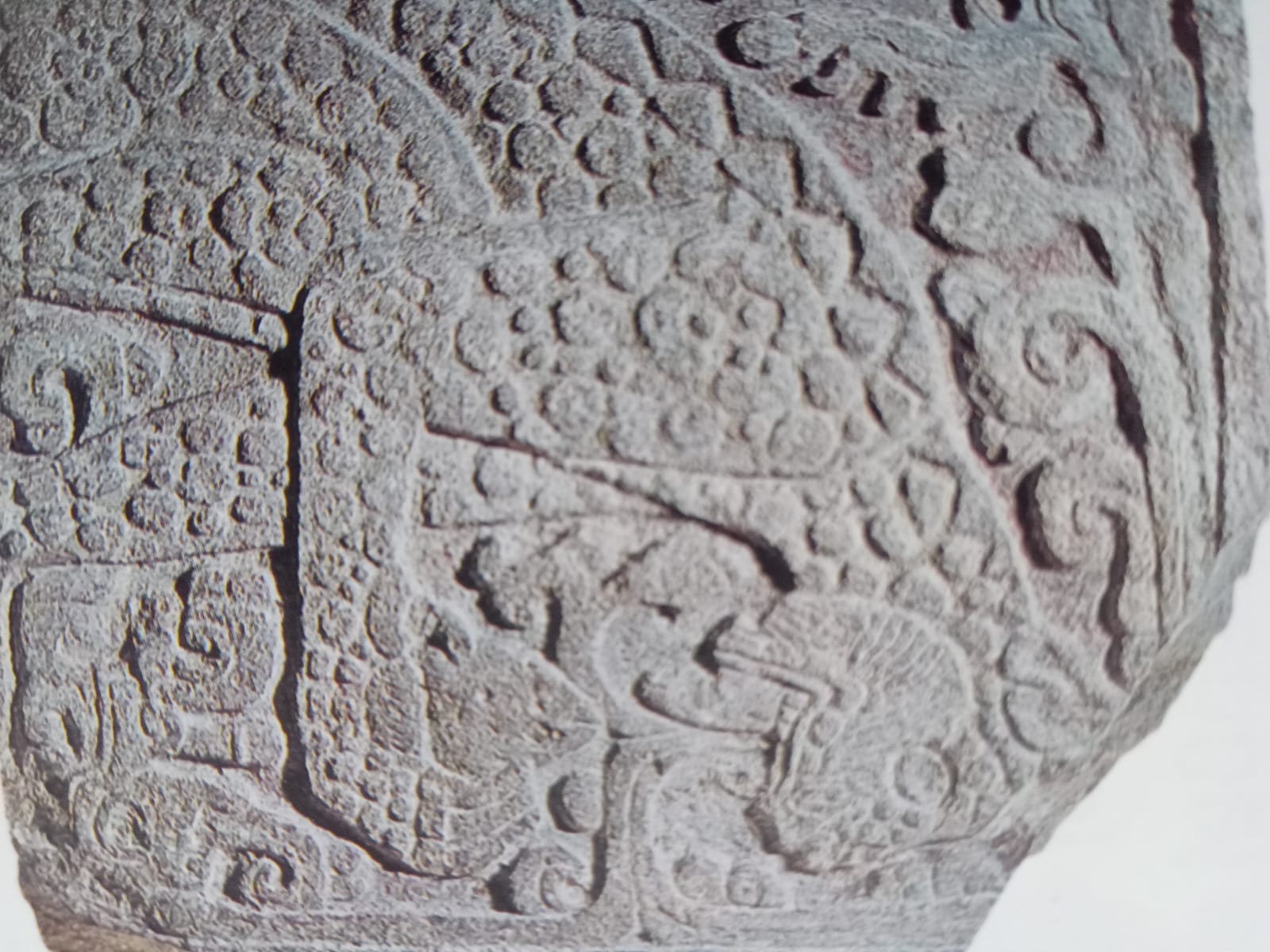
The cavity of the jaws of "The Great Jaguar of Tikal" can perfectly accommodate a human heart; a unique feature in messoamerican sculpture, especially in carved jade pieces;
which definitely we do not think could be a coincidence.

5.- Besides the very important analogy because of a really scarce material: the jade, a decisive clue is THE EXTRAORDINARY RESEMBLANCE OF "THE GREAT JAGUAR OF TIKAL" WITH THE JADE JAGUAR OF STRUCTURE 5D-73 BURIAL 196 OF TIKAL found in 1964:
The shape of the tail of "The Great Jaguar of Tikal" and the one of the ancient jade jaguar is exactly the same (1*), as we can see in next images.
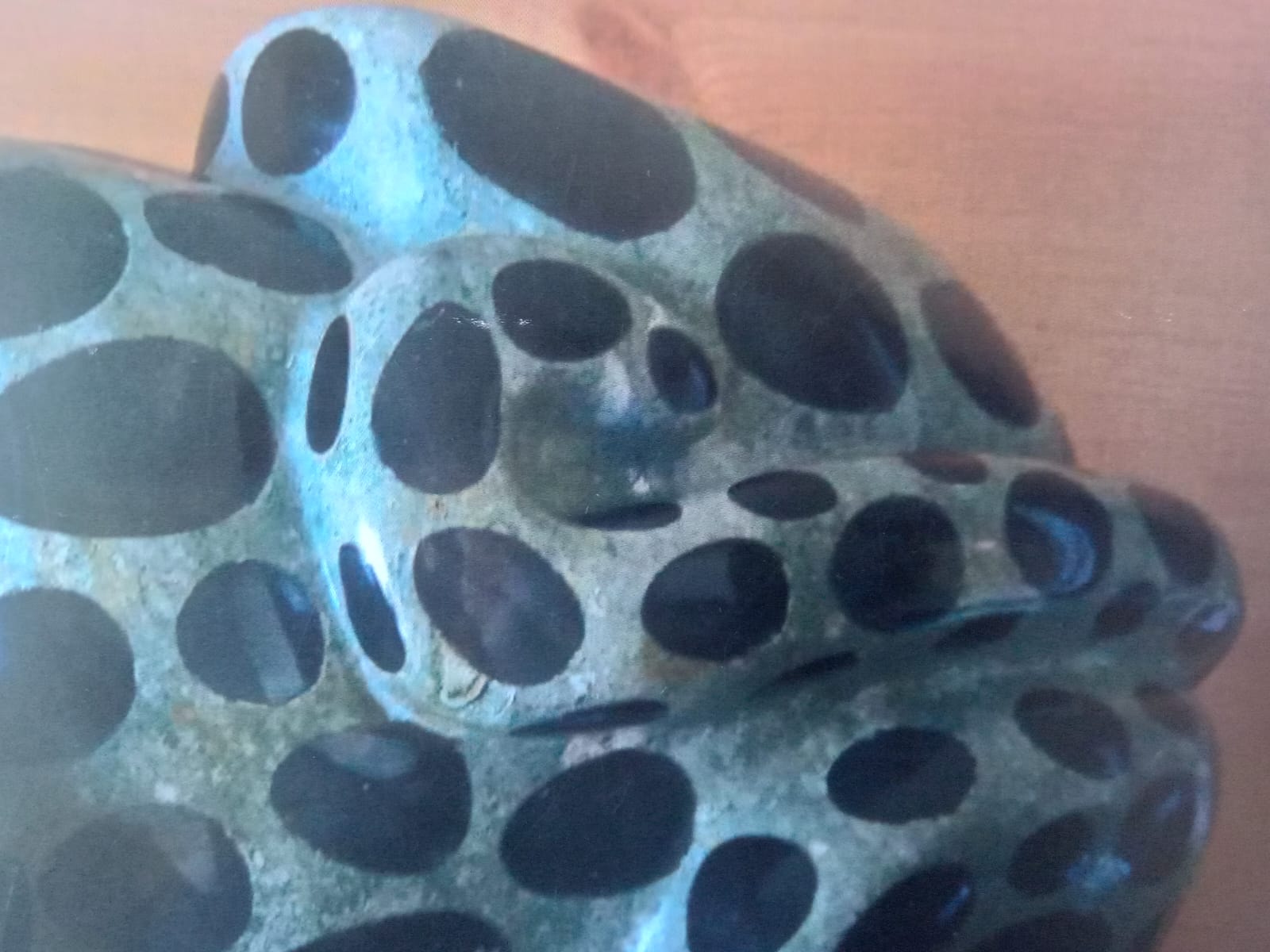
Mark indicating the shape of the tail
of the ancient Jade jaguar found in structure 5D-73, Tomb 196:
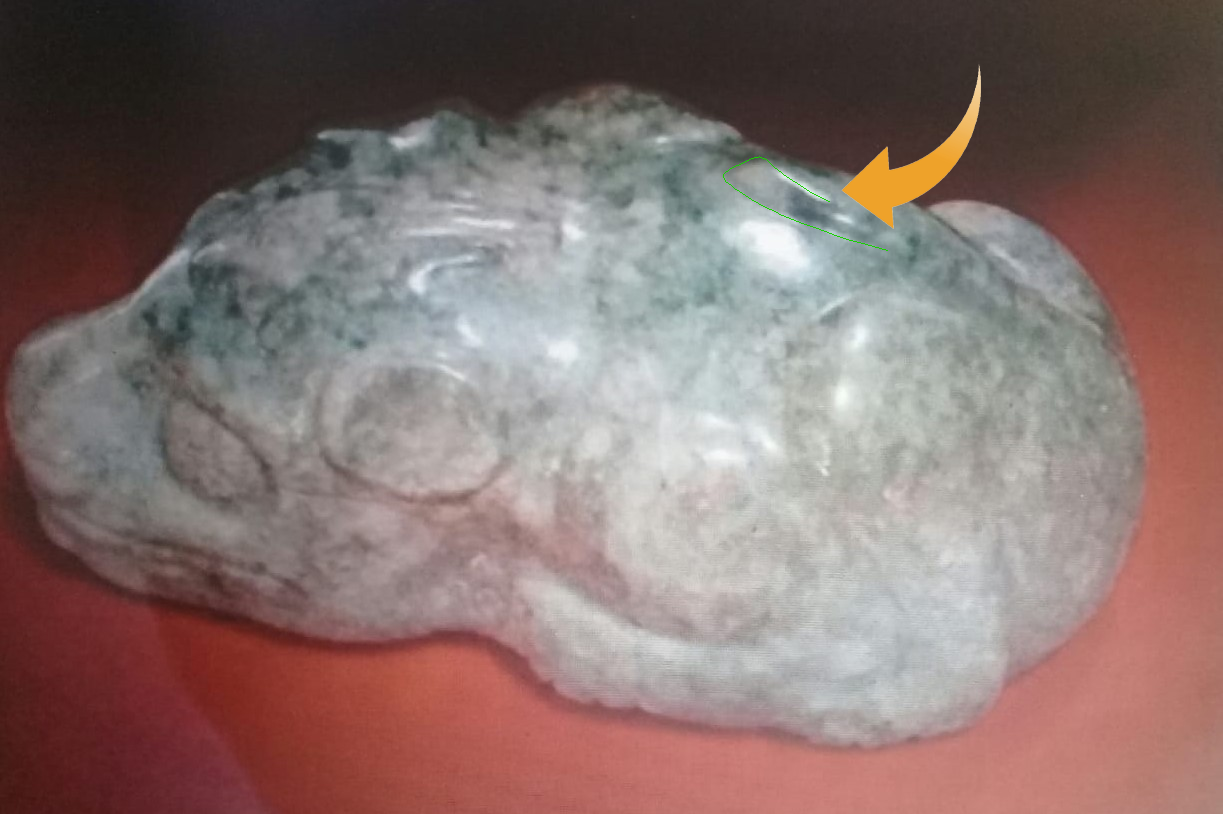
Surprisingly, we can also find the same design of the tail in one of the most important stelas of Tikal; the Stela 9, wich commemorate the end of katun 2 on May 15, 475:
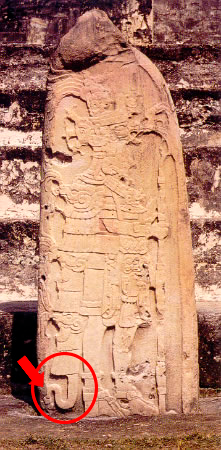
As we can see, that very special design of the Jaguar´s tails is the same that we see in the lower part of Stela 9 of Tikal in wich we can observe to K'an Chitam (son of Sihyaj Chan Kʼawiil II and Lady Ahiin), ruler of Tikal, wearing a jaguar custom.
K'an Chitam took the throne on 8 August 458 and reigned until 486 AD (28 years). The rich costume of the feline shows a jaguar tail with which he boasts his dynastic lineage. At the same time he represents the God jaguar of the Underworld: K'anhk' Chuwaj: the owner of the lake of the Sun God; the divine lord of Tikal.
We must observe that the end of the tails is not a tip but rather a straight line that "cuts" the tail, as we can see in next images; this is a unique feature in Mesoamerican jaguar sculptures.
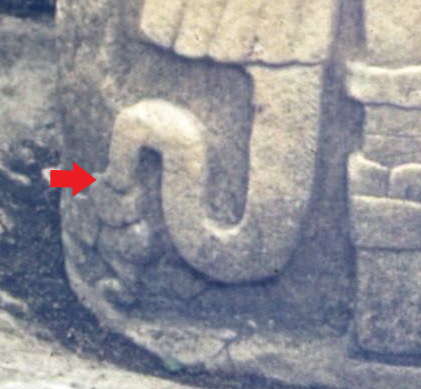
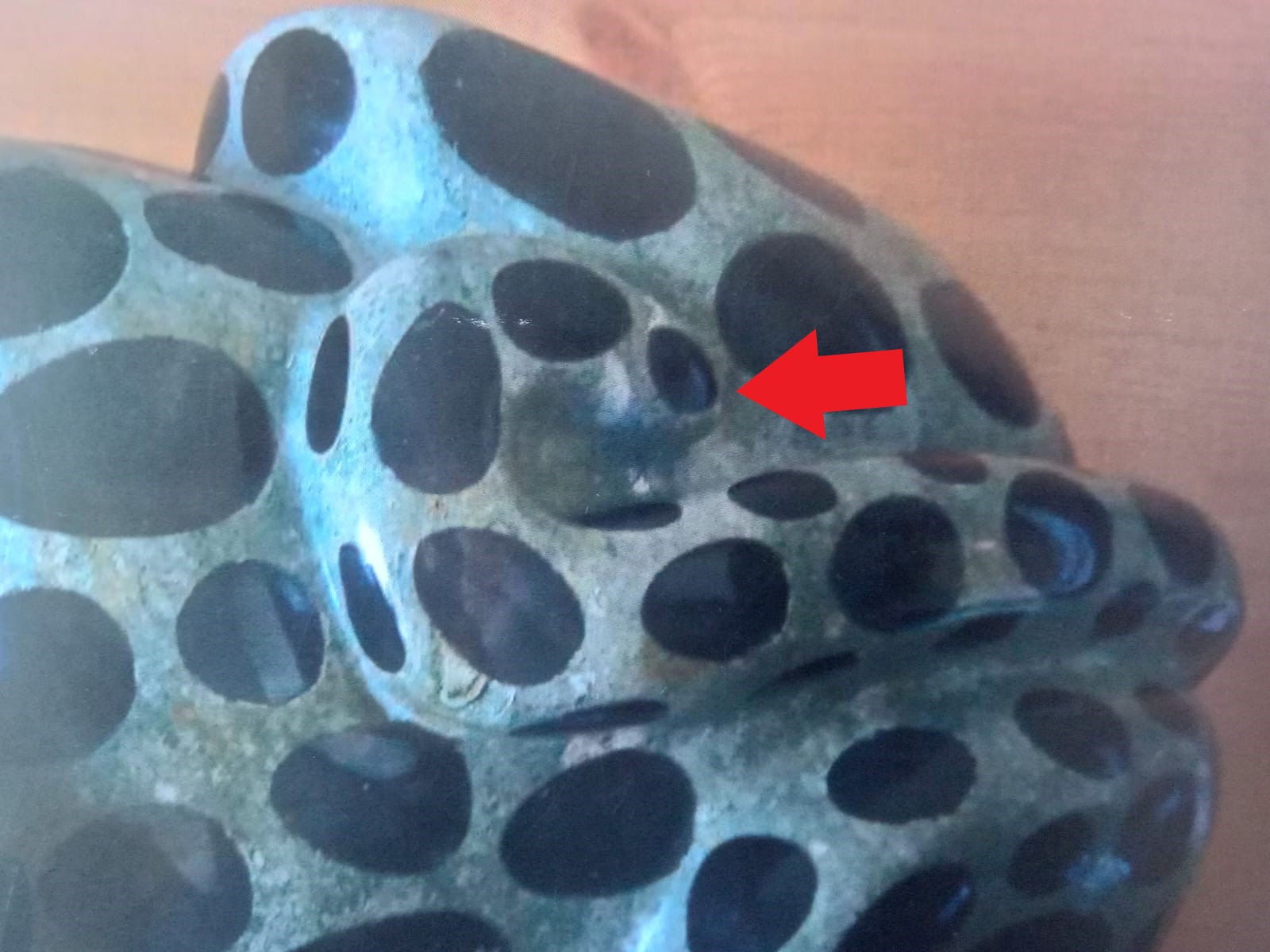
It is important to comment about the tail design, that the specific place were it starts to "grow up", and the way it climbs on the jaguar's loin
is practically the same for both jaguars; for the one of Structure 5D-73 Burial 196, and "the Great Jaguar of Tikal", as we can see in next images:
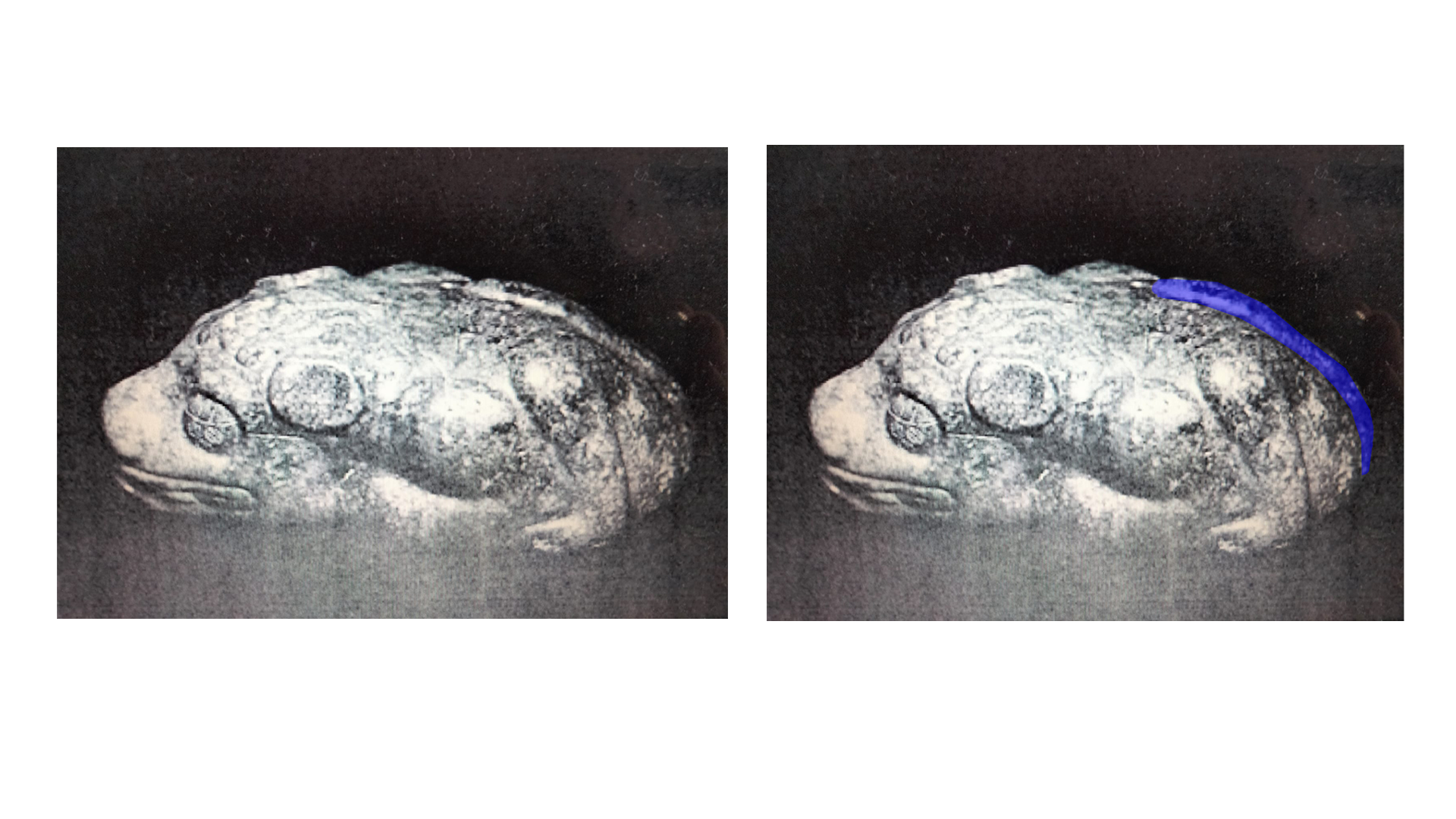
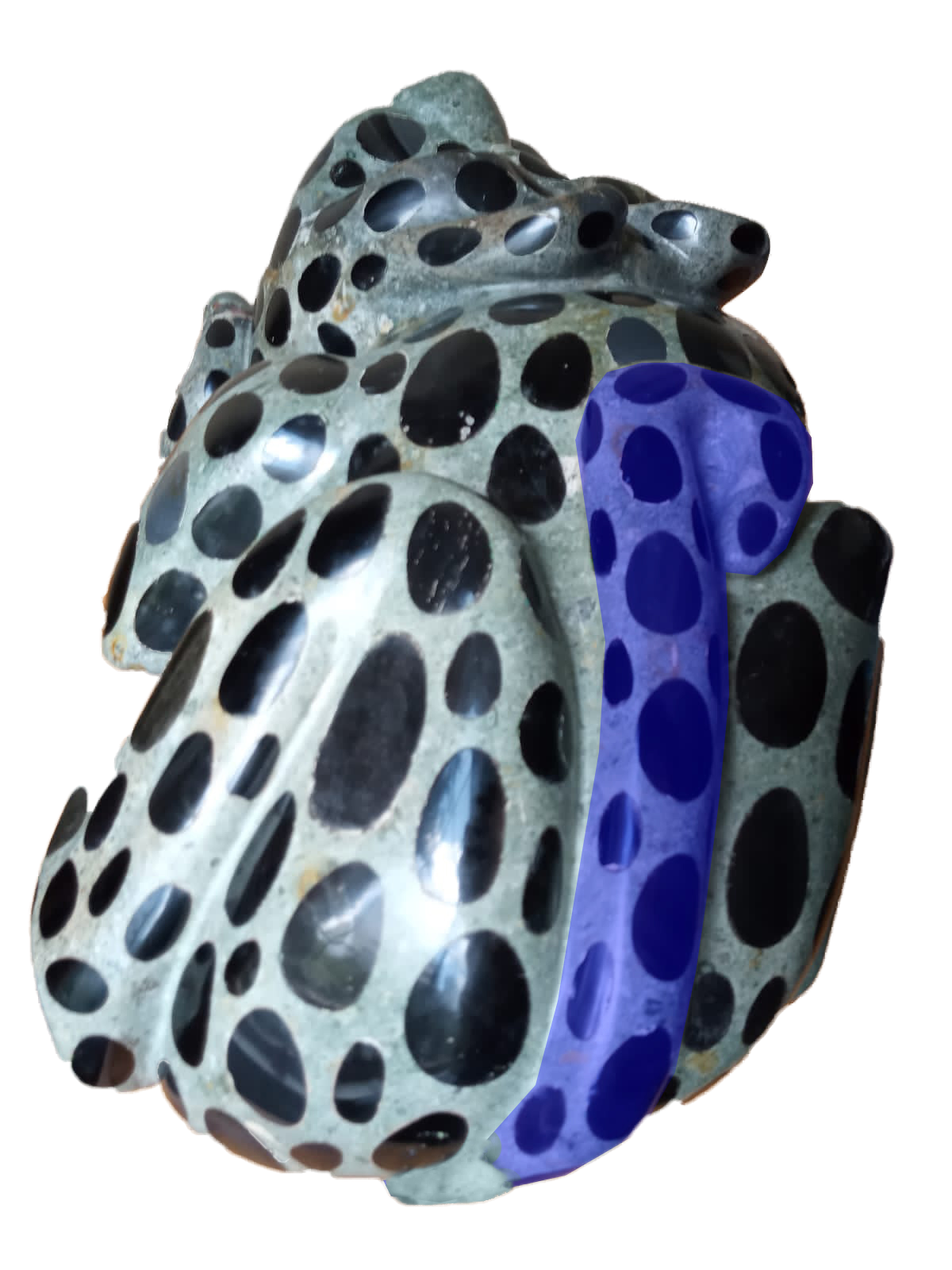
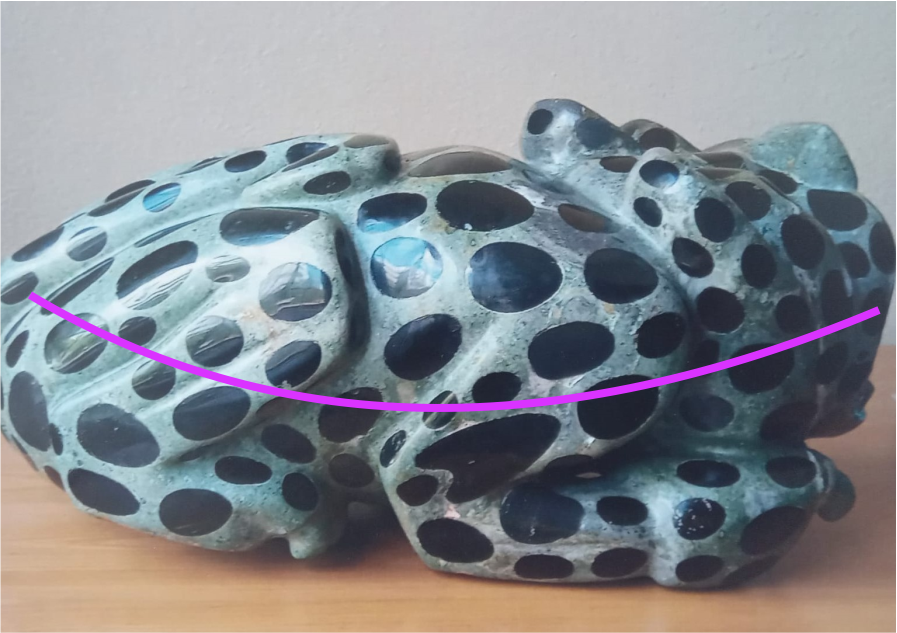
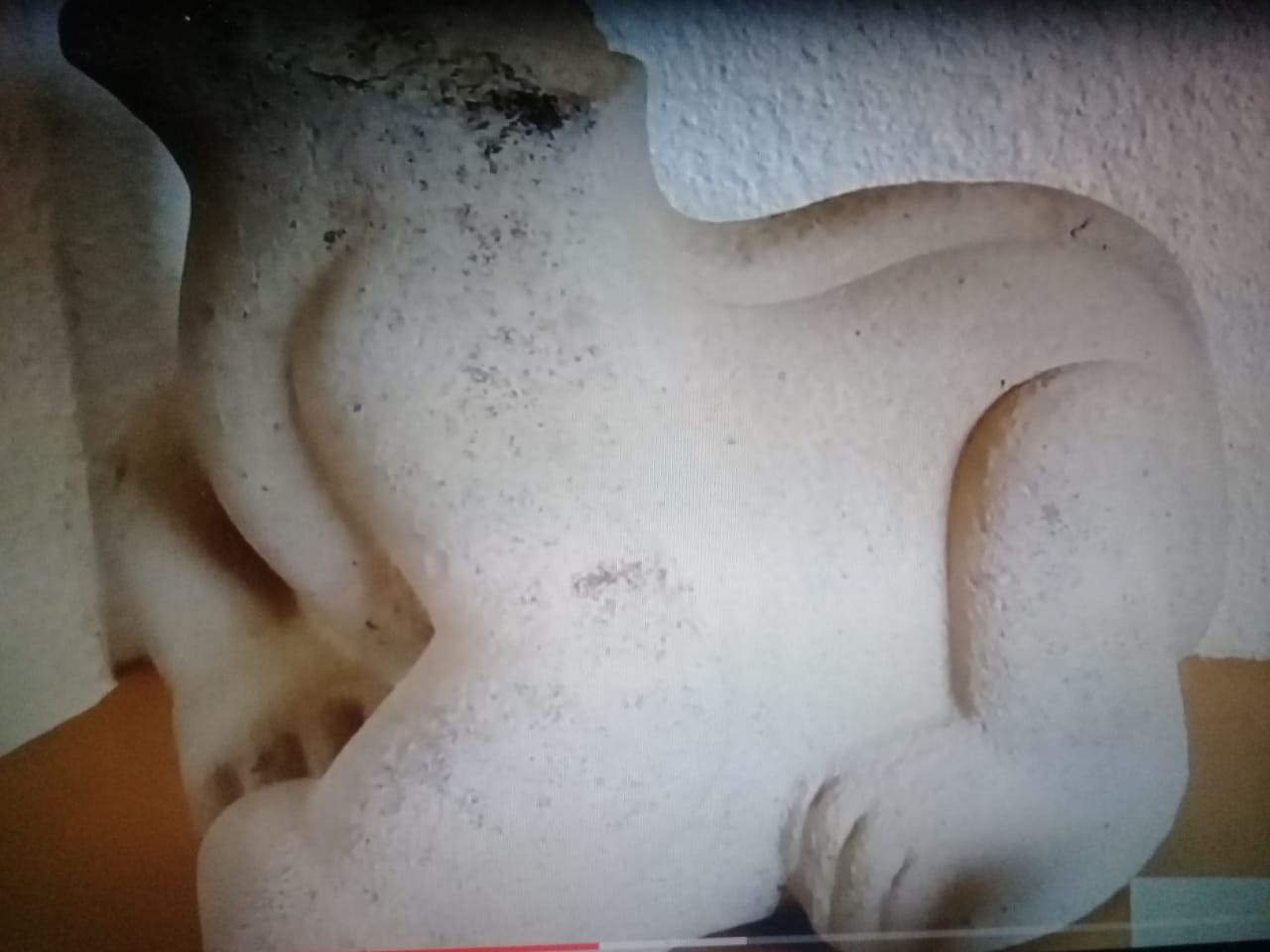
6.- The particular design of these jaguars with certain inclination towards the right hand side and some curvature towards the left no other prehispanic jaguar has (2*); the size of the jaguars (3*) is another distinctive element that definitely associate "The Great Jaguar of Tikal" to the ancient jade jaguar of Structure 5D-73, Burial 196:
The sculpture "asymmetrically and unbalanced and looking just as much like a frog as a jaguar" as defined by Dr. Nicholas Hellmuth in his Harvard Thesis, measures an astonishing 16 inches long and 10 inches wide, exactly the same as "The Great Jaguar of Tikal" click to see Dr. Hellmuth doctoral Harvard thesis p. 175 and up.. As we said, that similarity results in a curvature towards their left hand side extremely difficult to reproduce:
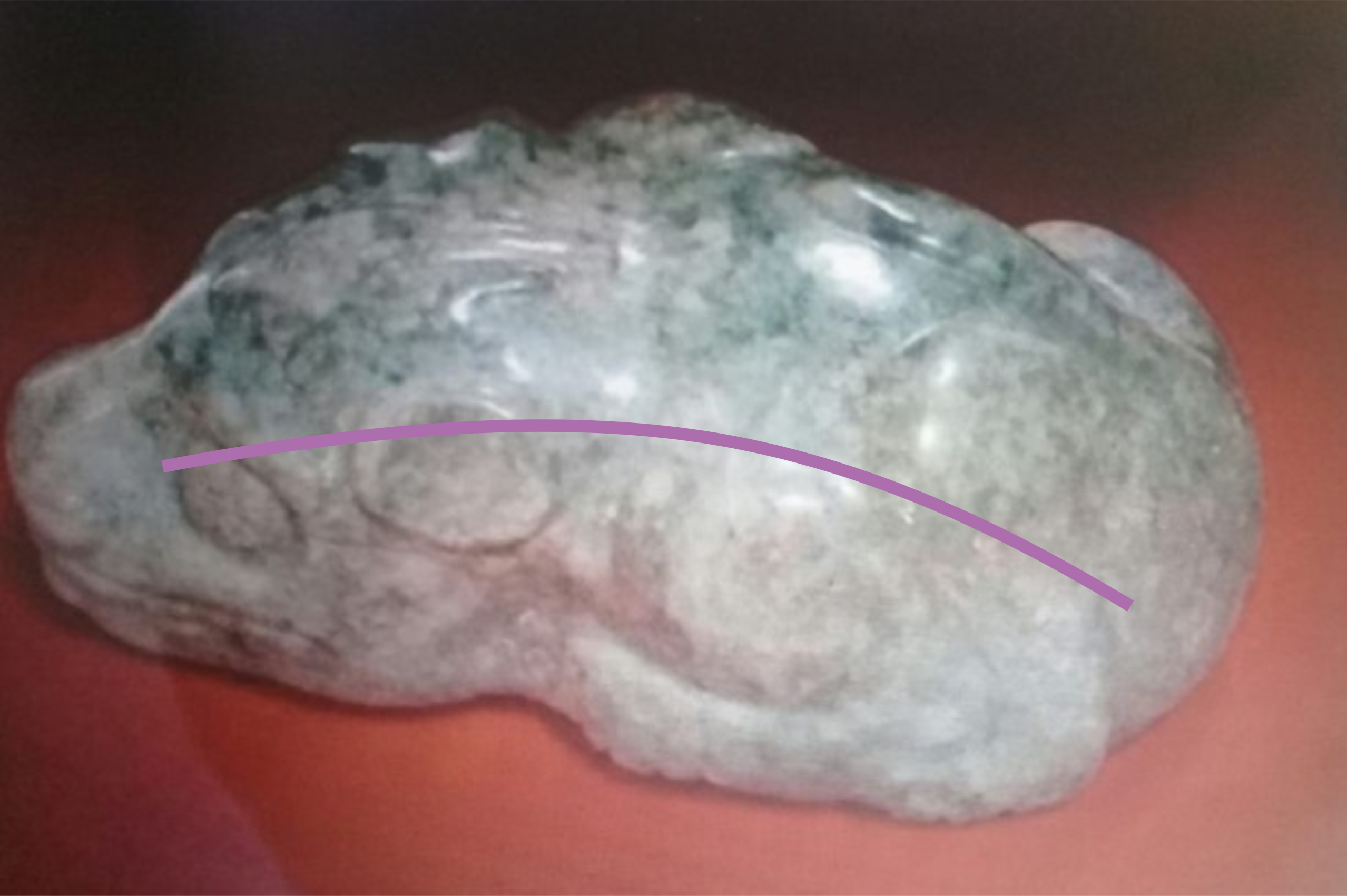
We can find others important similarities on the right side of both jaguars: A.- the rounded back (4*) , B.- a very similar curvature of the right shoulder blade (5*) , C.- a sharp front claw (6*) , and D.- an incipient claw on the rear leg (7*) as we can see in the following images:
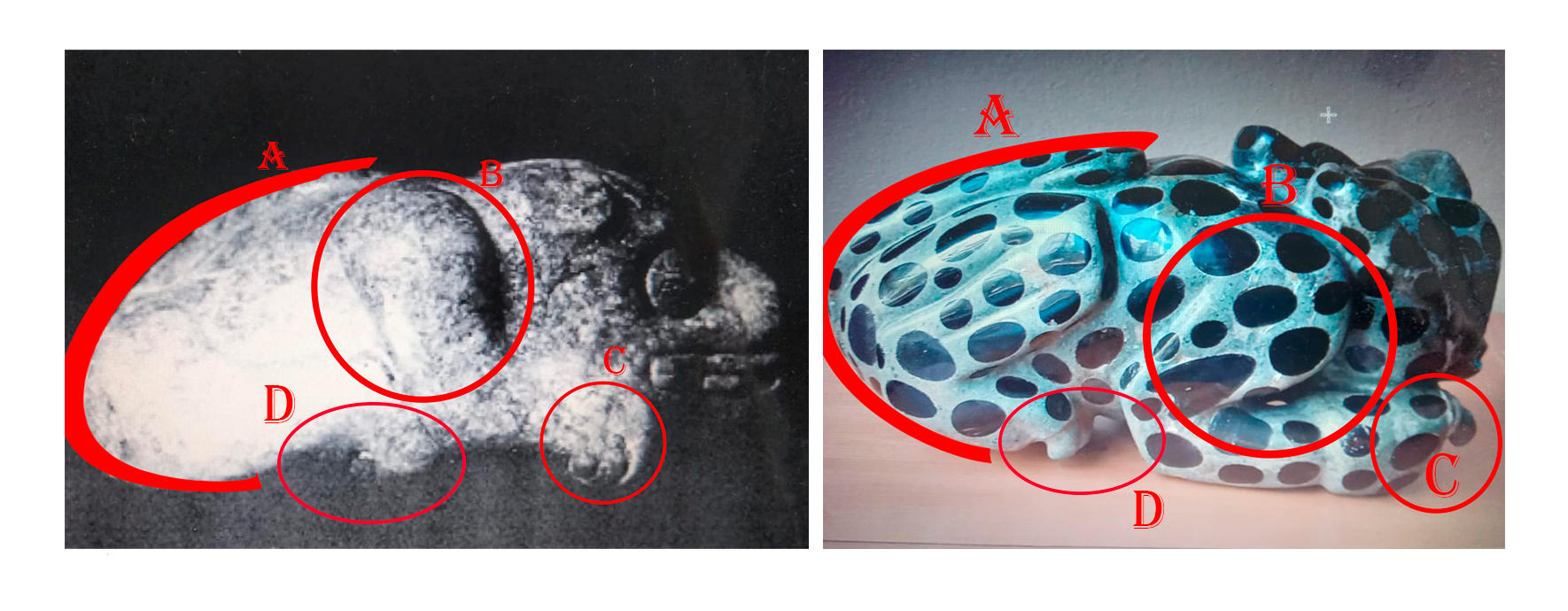
Evidently this comparison is not about the same jaguar, but what we can deduce is that the second one was made using the first one as a model; consequently the result was to have a more elaborated and much more functional jade jaguar according to the ritual needs and the development of new jade carving techniques.
We can also observe a surprising analogy in the curvature from the left side view of each jaguar's loin (8*), as we can see in the following images:

There is another incredible coincidence in the design of the hip and left hind leg (9*), without failing to mention the cleft that can be seen in the lower part of the head of both jaguars (10*), as shown in next images:

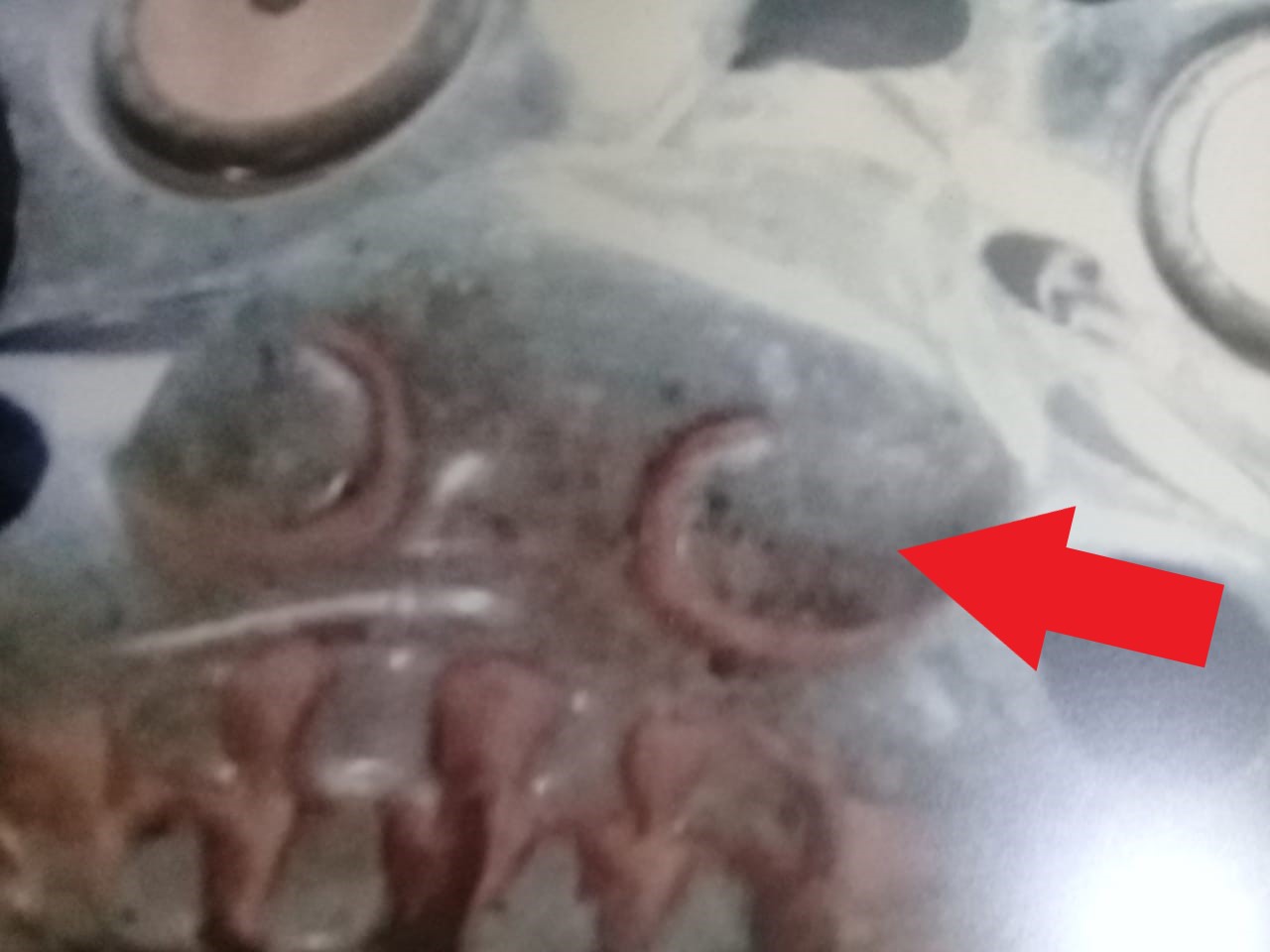
One more important coincidence between "The Great Jaguar of Tikal" and the ancient jade jaguar of Structure 5D-73, is that we can see, although faintly, on this last one the same glyph that emulates the nostrils (11*), besides the similar size and conical shape of the nose (12*).


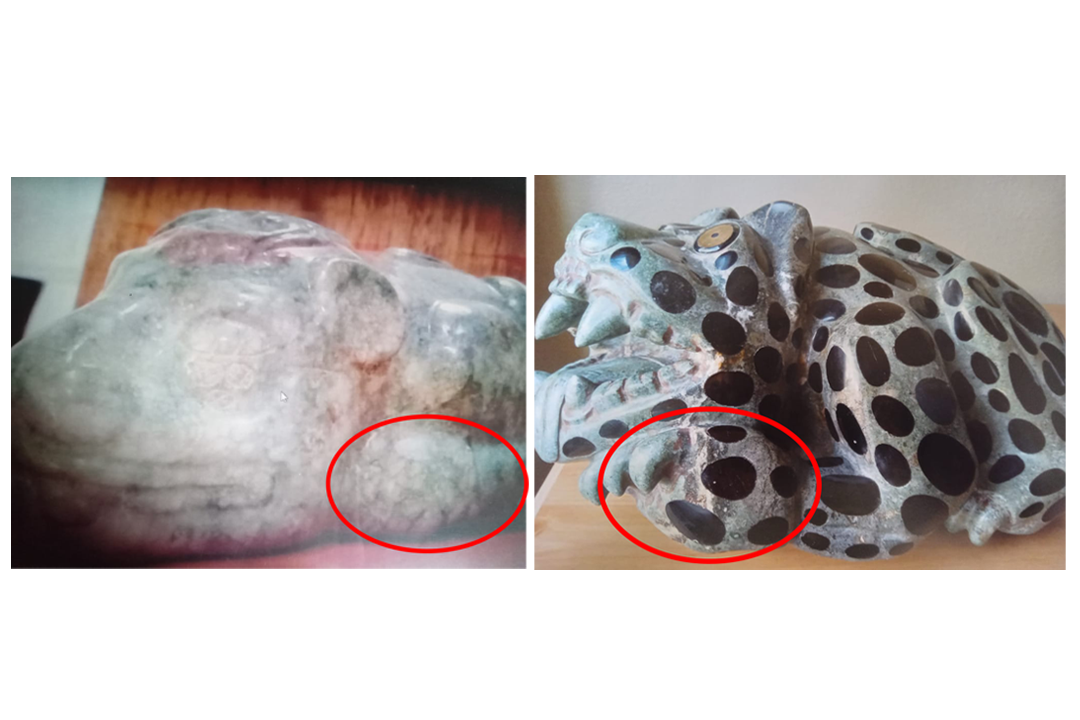
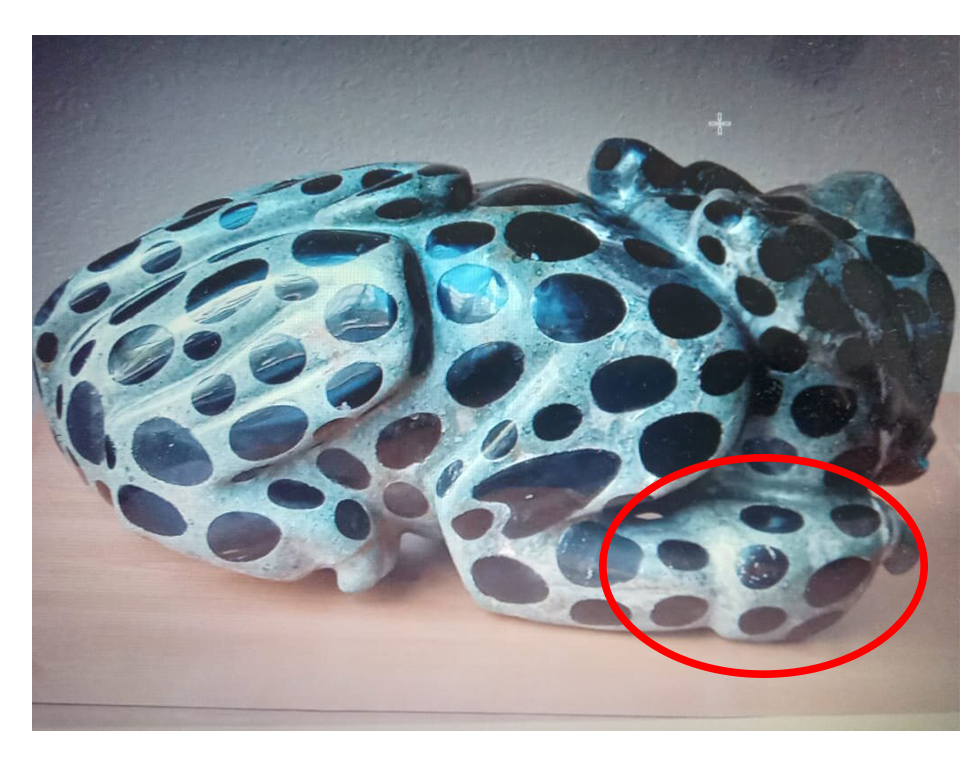
An additional and very important coincidence between both jaguars is the similarity of the shape of the claws that results in a stump form (13*), as we can see in next images:
AND THE LAST AND MOST INCREDIBLE FINDING:
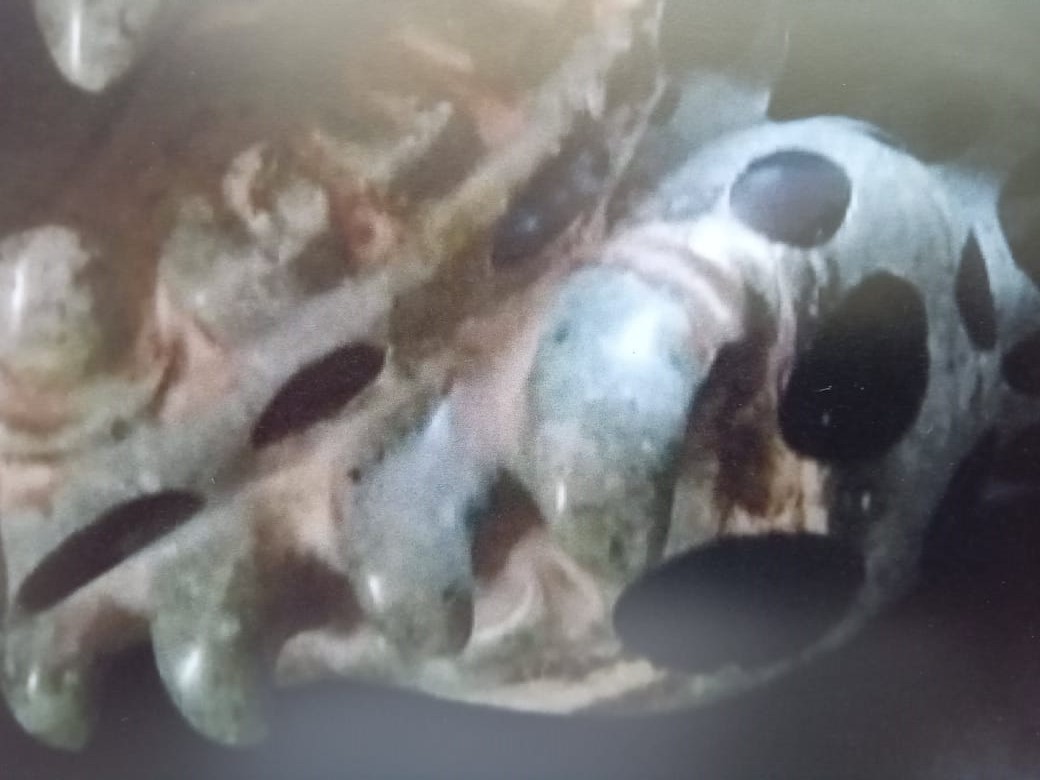
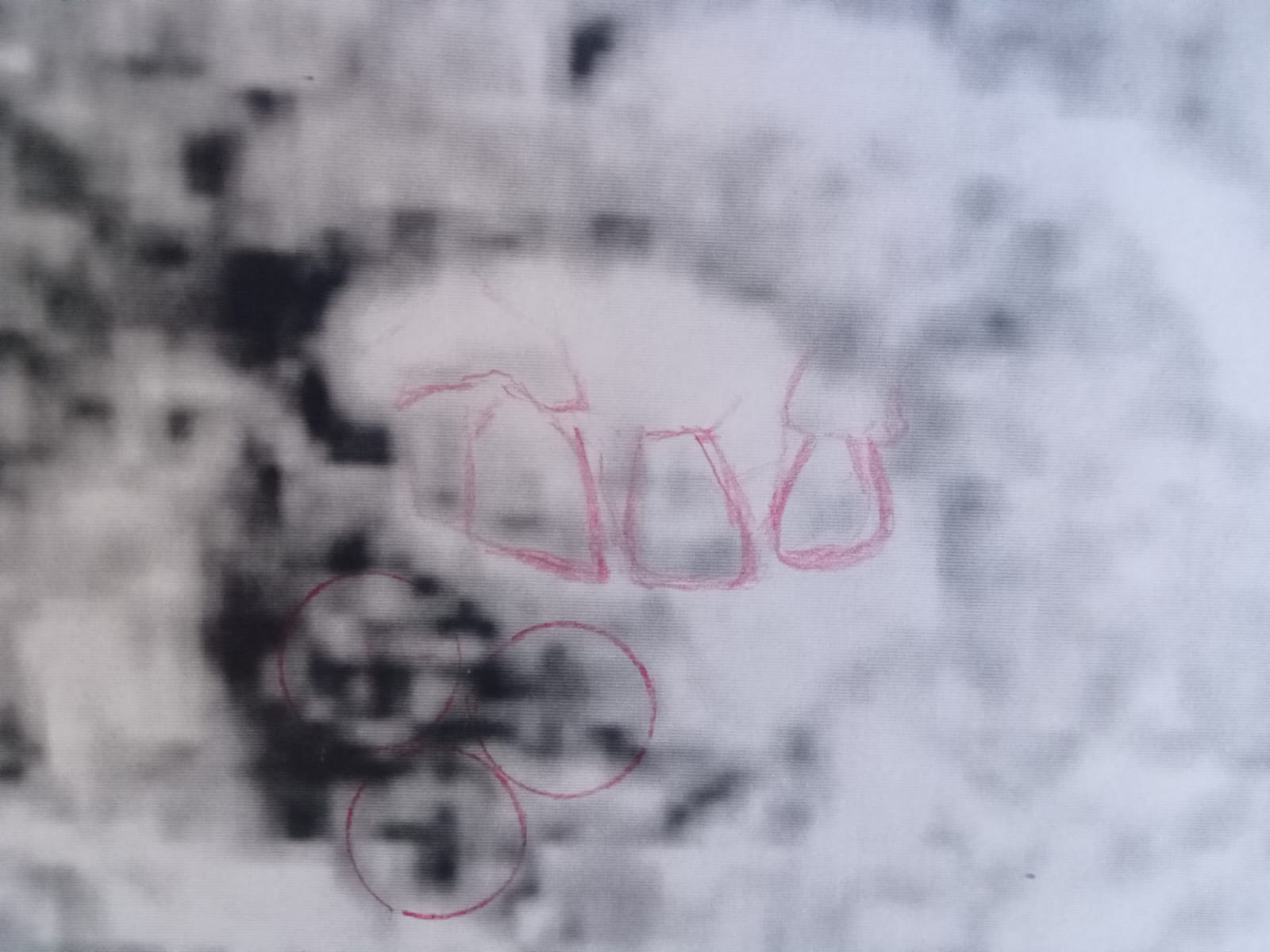
If we look closely to the eye of the ancient jade jaguar (first image below), SURPRISINGLY in the upper part of the eye, we can distinguish some figures that look very similar to teeth. We can also observe at the bottom of the eye several X glyphs, each surrounded by circles (second image below):
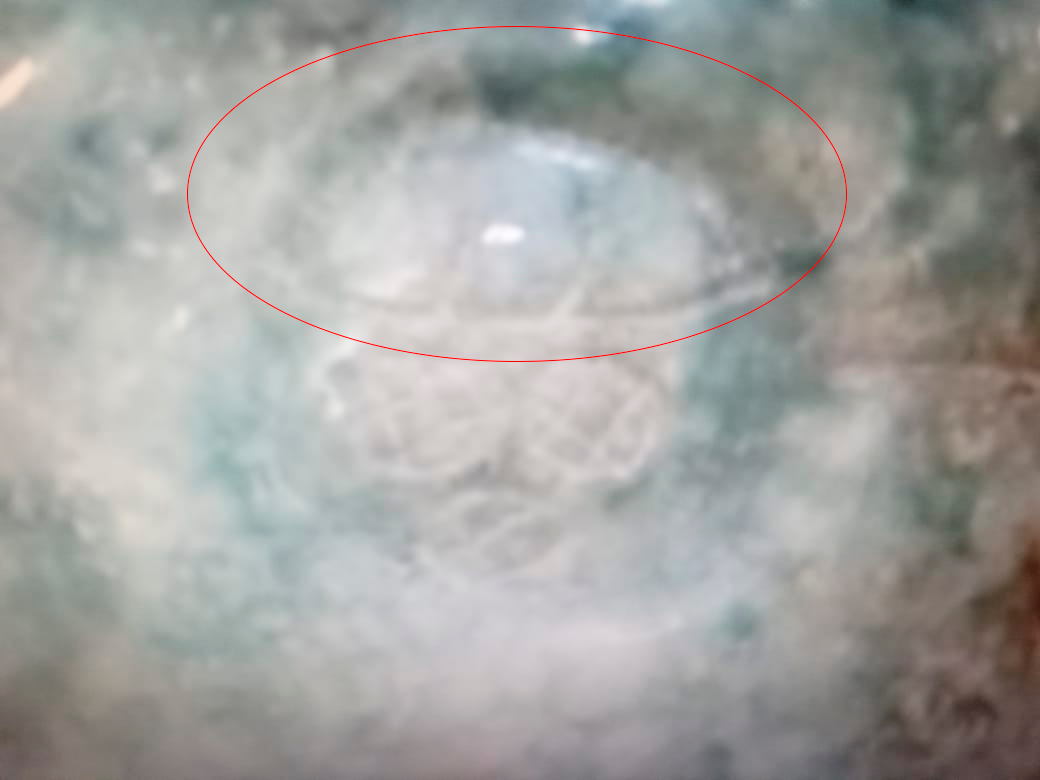
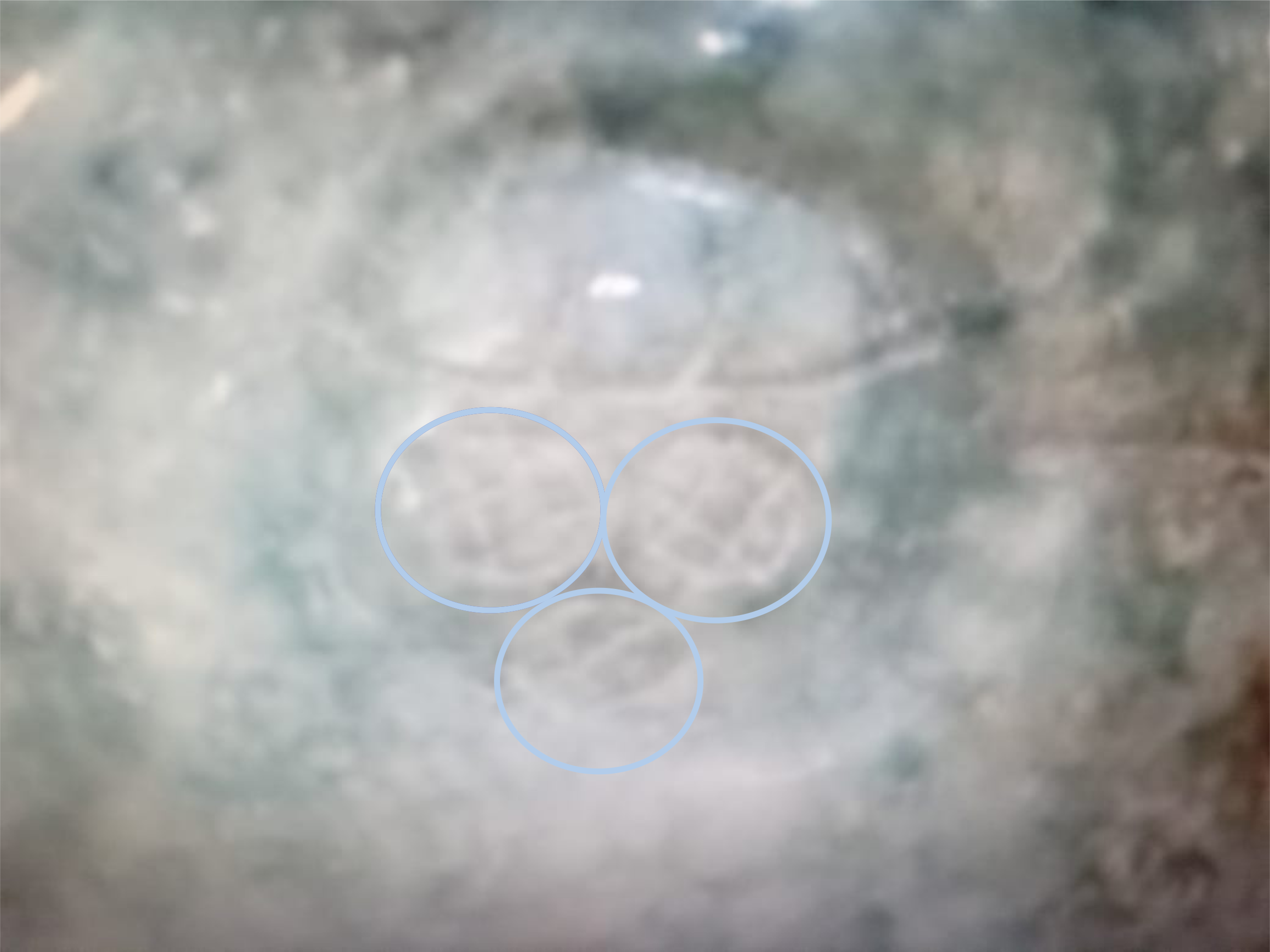
For Nicholas Hellmuth, one of the discoverers of the preclassical jaguar, the Ix glyphs located at the bottom of the eye mean "jaguar"; "That glyph is related to one of the Mayan days that has the jaguar as its patron" (N. Hellmuth Thesis p. 176), however he ignored the marks that appear on the top of the eye.
The interesting thing is that the three figures tooth-shaped that appear in the left eye of the ancient jade jaguar correspond perfectly to the first three incisors teeth located on its left side of "The Great Jaguar of Tikal"(14*), as we can see in next images:
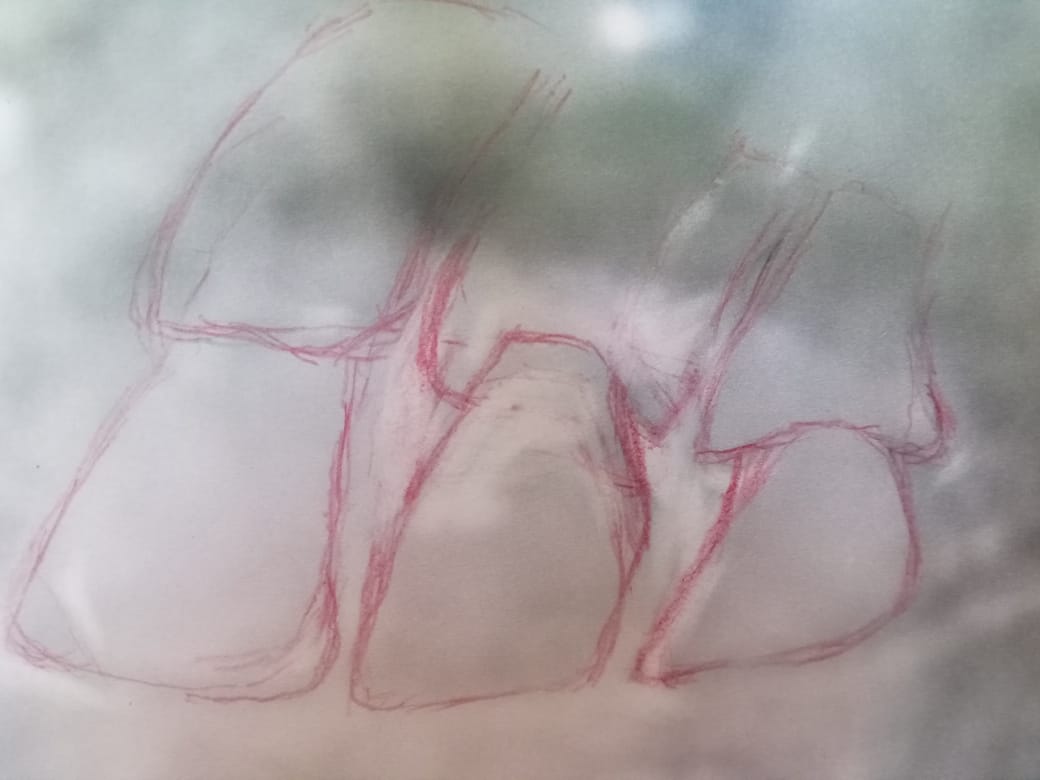
Would be this mark a manufacture seal, or a secret sketch for a next work of art? Or even more likely:
Would it be the signature seal at the completion of "The Great Jaguar of Tikal"?
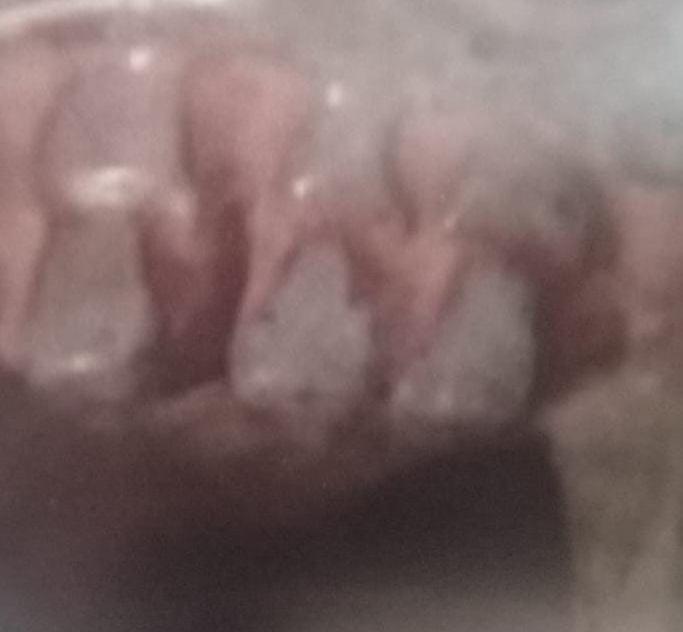
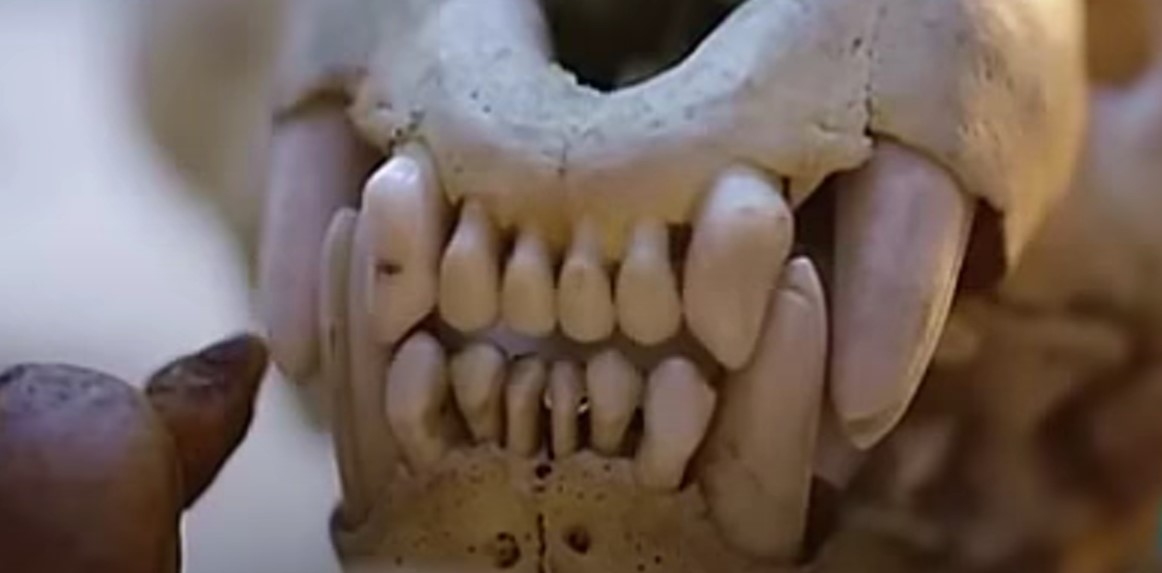
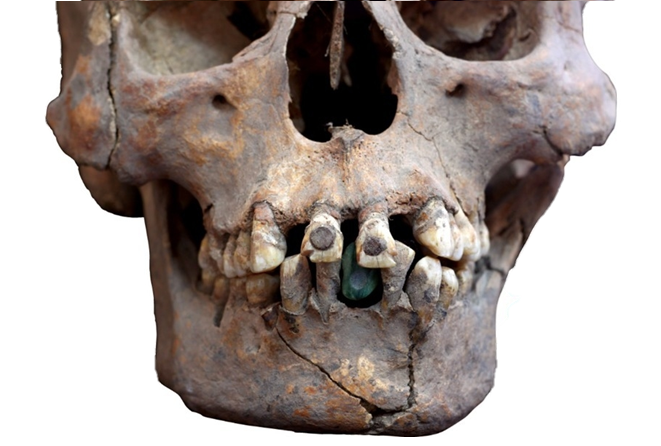
At first sight, we should deduce that three circles with supposed jaguar glyphs and three teeth figures, correspond to three jaguar teeth, however a more careful observation reveals that those teeth are not exactly from a jaguar.
After observing real jaguar incisors (image 1) and an image of ancient human maya teeth (image 2), we do not rule out that the author of the masterpiece had captured his own teeth as a signature upon completion of "The Great Jaguar of Tikal" (image 3). By the way, those teeth that have separate spaces seem to have been intentionally modified, which was a common practice distinctive of social status (Dr. J. Ramos 1964), just like the teeth of "the lady of the jade smile" found in Teotihuacan and documented by Jorge N. Archer-Velasco and Veronica Ortega Cabrera shown on image 4 :

It would not be the first time that great artists devised unique forms of symbol representation.
Curiously, there is one Mayan glyph "ch'ahom", documented by Harri Kettunen and
Christophe Helmke, that present a very similar draw to what we see in the lower part of the left eye of the ancient jaguar that means "male", in spanish "varón":


Which suggests that those teeth are actually male human teeth.
Exactly the same circumstance can be observed in the right eye of the ancient jade jaguar of Structure 5D-73 (15*):

Let us not forget that the greatest novelty of the brand new jaguar, "The Great Jaguar of Tikal", would be its open jaws, showing its sharp teeth, which in themselves constitute an extraordinary work of art and correspods perfectly to the renaissance of art and culture of Tikal after the defeat of Calakmul.
The fact of having a new jaguar capable, literally, of devouring hearts would inaugurate a transcendent event, after more than 600 years of using the ancient jaguar, that would mark a new era for Tikal, which definitely would be worthed to record.
This last coincidence would undoubtedly be the conclusive and defining proof of the intrinsic relationship between the ancient jade jaguar of Structure 5D-73 and “The Great Jaguar of Tikal”.
All this evidence, which adds up to 15 matches points, allows us to conjecture that both jaguars were made by the same school of artisans, perhaps belonging to the same family, surely native of Tikal, ; most likely "the Great Jaguar of Tikal" was made with the Preclassic jade jaguar physically present as a model even though there could be centuries of difference between the manufacture of the first one and the last one.
A Perfect Match:

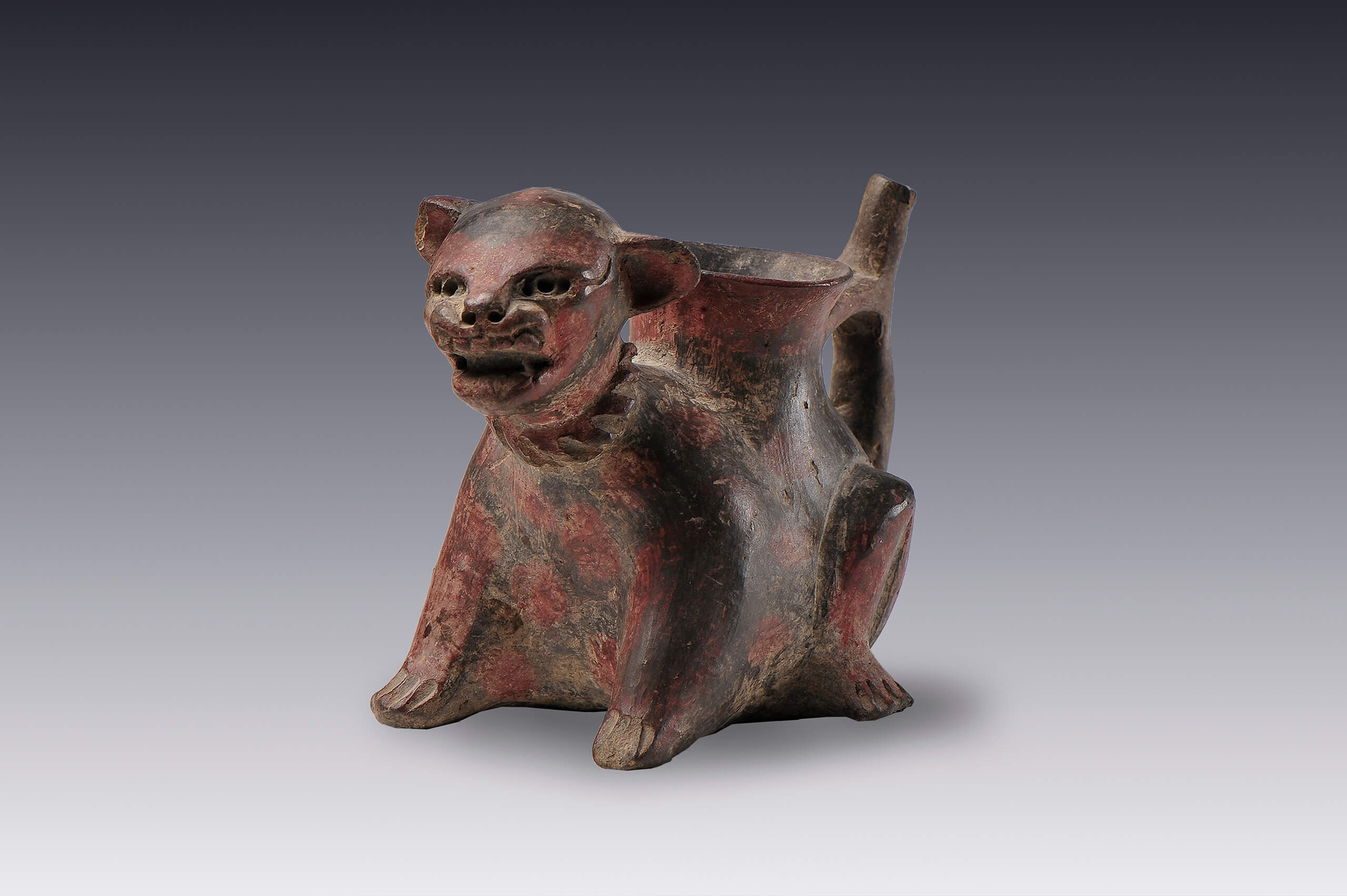
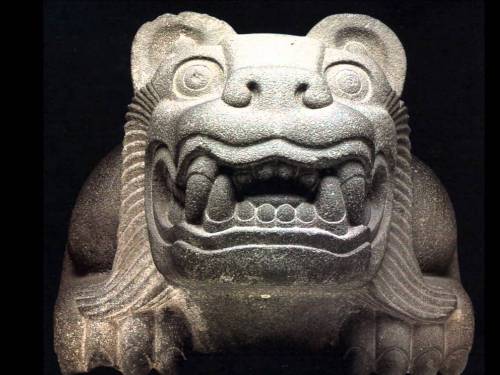
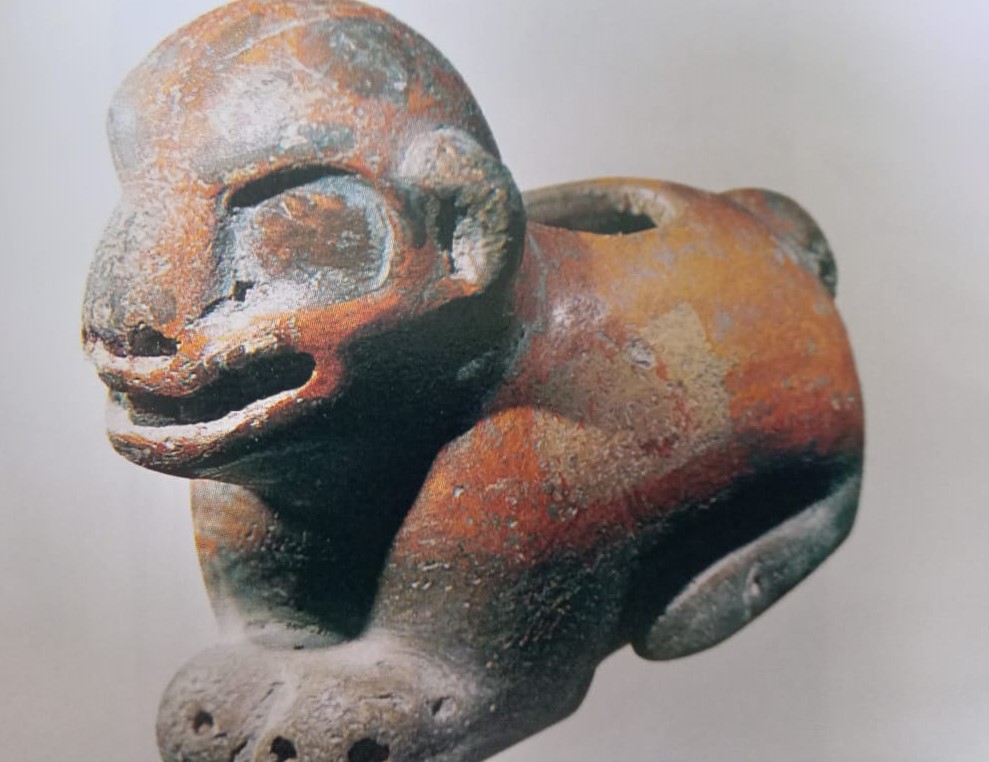
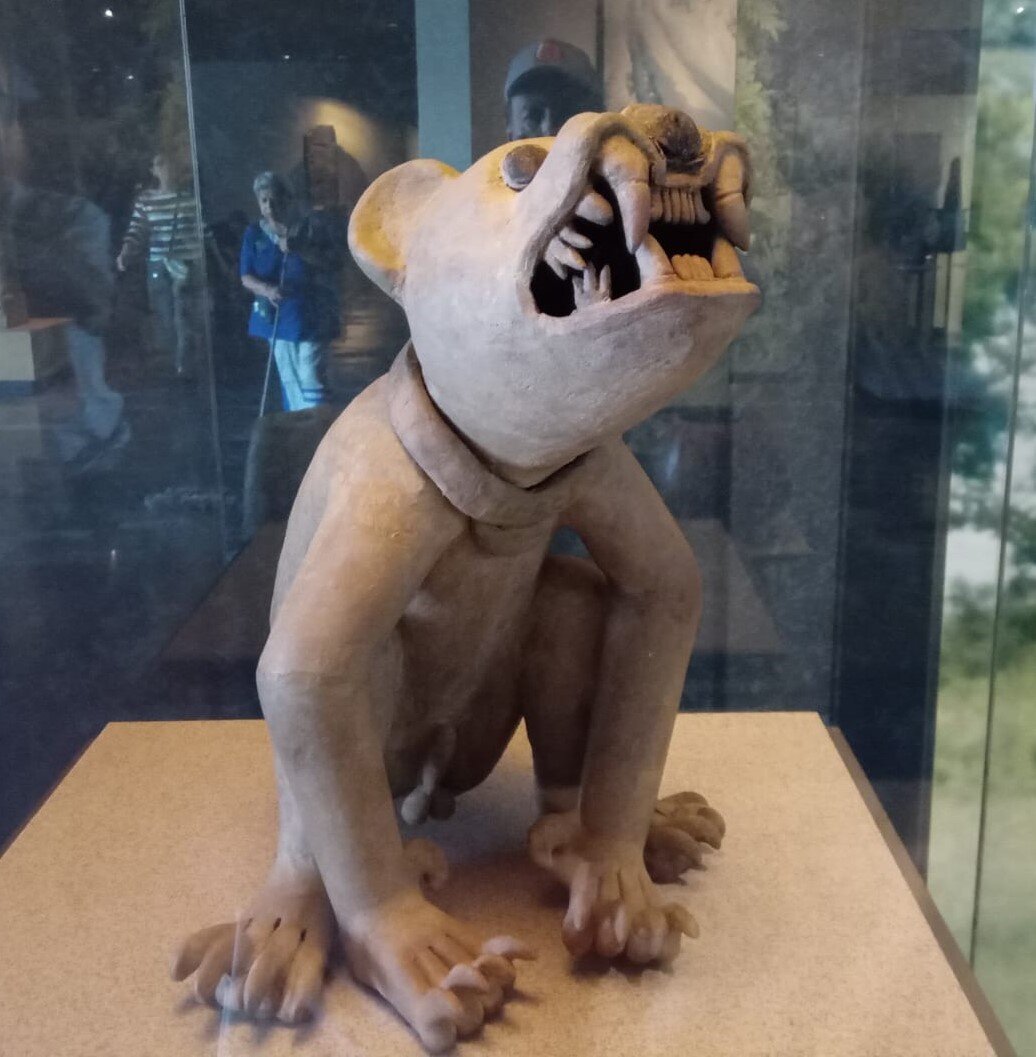
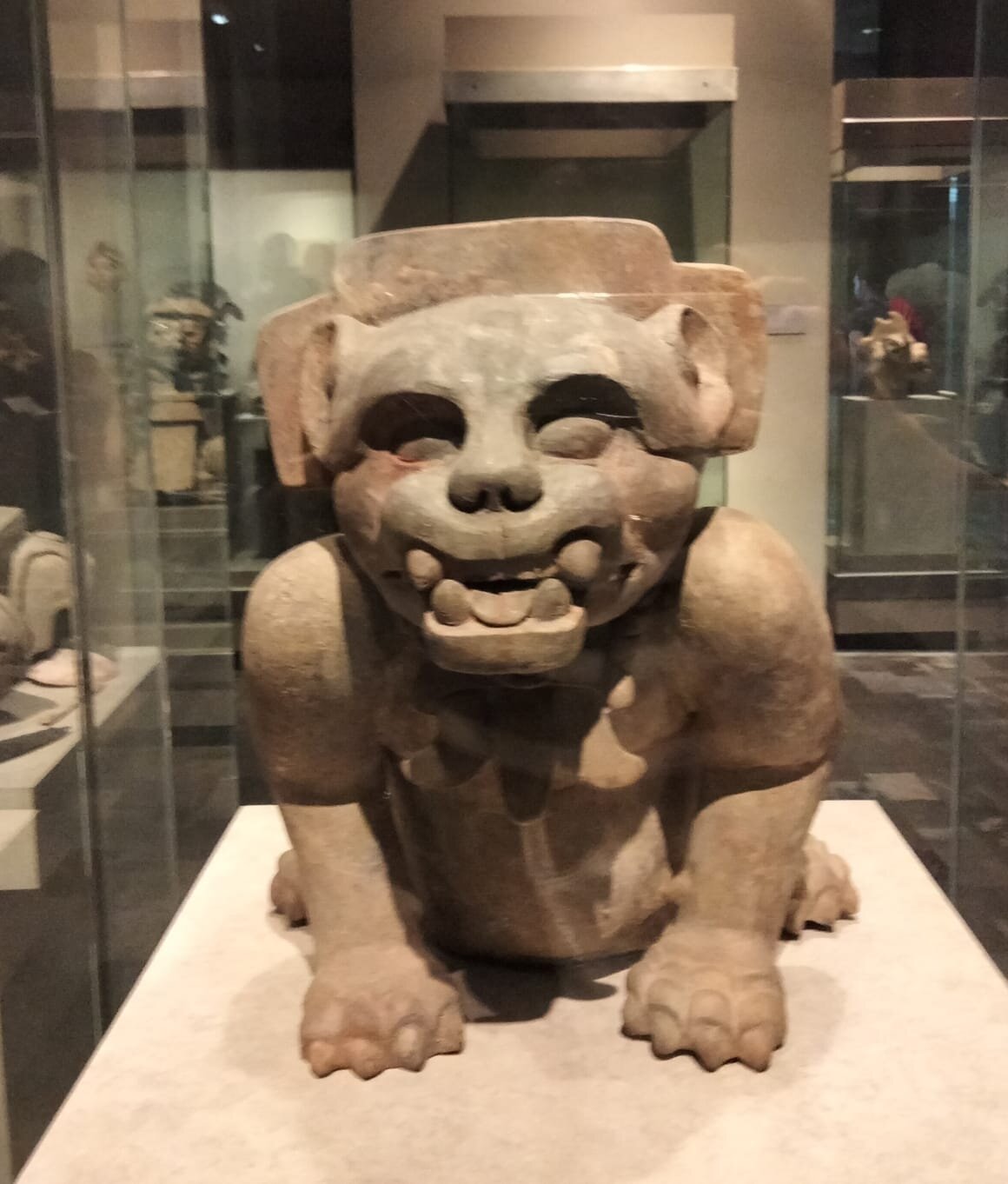
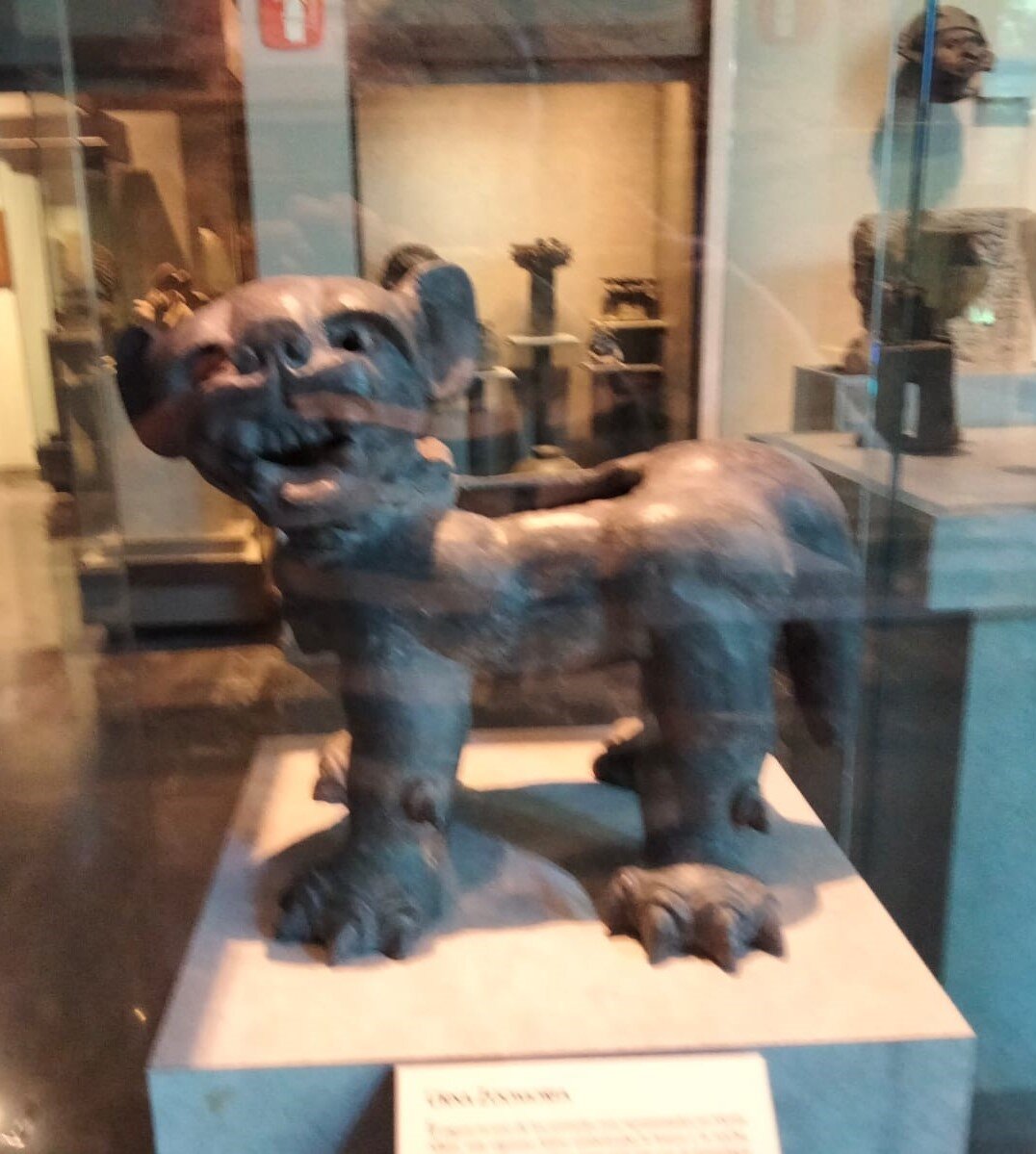
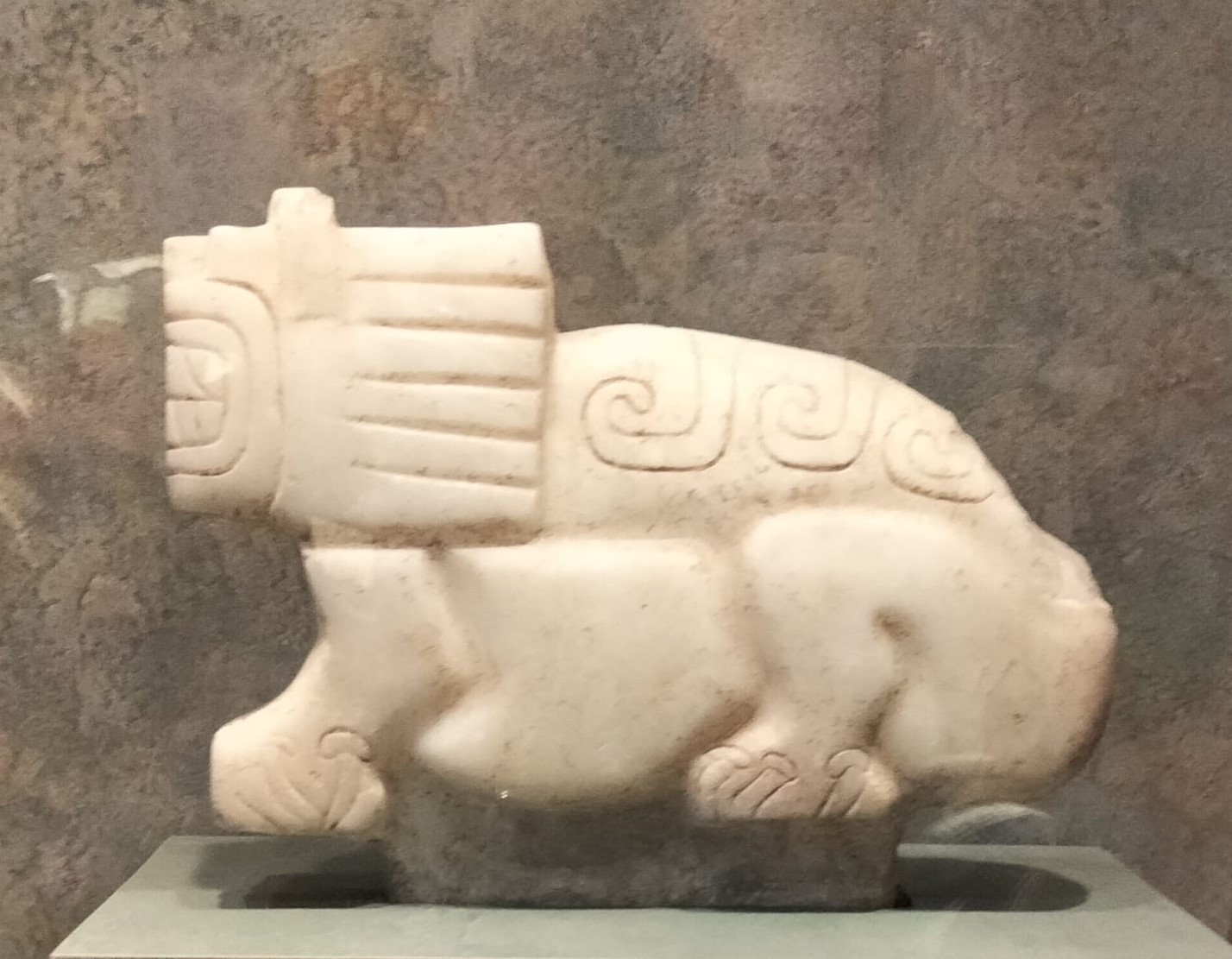
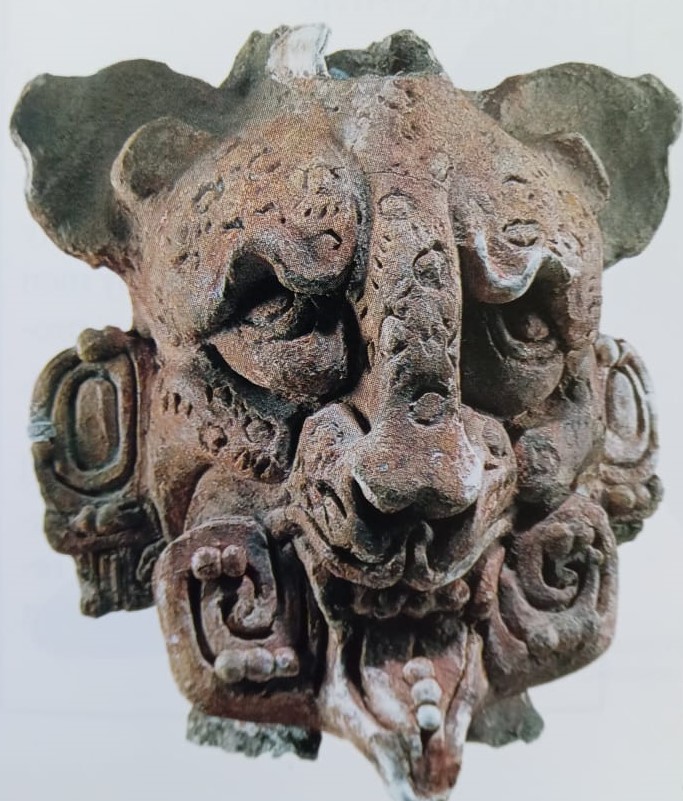
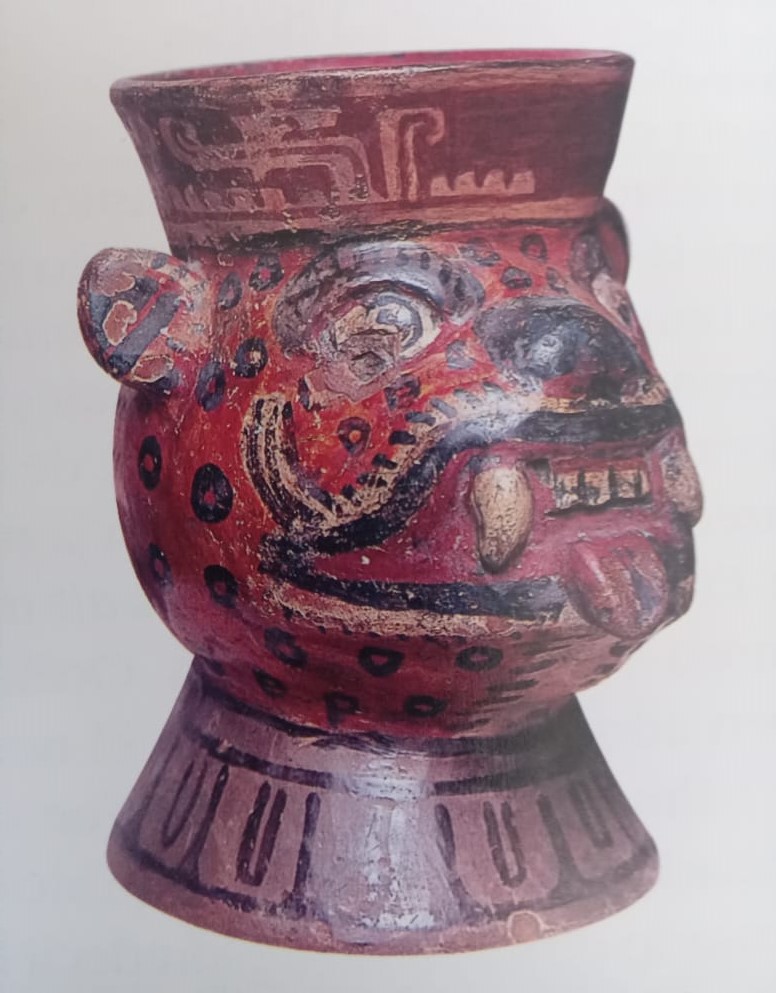
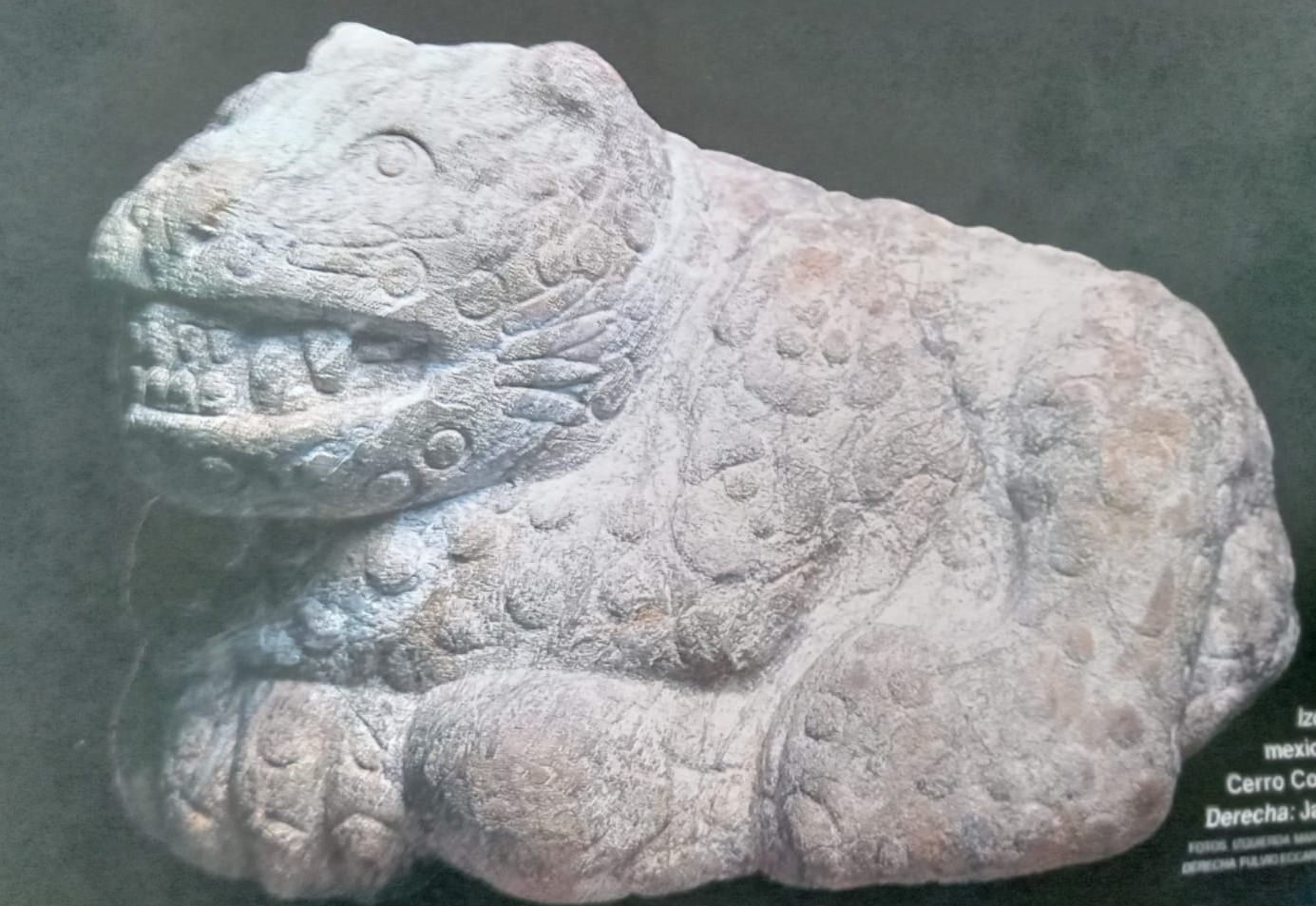
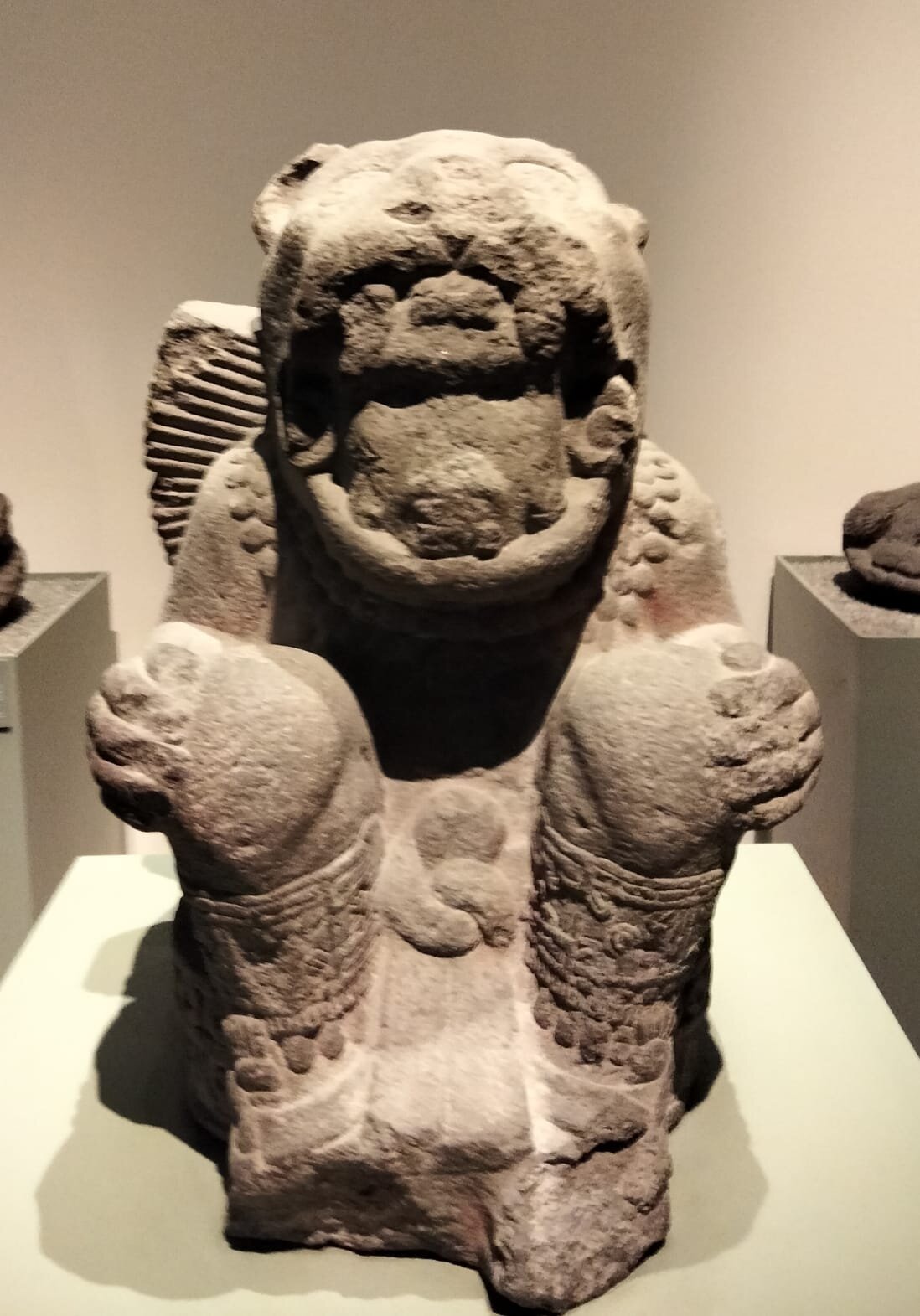
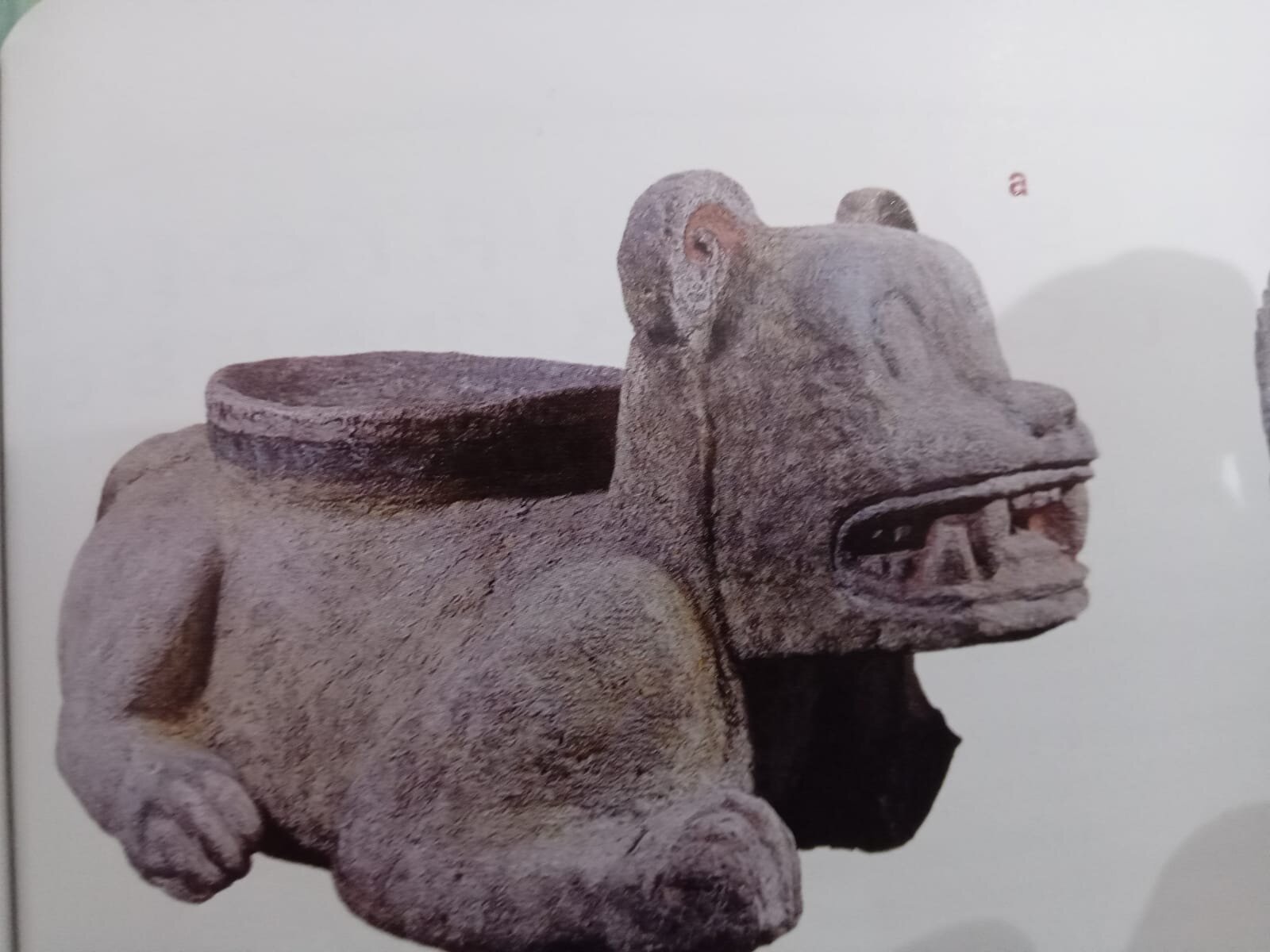
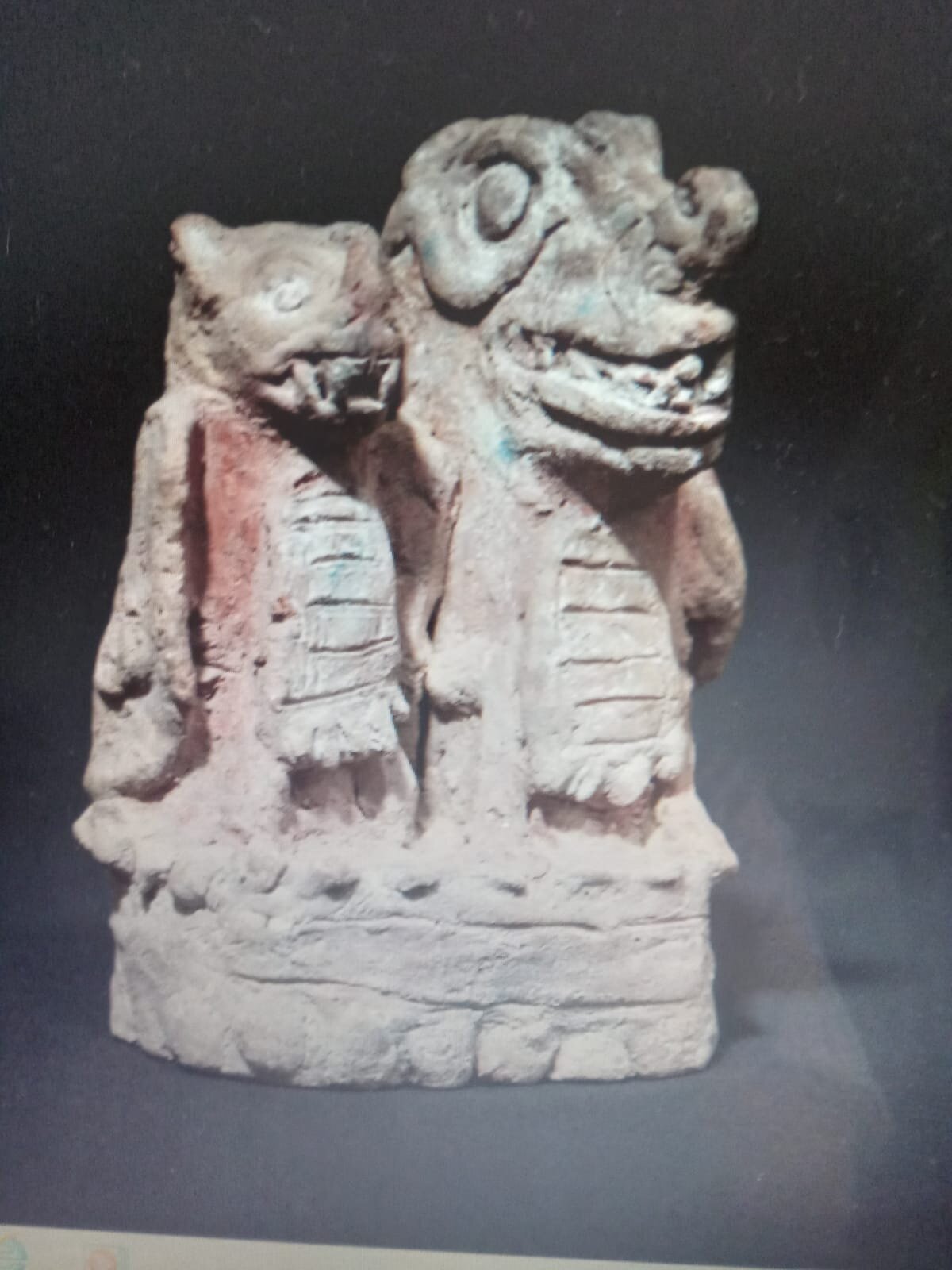
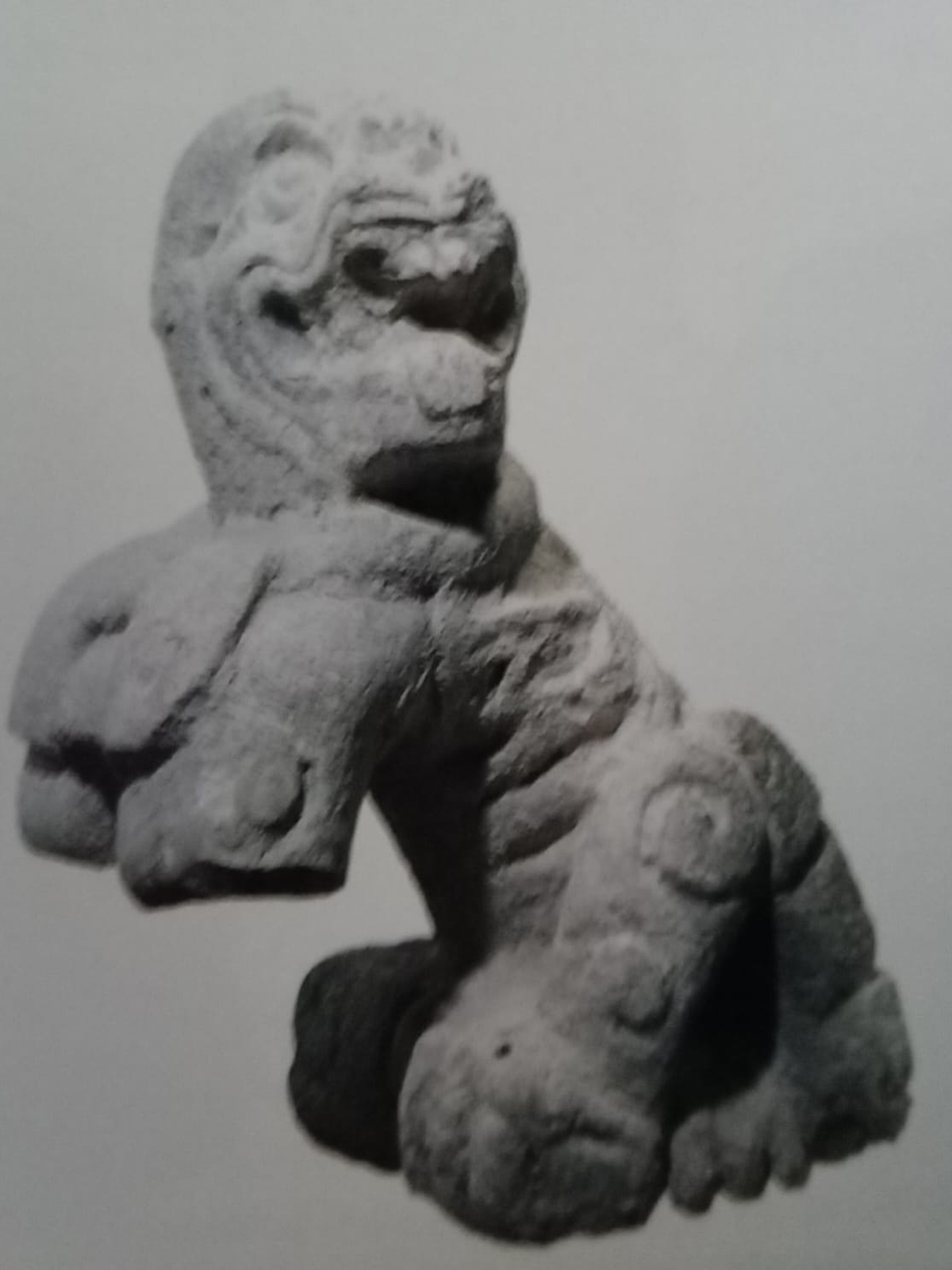
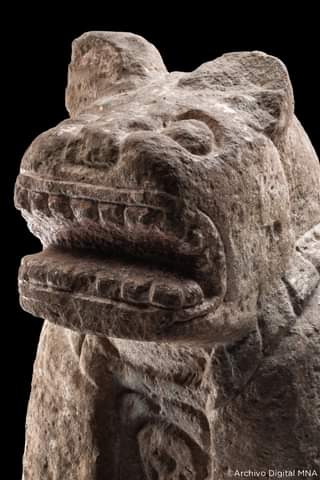
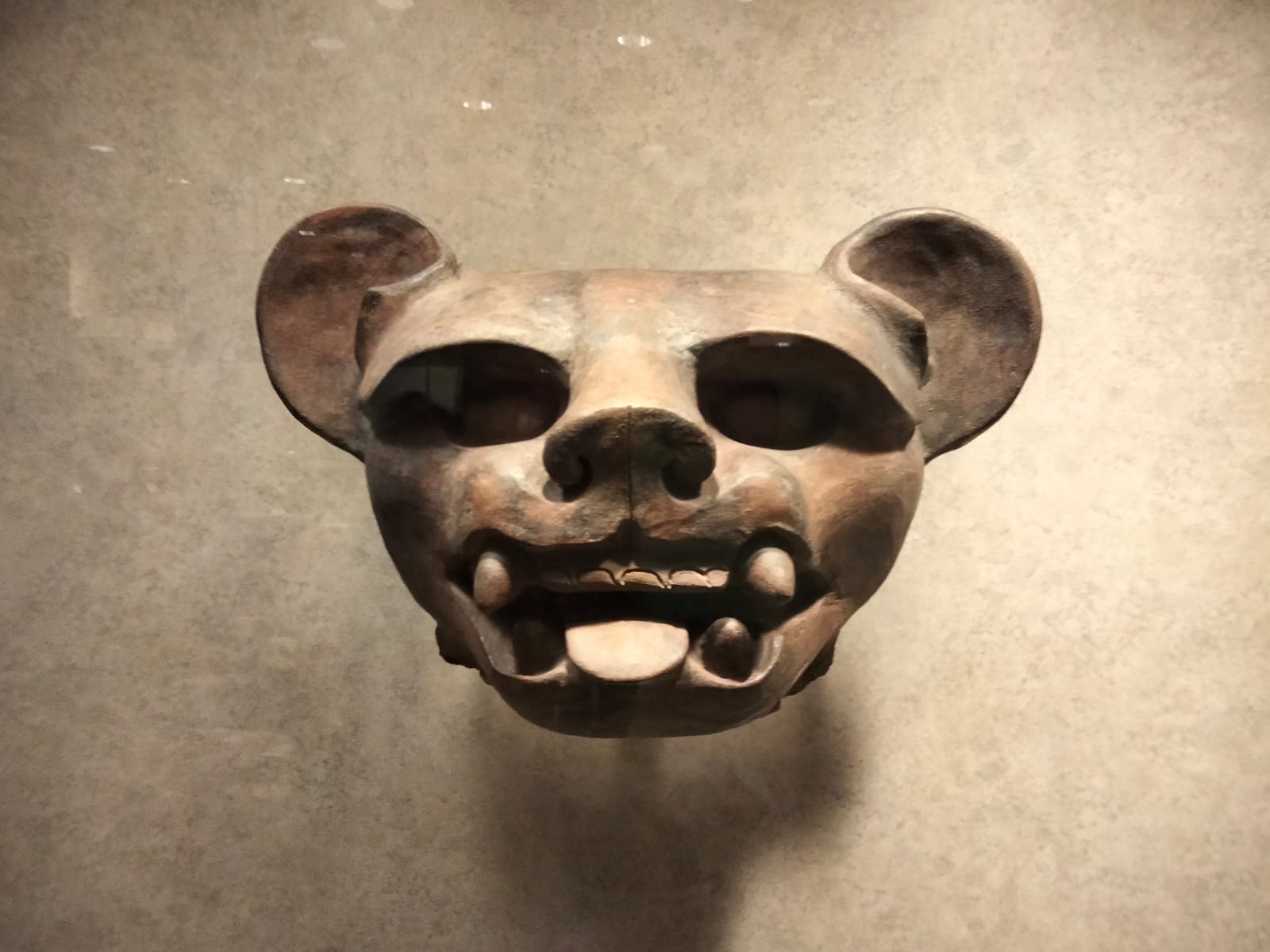
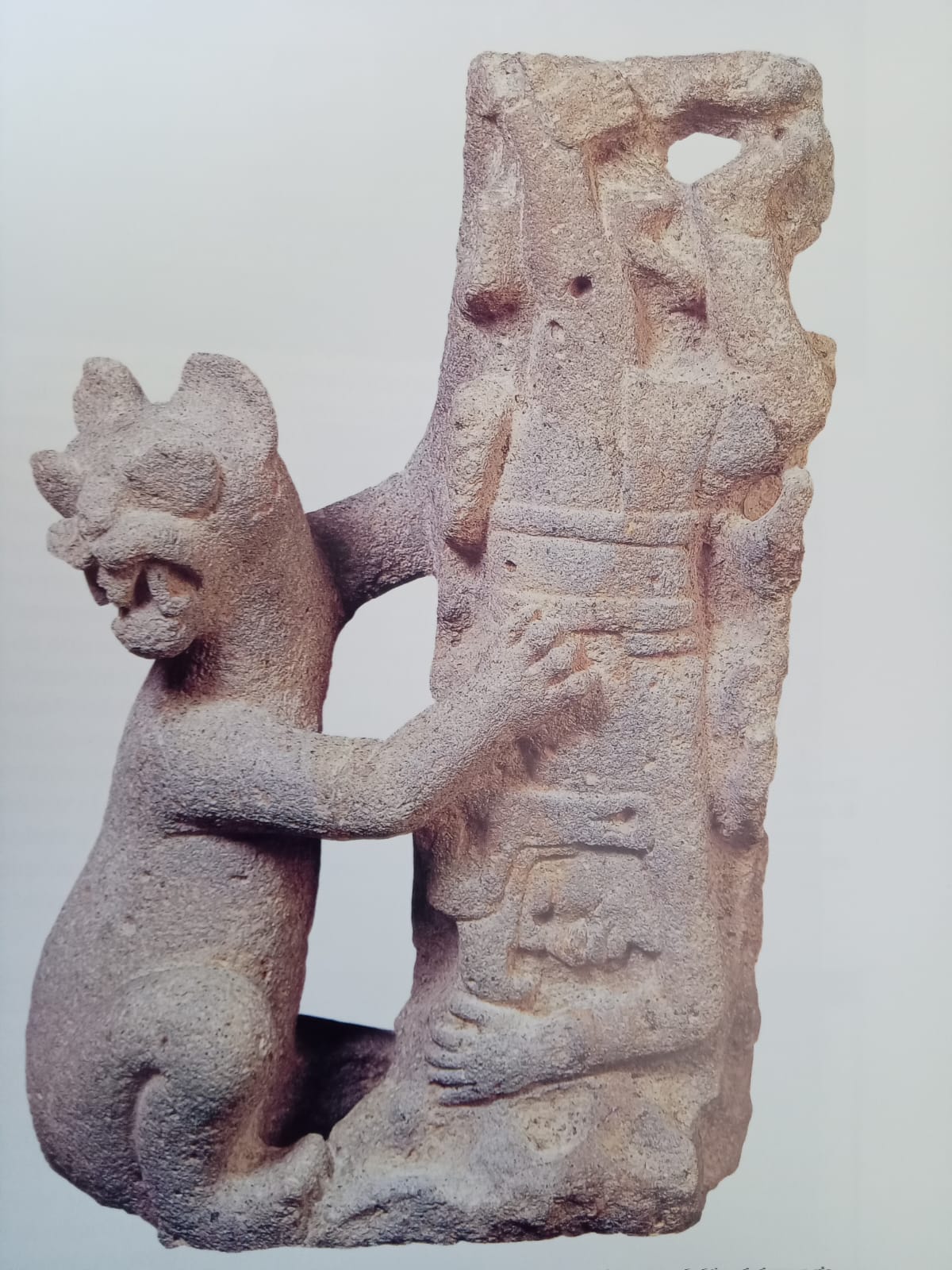
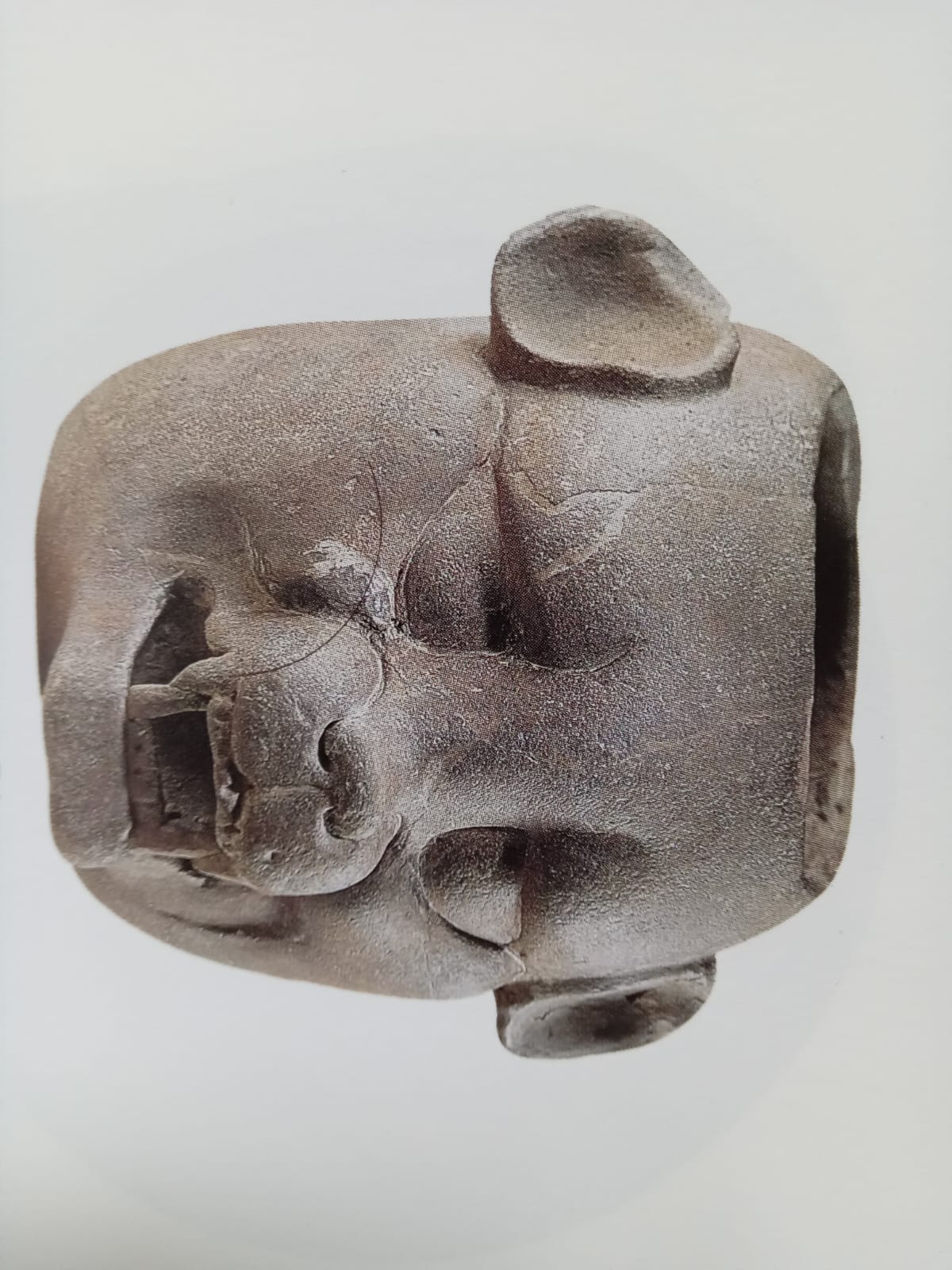
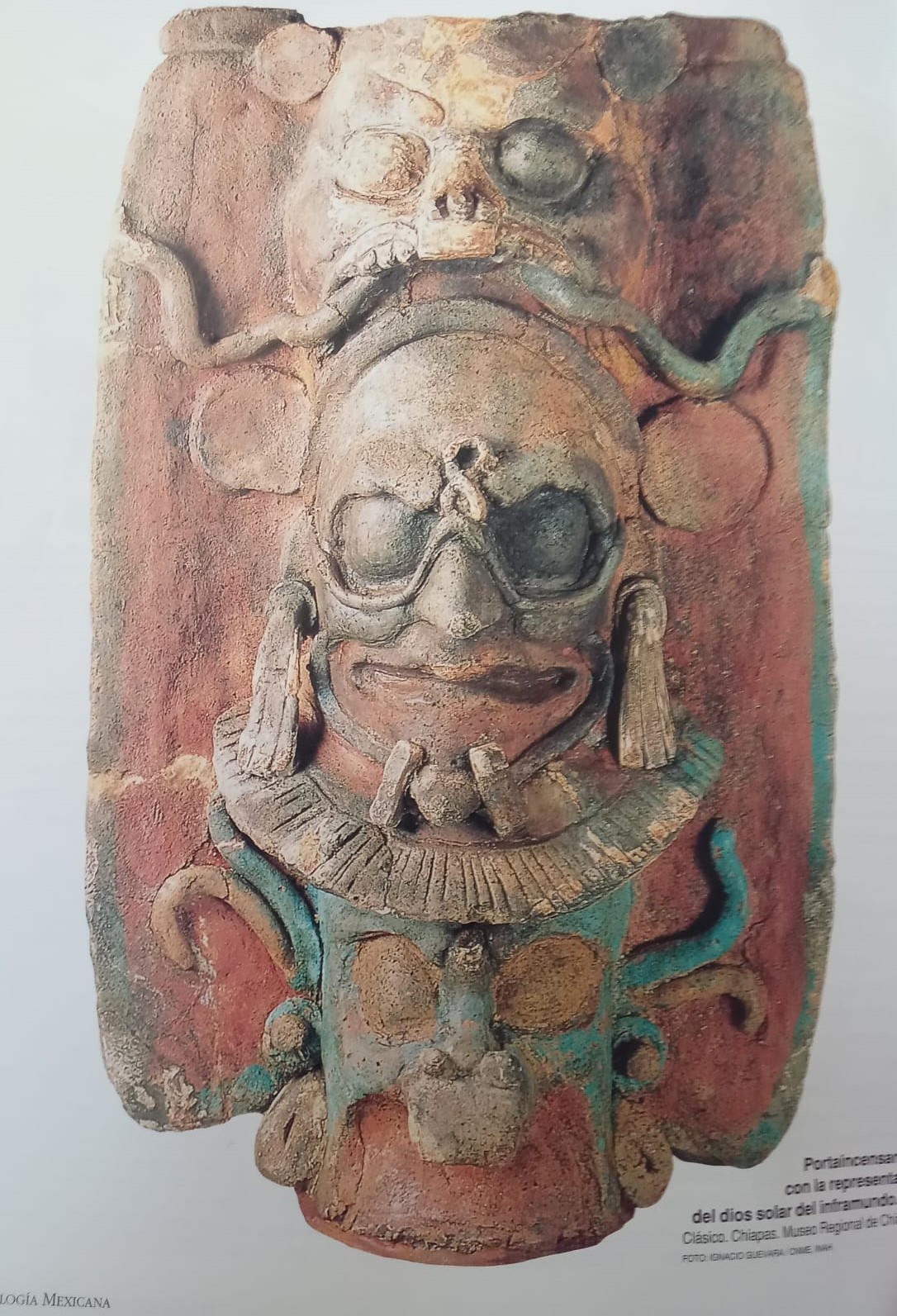
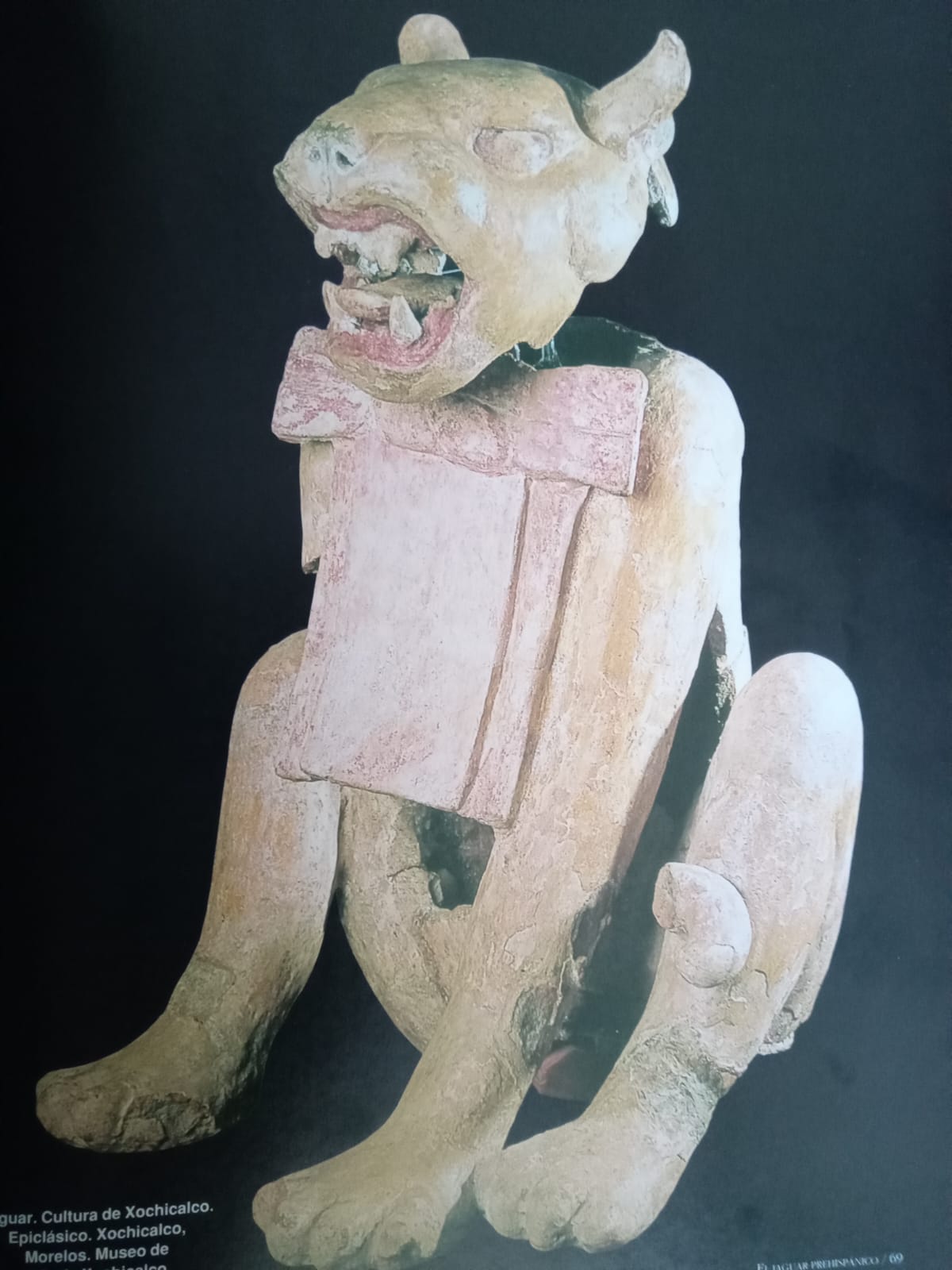
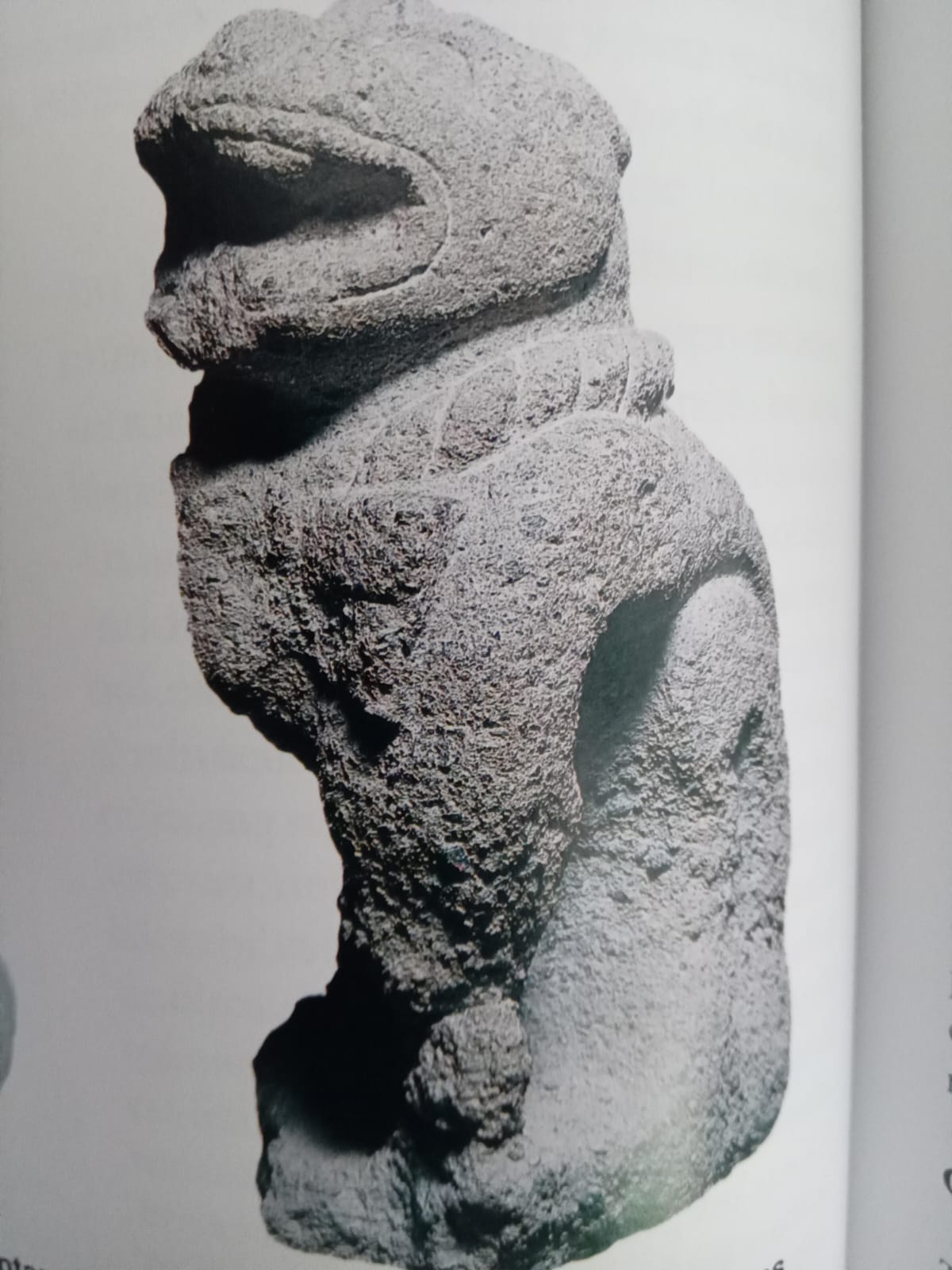
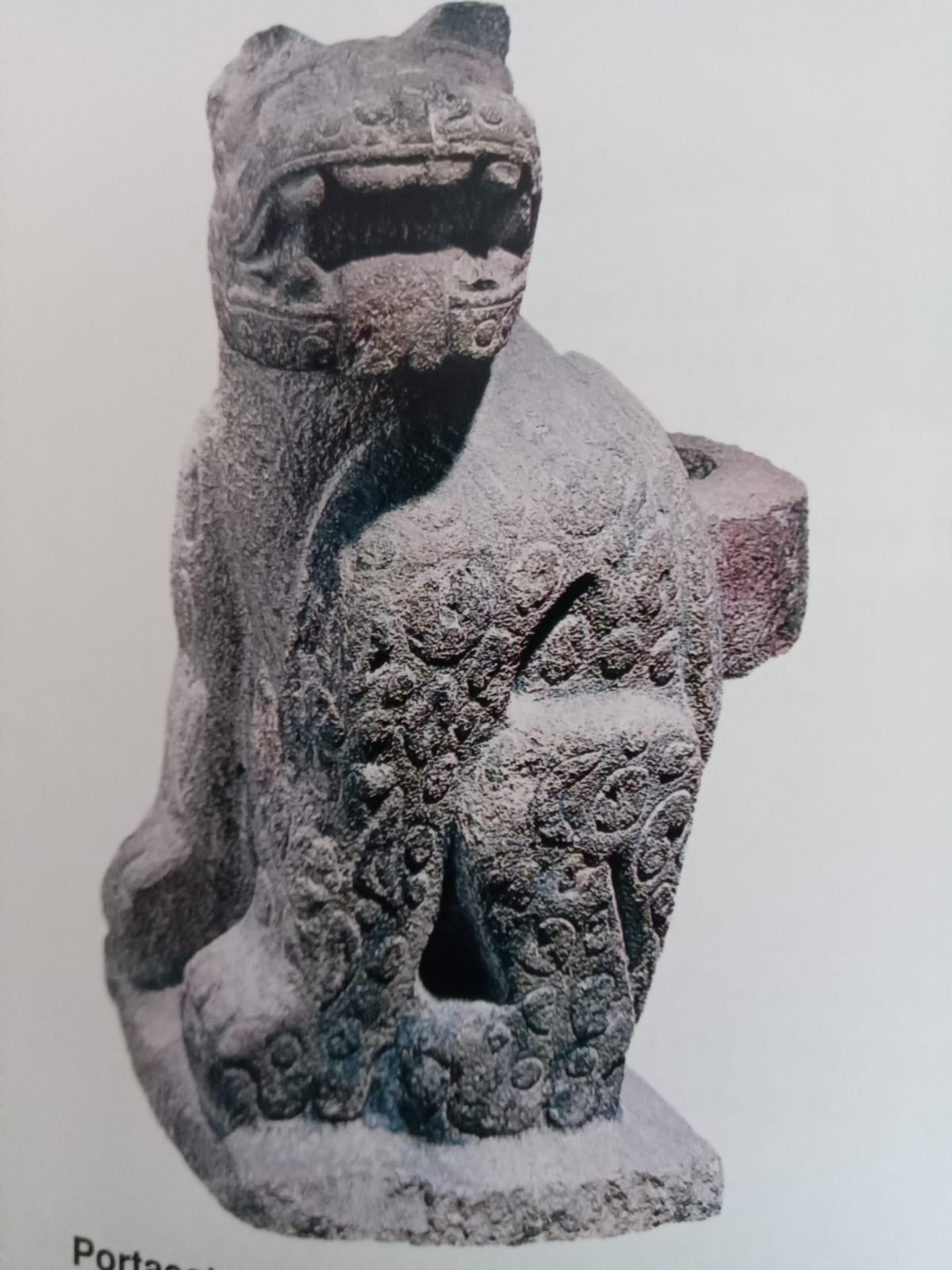
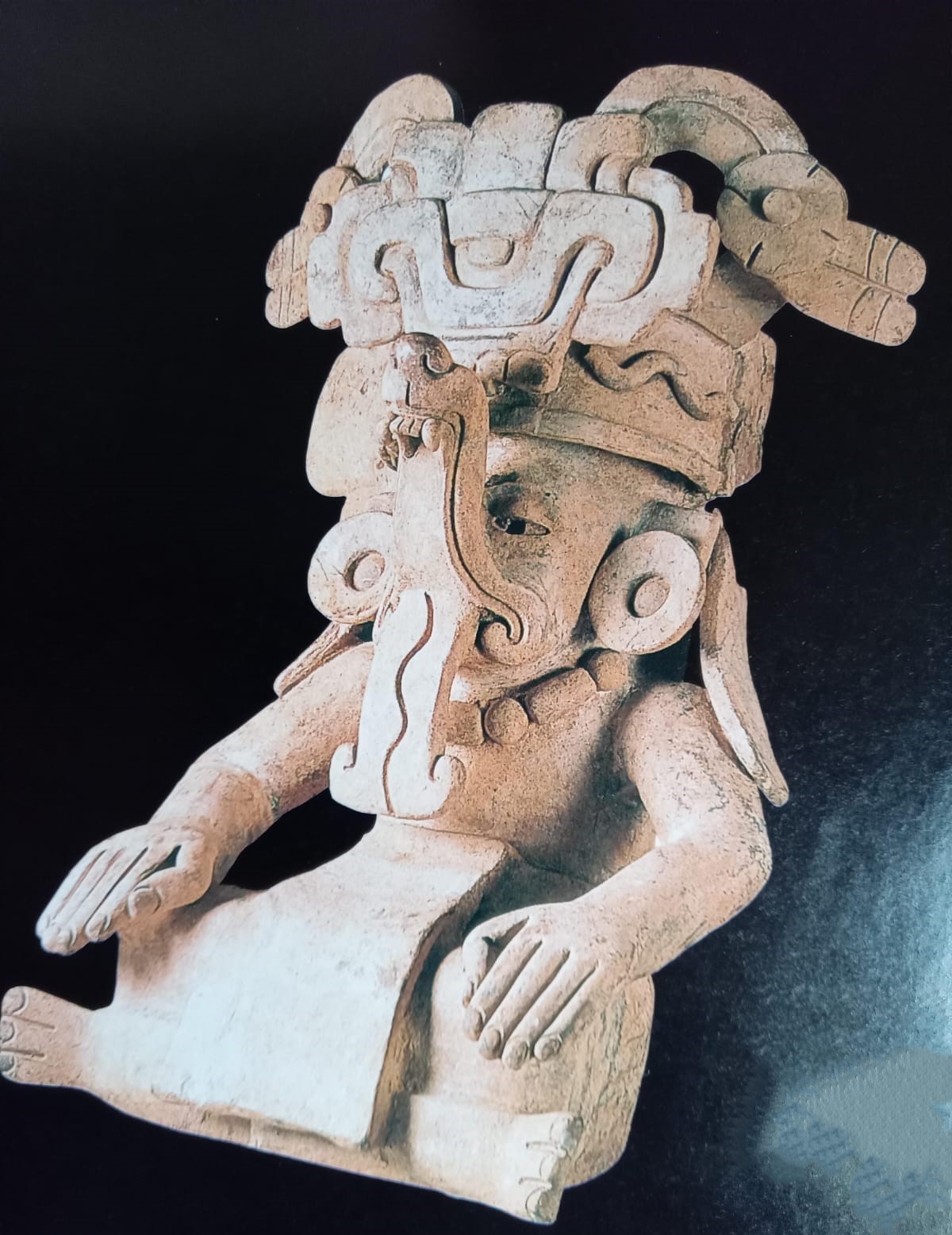
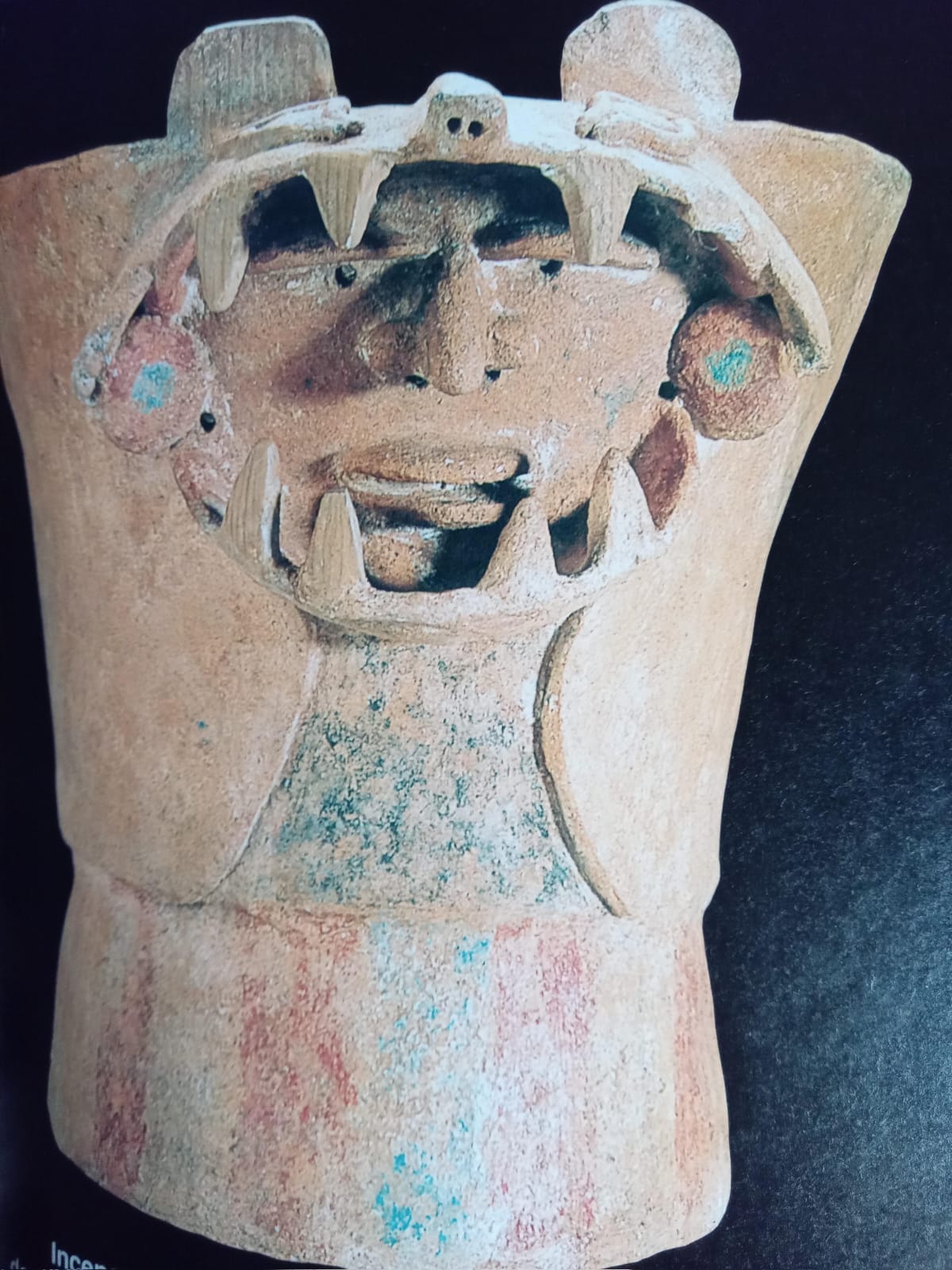
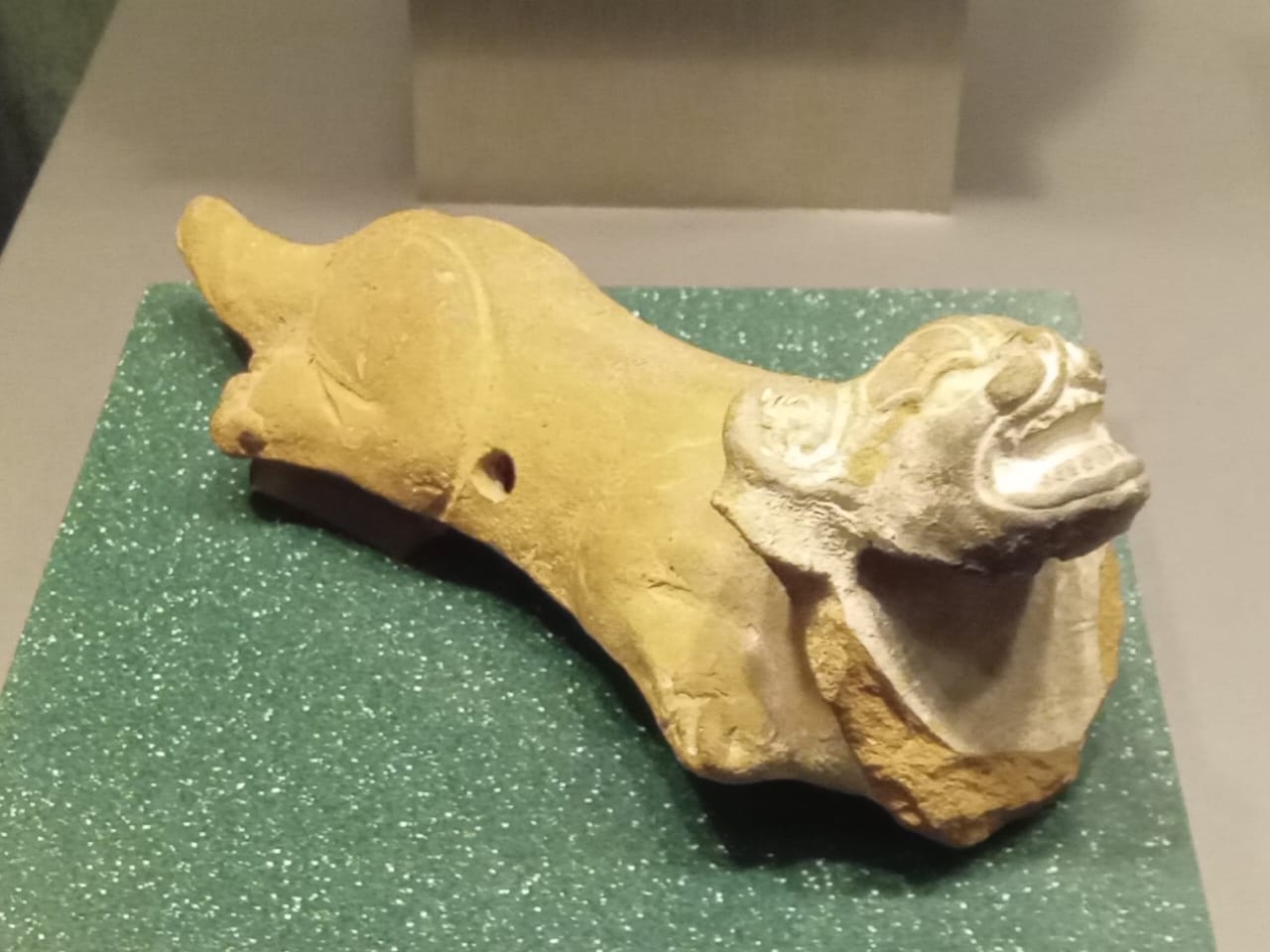
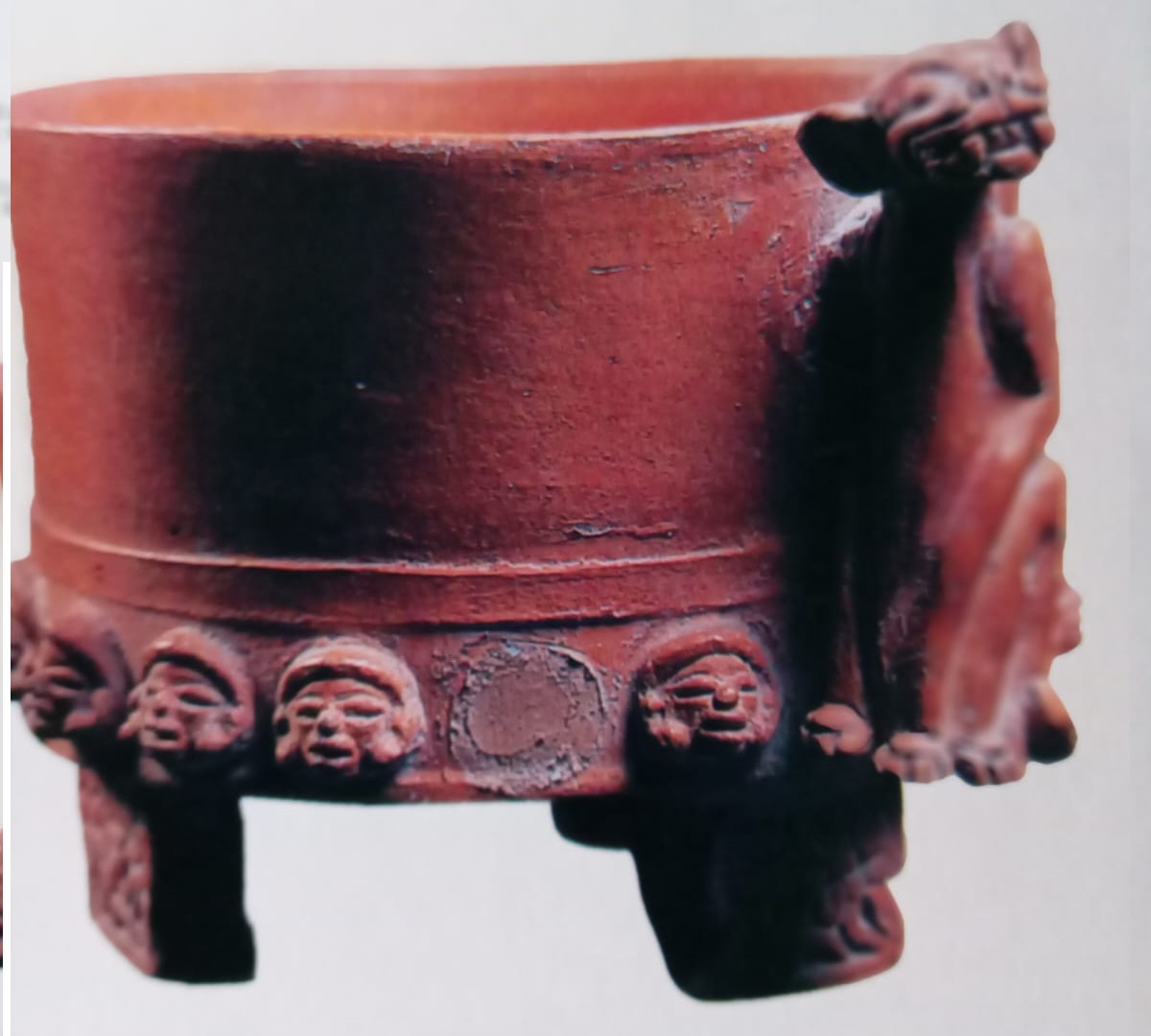
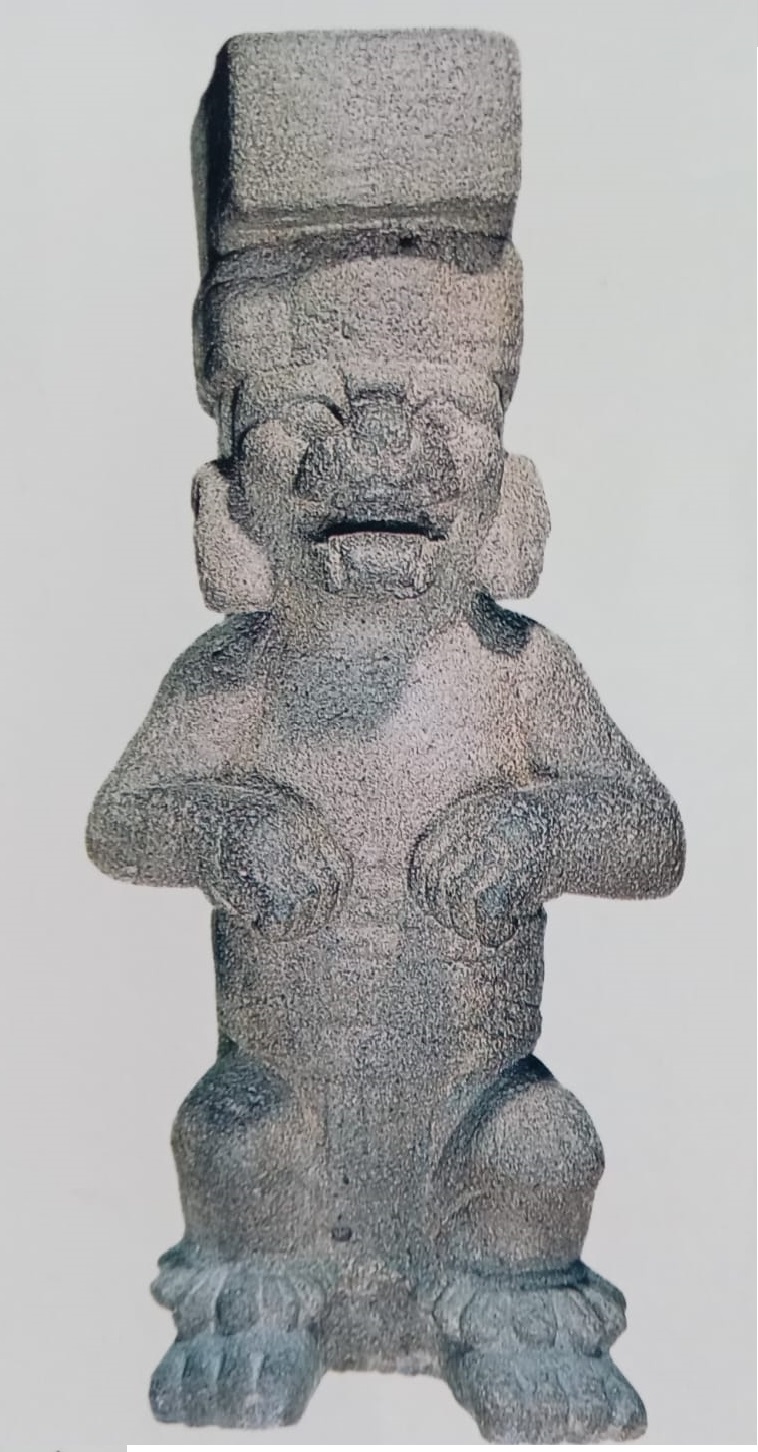
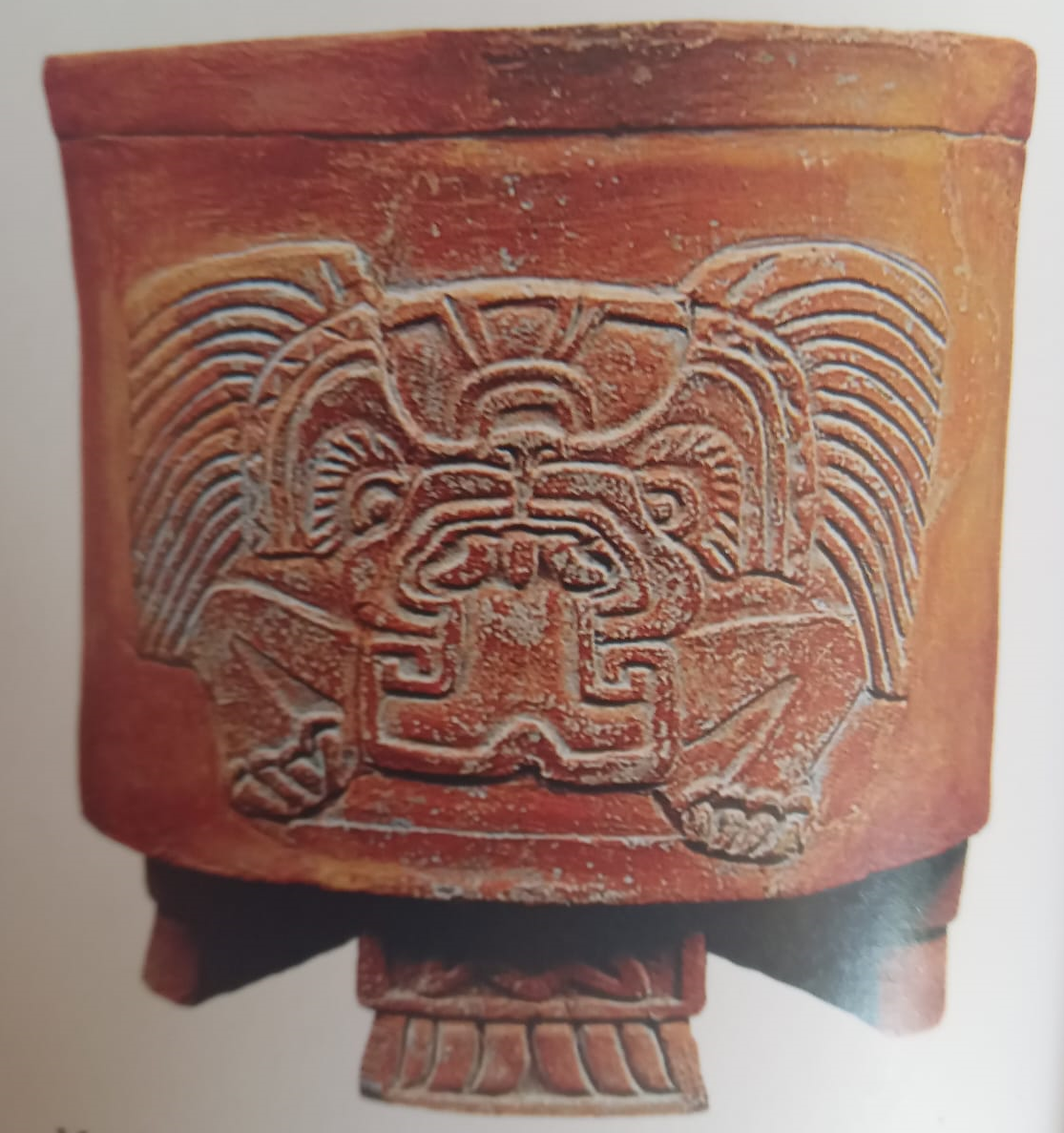
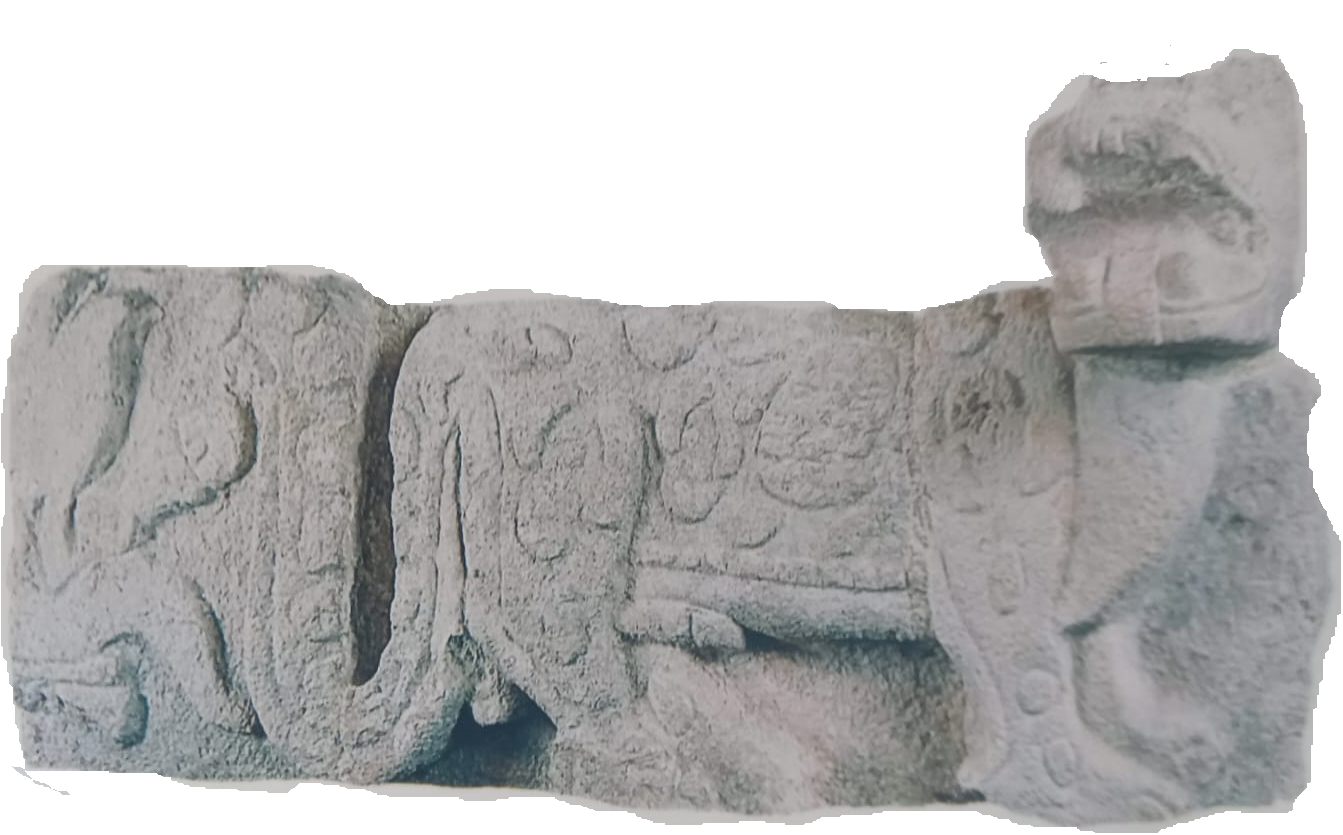
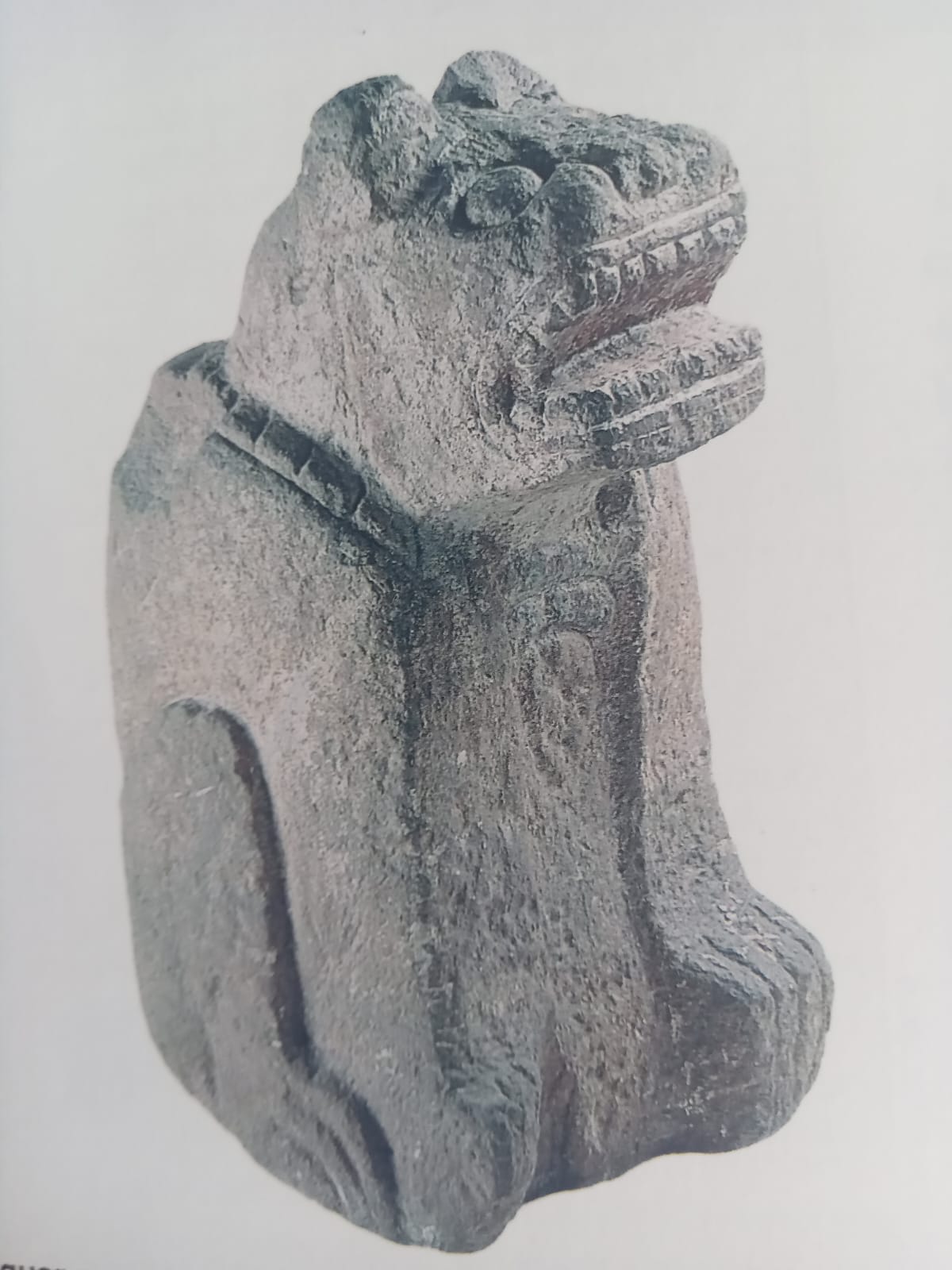
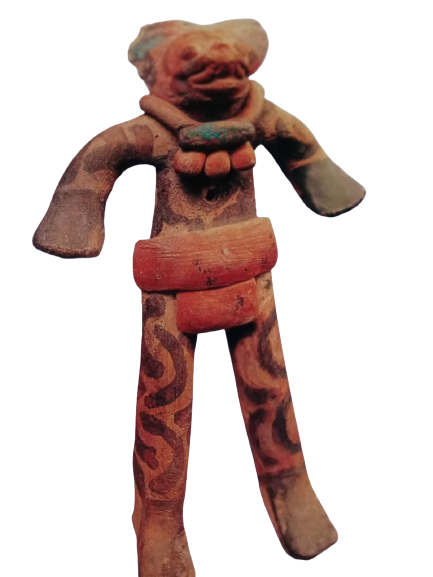
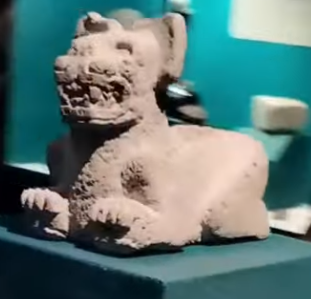
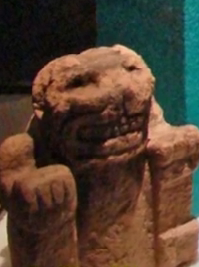
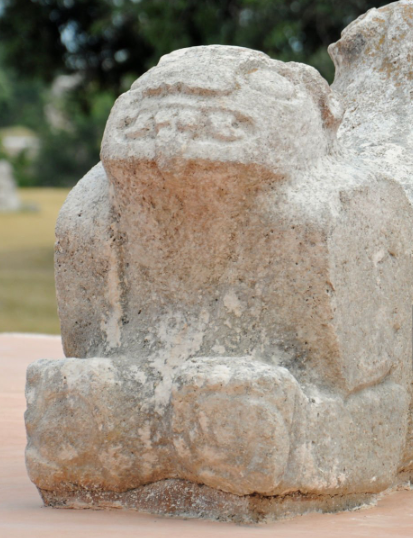
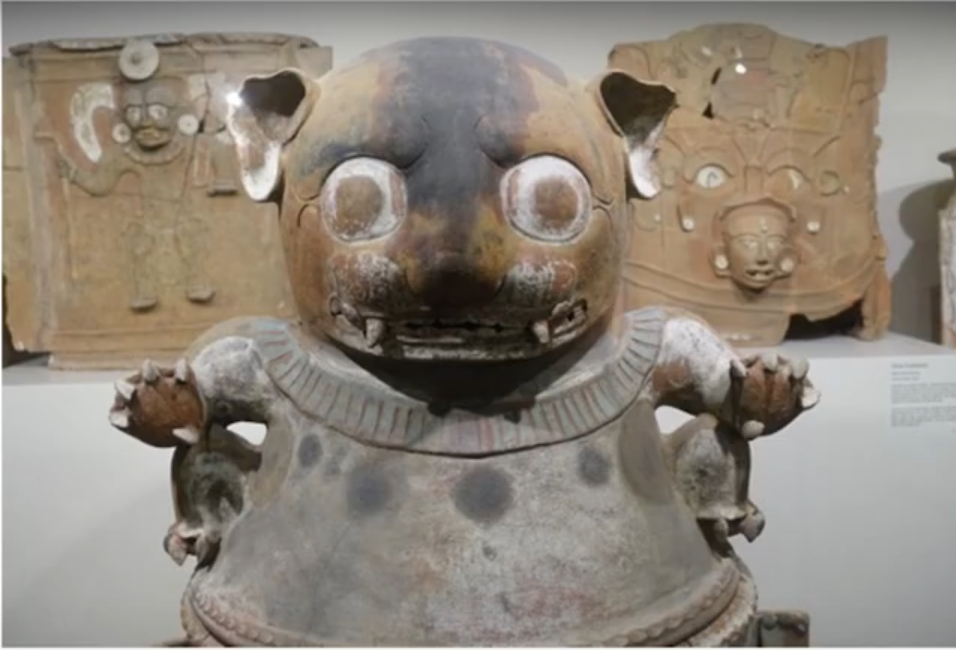
This presumption is reinforced by the fact that if we observe the enormous variety of jaguar designs found in Mesoamerica, where it is very difficult to find a match, it is practically impossible to find two jaguars with such striking similarities, as we can see in next images:
 |
 |
 |
 |
 |
 |
 |
 |
 |
 |
 |
 |
 |
 |
 |
 |
 |
 |
 |
 |
 |
 |
 |
 |
 |
 |
 |
 |
 |
 |
 |
 |
 |
 |
 |
 |
 |
 |
 |
 |
 |
 |
 |
 |
 |
 |
 |
 |
 |
 |
 |
 |
 |
 |
 |
 |
7.- If all of the above were not sufficient evidence, we must to say that
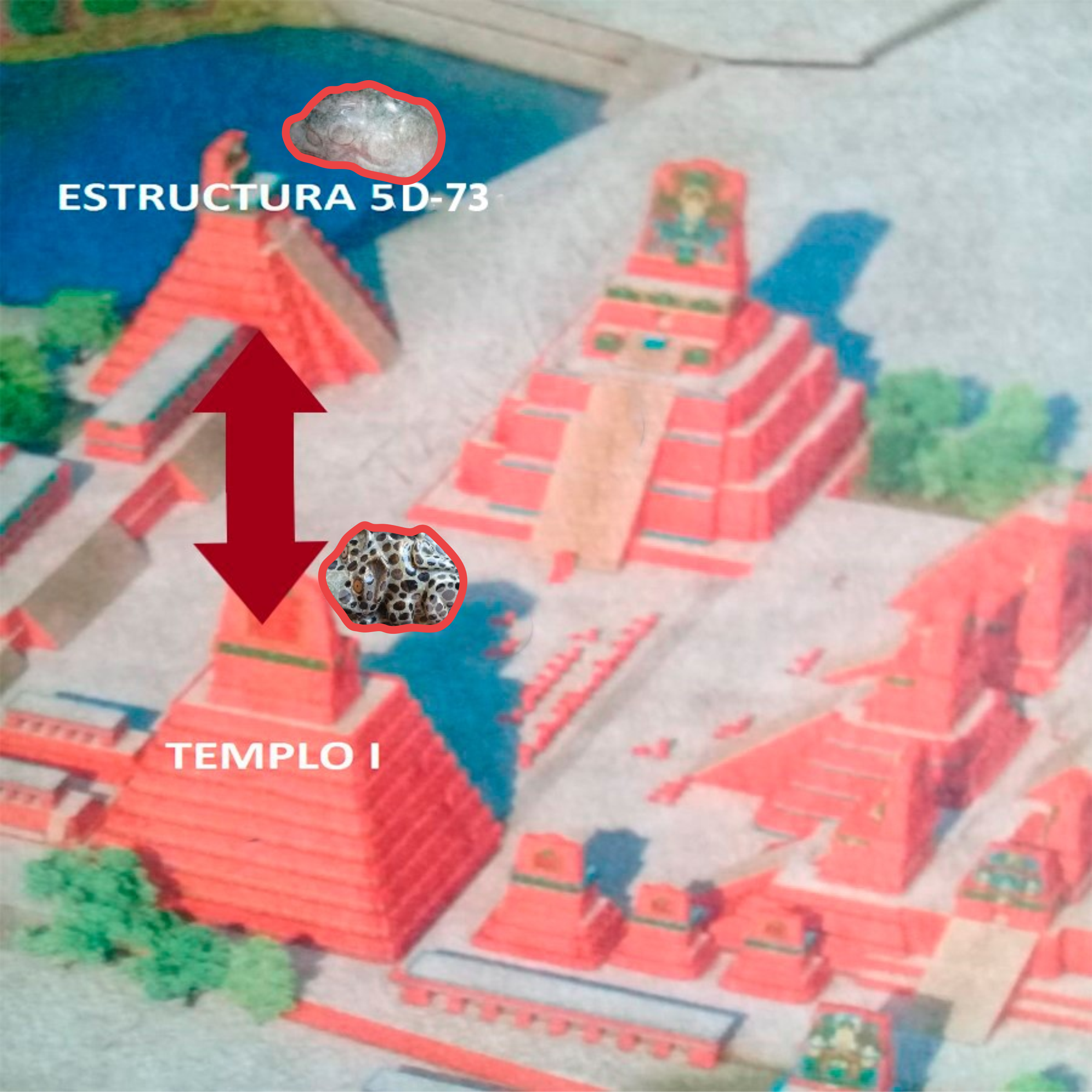
the notable architectural analogies between structure 5D-73 and Temple I of "The Great Jaguar", reinforce our hyphotesis wich proposes that the design of "The Great Jaguar of Tikal" was inspired by the one found in the structure 5D-73 of Tikal:
There are important architectural similarities between Temple I called of "The Great Jaguar" and Structure 5D-73 in which the ancient jade jaguar was found. There are also important similarities in the burial of Jasaw Chaw K'awiil I (the twenty-sixth ruler of Tikal) discovered in Temple I (burial 116), and the one found in Structure 5D-73 (burial 196), as Dr. Nicholas Hellmuth comments in his doctoral Harvard thesis:
"just as the pyramids were identical, many offerings in Tikal Burial 116 (Temple I) and Tikal Burial 196 (Structure 5D-73) were identical".
"The real importance of Bu. l96 is that the immense
quantity of offerings provides much material for comparative
studies. Of great interest is the similarity between Bu. 196
and Bu. ll6 in Temple I. This ties in with the similarity
between the architectural design of the two structures and
suggests a relationship between the two individuals buried."; CONCLUSIONS p. 214
This is particularly relevant for our thesis since it directly relates Temple I of "The Great Jaguar", from where we believe "The Great Jaguar of Tikal" was extracted, with the ancient Jade jaguar of structure 5D-73 that undoubtedly dates from the preclassic period (400 B.C. to 200 A.D.). click to see video of Dr. Hellmuth
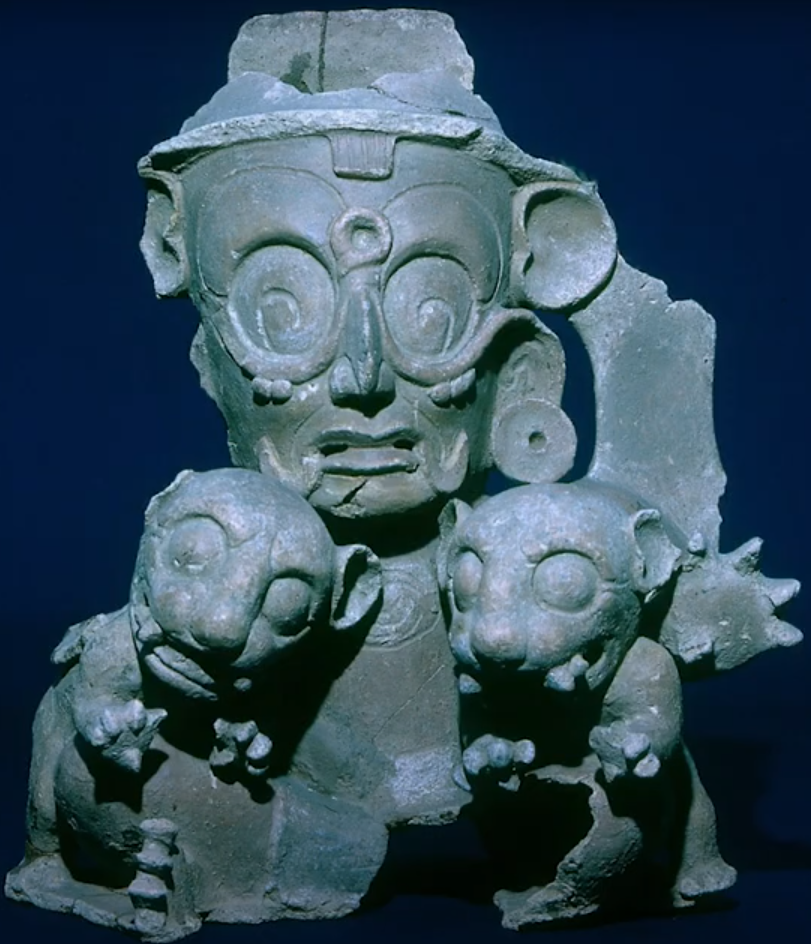
8.- The outstanding similarities between the green jade mosaic vessels found in each one of both tombs: 116 and 196, reinforce enormously the sturdy relationship they have with each other, underpinning consequently our theory:
The notable relationship between tomb 116 of Temple I of "The Great Jaguar" and between tomb 196 of Structure 5D-73, in which the ancient jade jaguar was found, is strongly reinforced because in each one of them was found an iconic jade mosaic vessel. This is particularly important because, as Dr. Peter D. Harrison comments in his book "The Lords of Tikal: Rulers of an Ancient Maya City":
"the two vessels seem to be made simultaneously, as a pair", as we can corroborate in the following image:
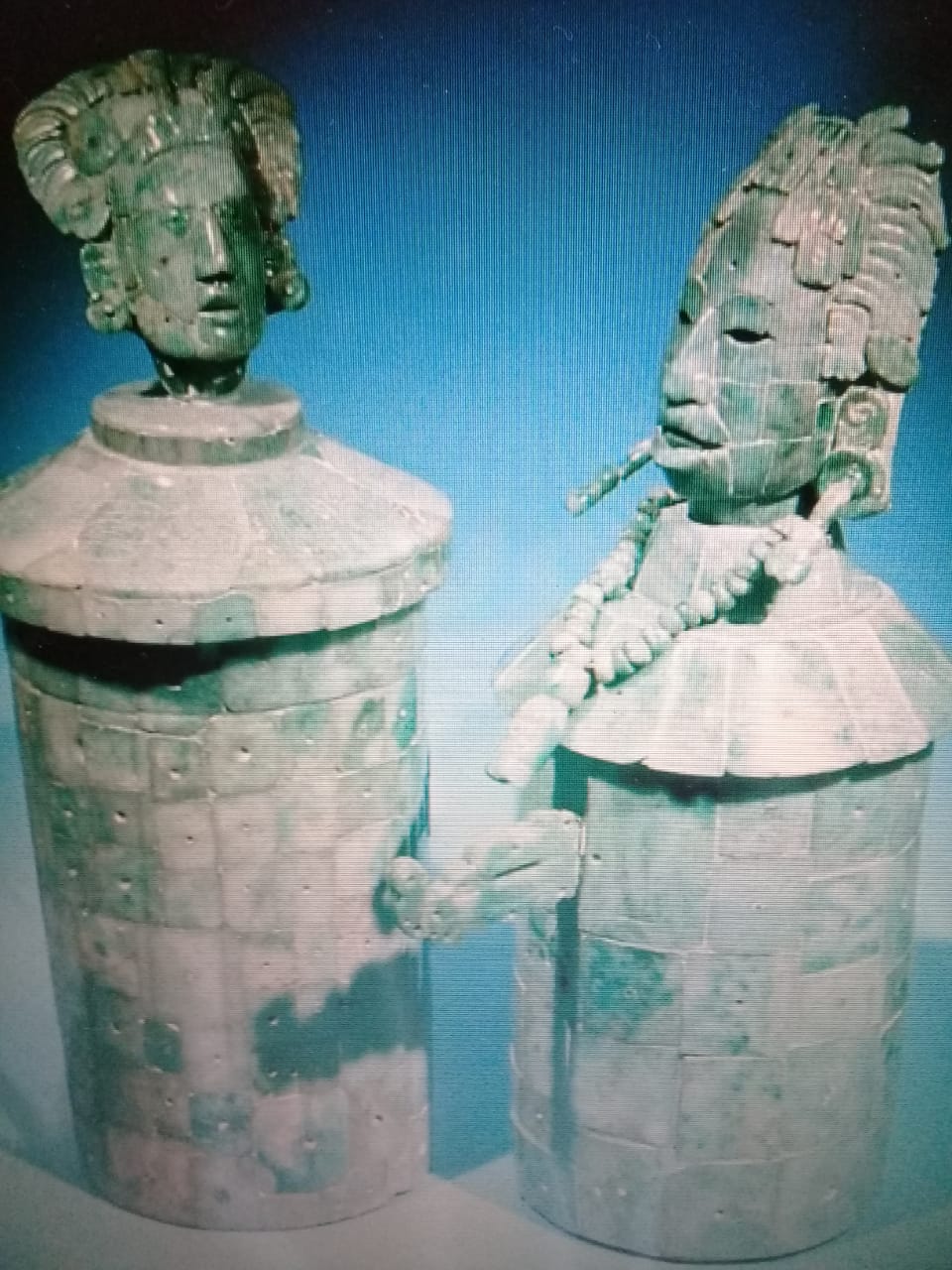
The vase on the left hand side, which was found in 1962 in tomb 116 of Hasaw Chan K'awiil I, Temple I of "The Great Jaguar", bears the ruler's portrait; we know this from the glyphs engraved on the top of the lid.
The vessel on the right hand side represents a priest of the Maize God. This is very significant because it explains the character hierarchy and the importance of the burial.
We must remember that the jaguar as Lord of time and the underworld, is directly related to agriculture and fertility. Tomás Pérez Suárez says regarding the god of corn: "as the personification of the sprouted grain, he performs various rites in the underworld."
Furthermore, Ana María Barrios says in "The Art of the Mayan Kings" (p. 195): "the deceased was buried with the waxes that he had used in life".
The relationship between Hasaw Chan K'awiil I and the alleged priest is perfectly confirmed, intertwining the relationship between tomb 116, from the Temple of "The Great Jaguar", and Tomb 196 of Structure 5D-73, where the ancient jade jaguar was found.
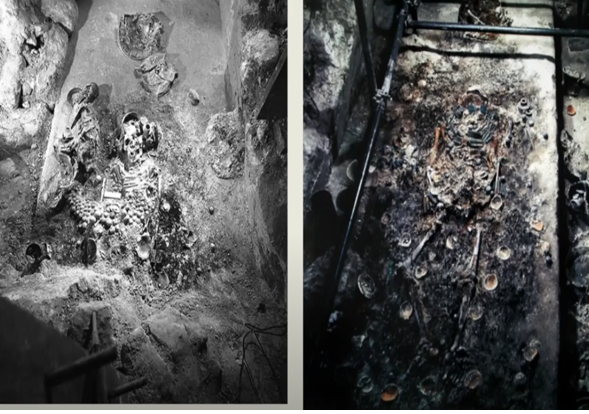
Our theory is that Yik'in Chan K'awiil built the Structure 5D-73 at 754 A.D. and entombed a priest who was very dear to his father Hasaw Chan K'awiil I along with the ancient jade jaguar and a very special jade mosaic vase after burying his father with the mate mosaic vase jade in the base of Temple I.
As Peter D. Harrison says in "The lords of Tikal..." regarding the vase from tomb 196:
"it is a companion to the one from Hasaw's tomb"; but he also states:
"the contents of the tomb place the same as contemporary or a little bit from a different era" p. 162 op. cit.
Shortly after "The great jaguar of Tikal" was completed, the ancient jaguar was buried in Structure 5D-73.
This theory coincides with the well-known intention of Hasaw Chan K'awiil I, recognized as the Great Reformer of Tikal, to create a new cosmovision for the city with a a brand new "Great Plaza" with its gorgeous main building Temple I, where a brand new jade jaguar would be placed.
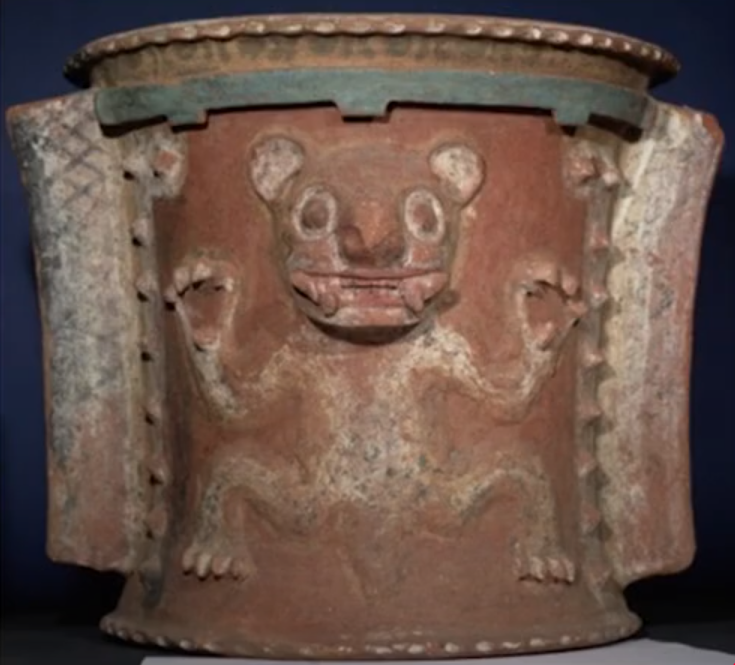
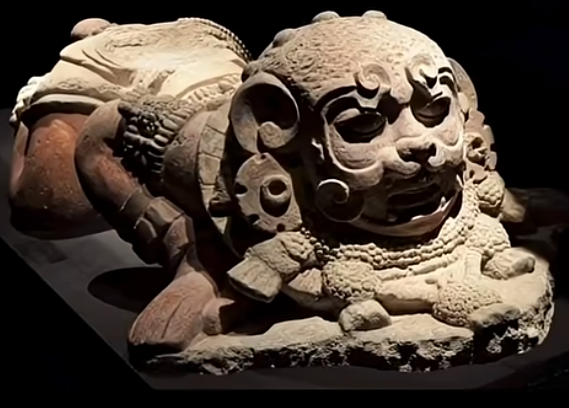
9.- There is enough archaeological evidence to deduce that the design of "The Great Jaguar of Tikal" was inspired by the art works of preclassical civilizations, as shown by archaeological remains of the Olmec and Maya cultures:
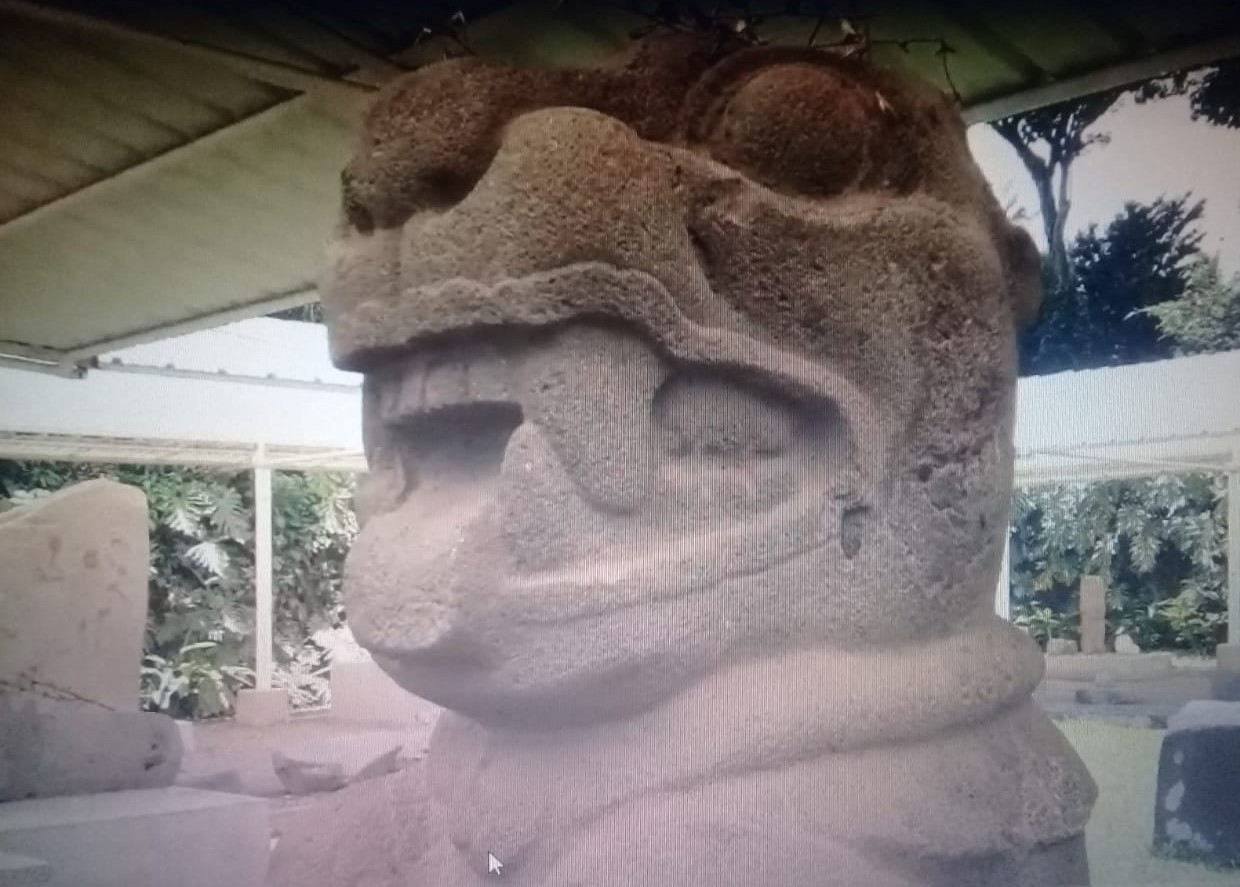
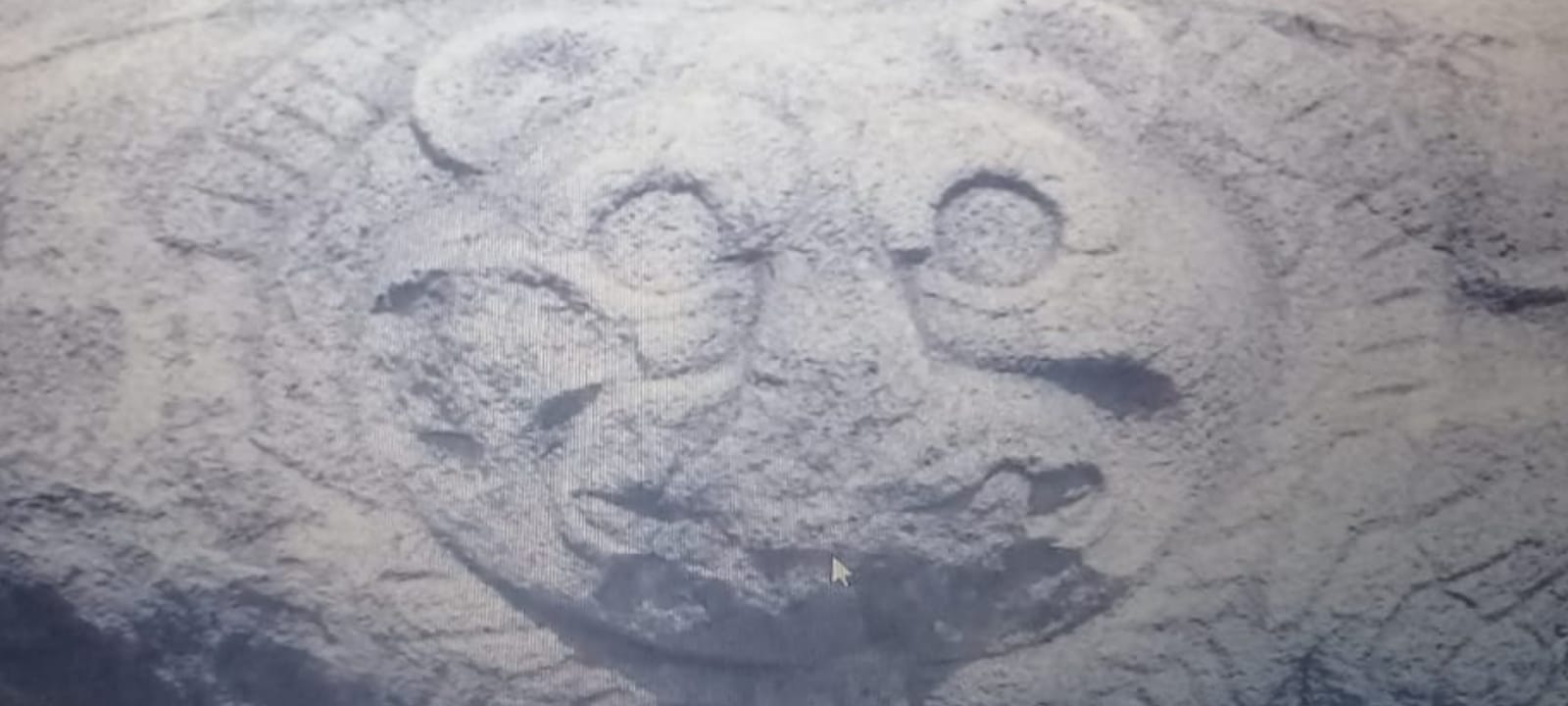
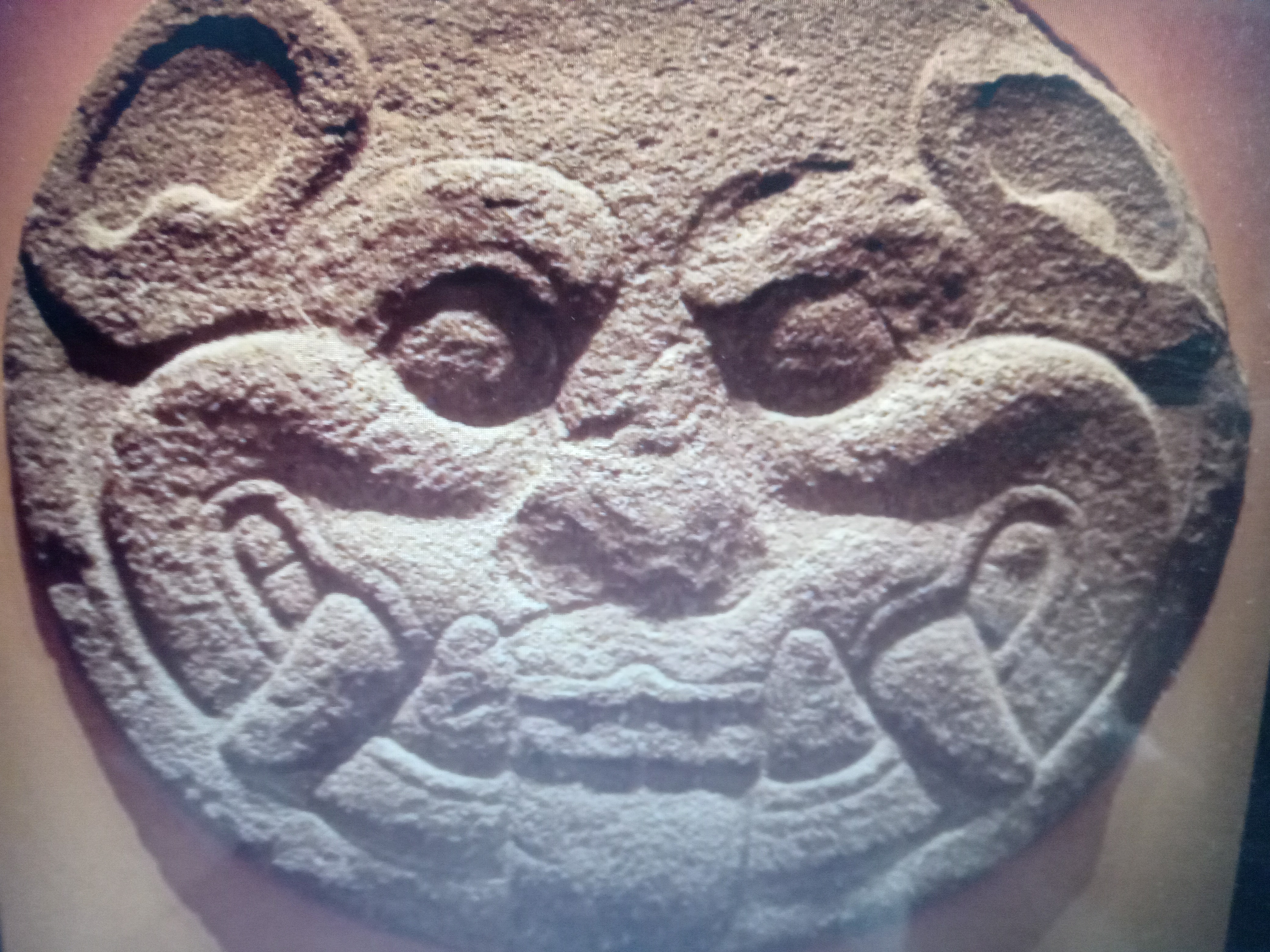
The ancient stone jaguars of the Olmec culture found in San Lorenzo Tenochtitlan in the State of Veracruz, México (images 1 and 2), Santa Lucìa Cotzumalguapa, Guatemala (images 3, 4 and 5) and the Jaguar Disk from Cara Sucia, El Salvador (image 6), give us indications of the possible earliest origin of the Great Jaguar of Tikal, however, it was not until the classic Mayan period (200-950 AD) the jade carving technique was perfected.

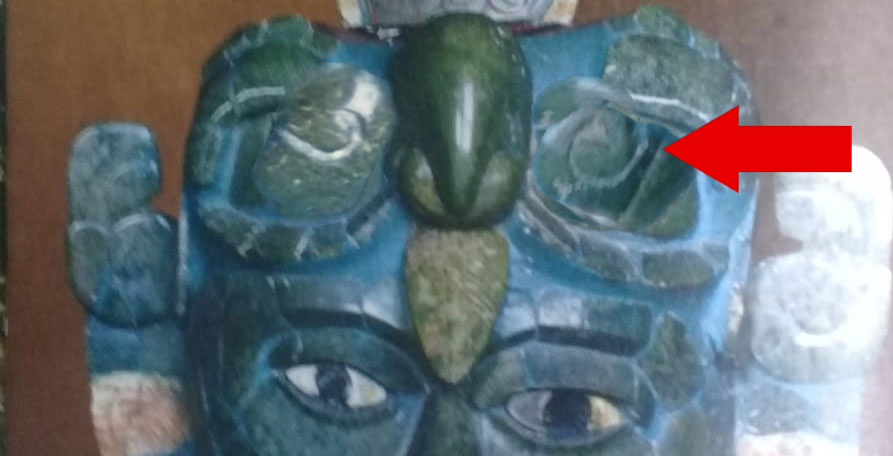
10.- There are important similarities between glyphs of the jade Mask of Tikal found in structure 5D-34 in 1959, an the grapheme carved on the nose of "The Great Jaguar of Tikal" wich tells us about the same origin:
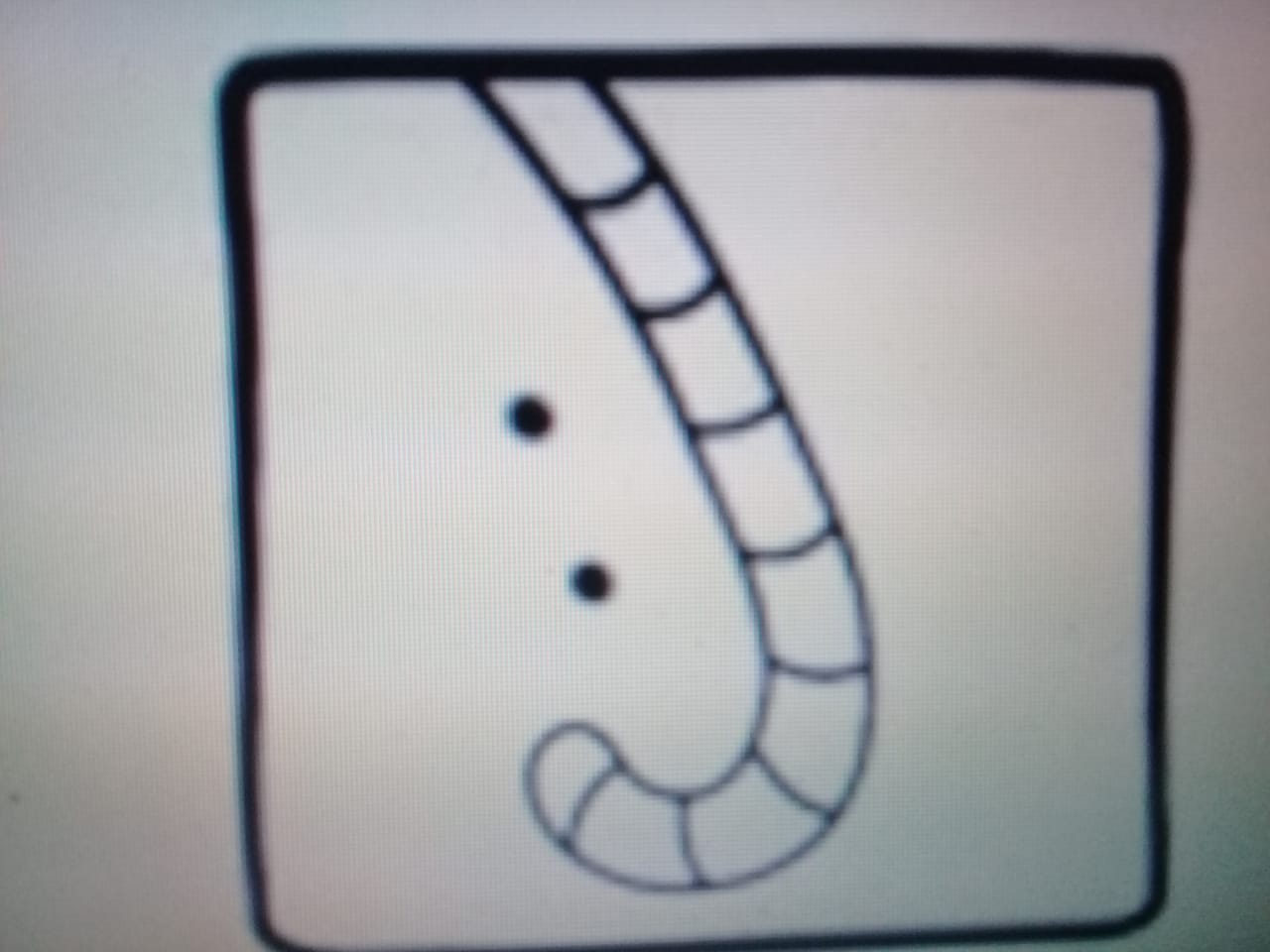
We find surprising similarities between the two curved signs that flank the tusk on the upper part of the jade mask found in structure 5D-34 of North Acropolis of Tikal (image 1) with the double virgule that draws the nose of “The Great Jaguar of Tikal” (image 2).
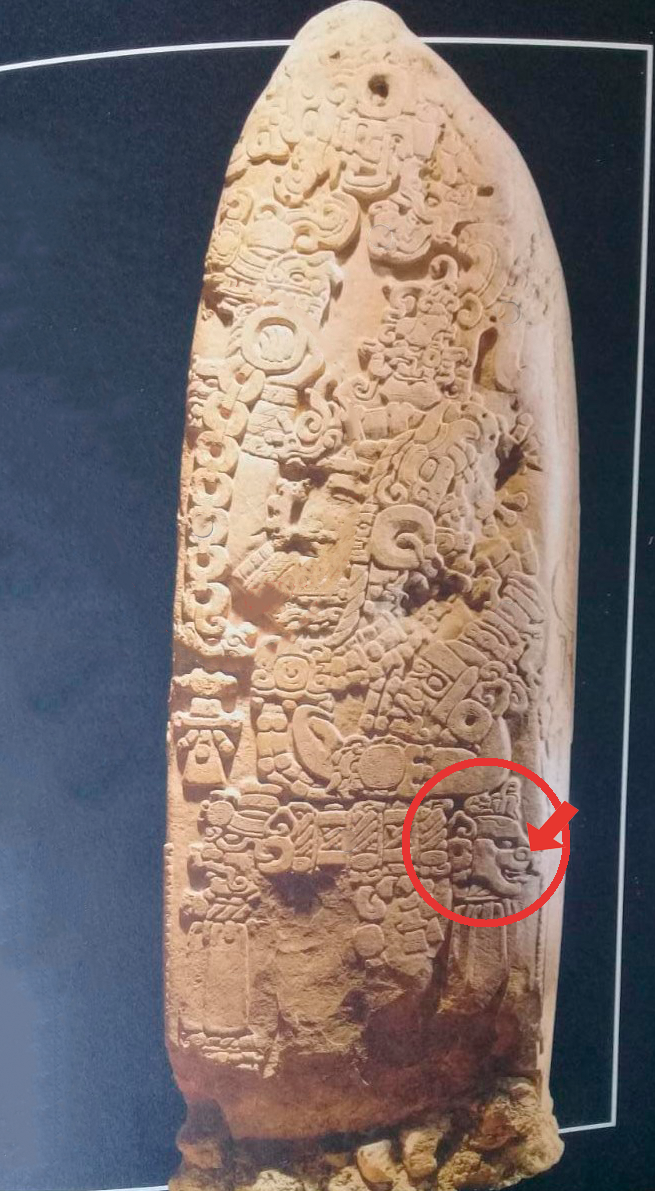
Also known as grapheme T-324 is related to the symbol “iX”, which means "jaguar". (image 4). This grapheme can also be found on lower right hand side of the famous Stela 31 of Tikal (image 5) illustrating to lady Ix Unem Bahalam, represented as a deity, showing a remarkable virgule in the nose (images 5, 6 and 7).

A PERSONAL PROPOSAL:
IF WE CHANGE THE POSITION OF THE MOSAICS OF THE JAGUAR GRAPHEME WE CAN APPRECIATE BETTER THE SIMILARITIES AMONG EACH OTHER:


Furthermore, we find a very interesting geographical relationship between the Structure 5D-34 of North Acropolis where the jade mask was found, the Temple I of "The Great Jaguar", and the Structure 5D-73 were the ancient jade jaguar was found:

11.- The size and the shape of the jaguar fang that wears the jade mask of Tikal (Image 1) is very similar to the upper fangs of "The Great Jaguar of Tikal" (Image 2):
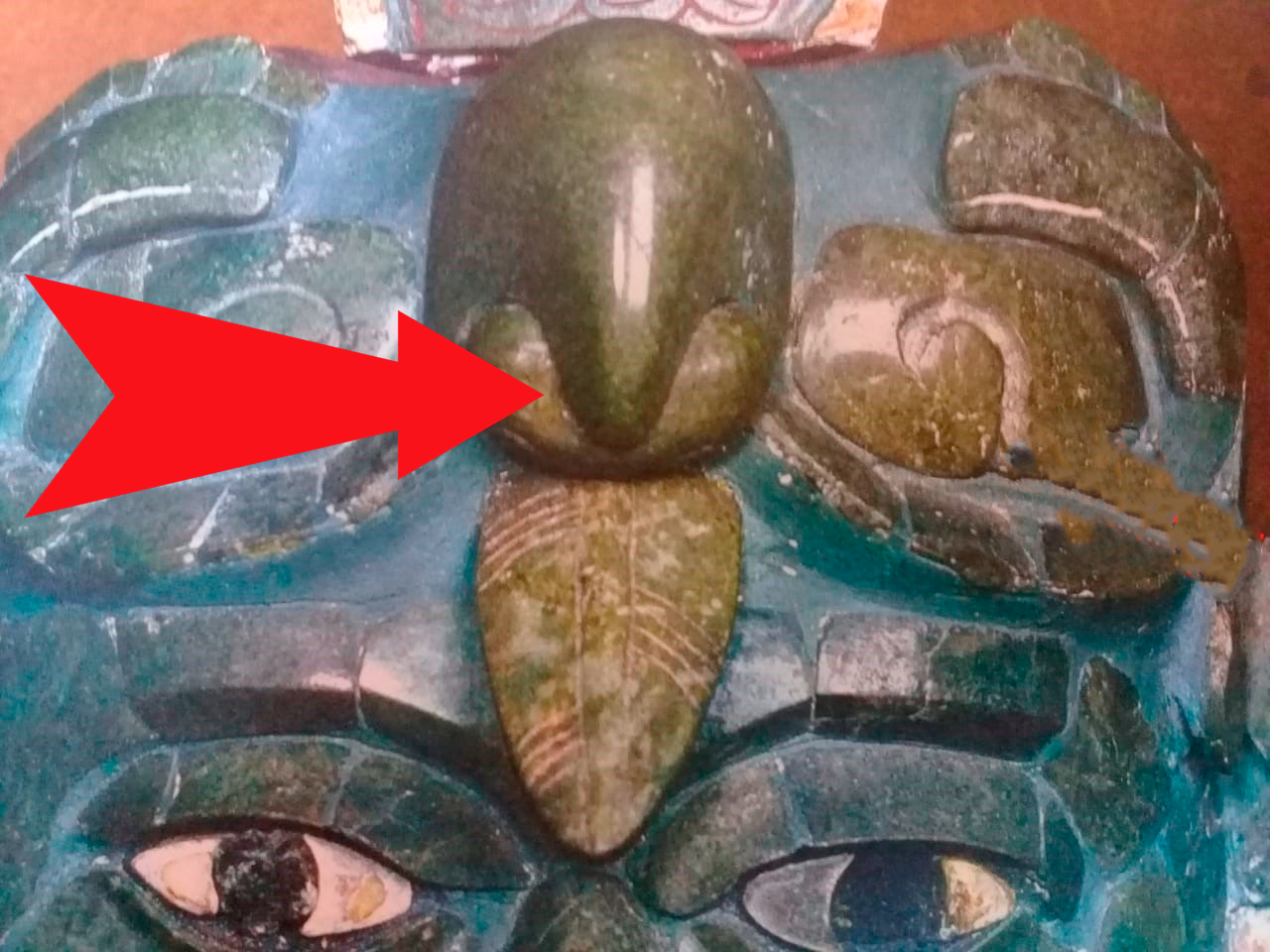
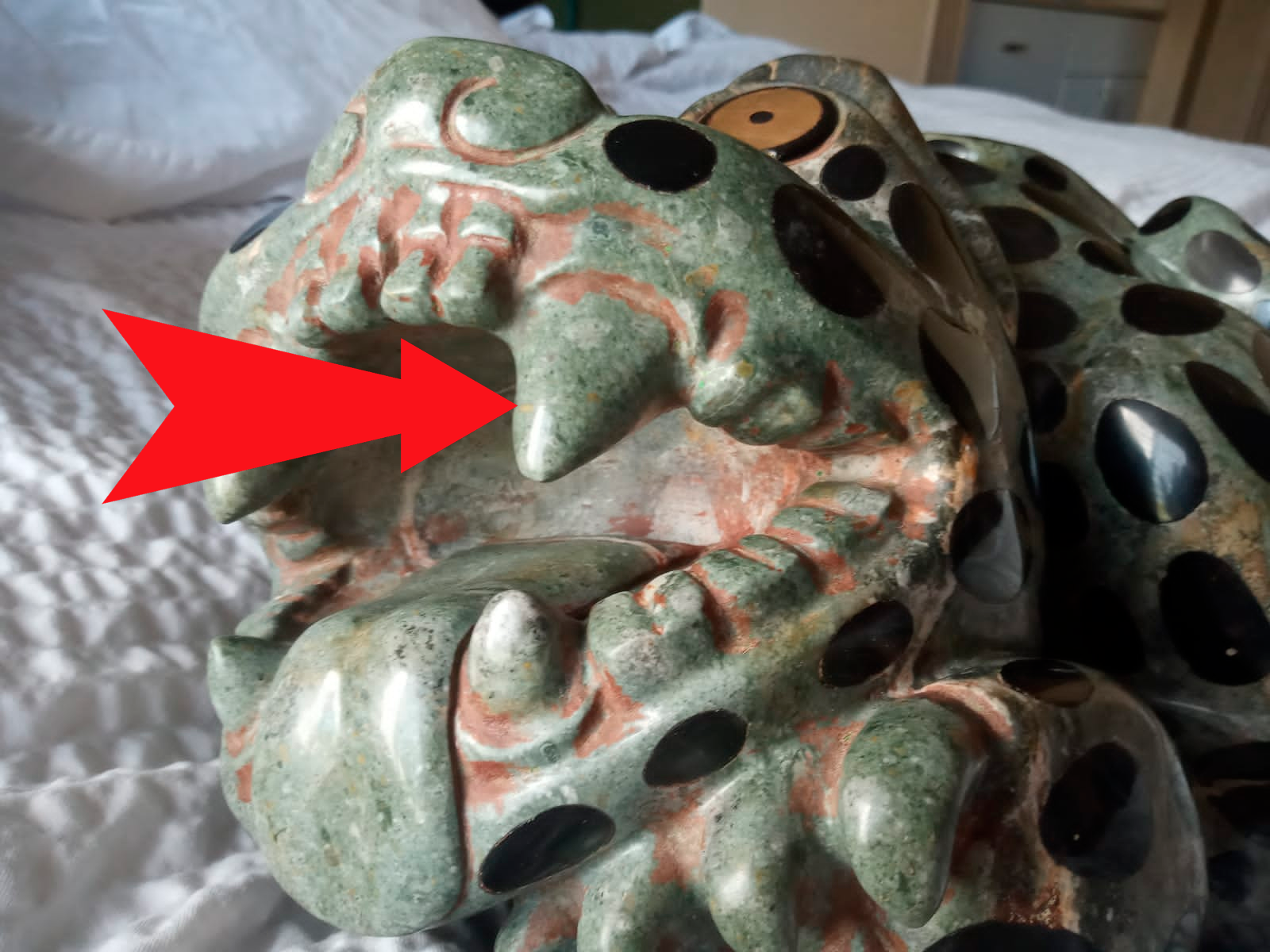
12.- We found in Stela 20 of Tikal archaeological evidence of the central character and preeminece of the jaguar, wich we belive after the opening of the Great Plaza was presided by "The Great Jaguar of Tikal":
The fact that in an important Stela, the number 20 of Tikal, the successor of Hasaw chan K'aawil I, his son Yik'in Chan K'aawil (Lord of Tikal from 734 to 755 A.D.) is shown with an image of a jaguar in a preponderant place reclining on a stool that represents the emblem glyph of Tikal, seems to be absolutely revealing about the ritual custom at that time.


Additionally, we found that there is an important relationship between the jaguar of Stela 20 and the Preclassic jade jaguar of Structure 5D-73; in both of them we can identify a "floral" glyph in the form of a mane; furthermore, we can relate this Stela to the "Great Jaguar of Tikal" for its round eyes and feline spots which leads us to think that when this Stela was made the author had access to both jaguars.
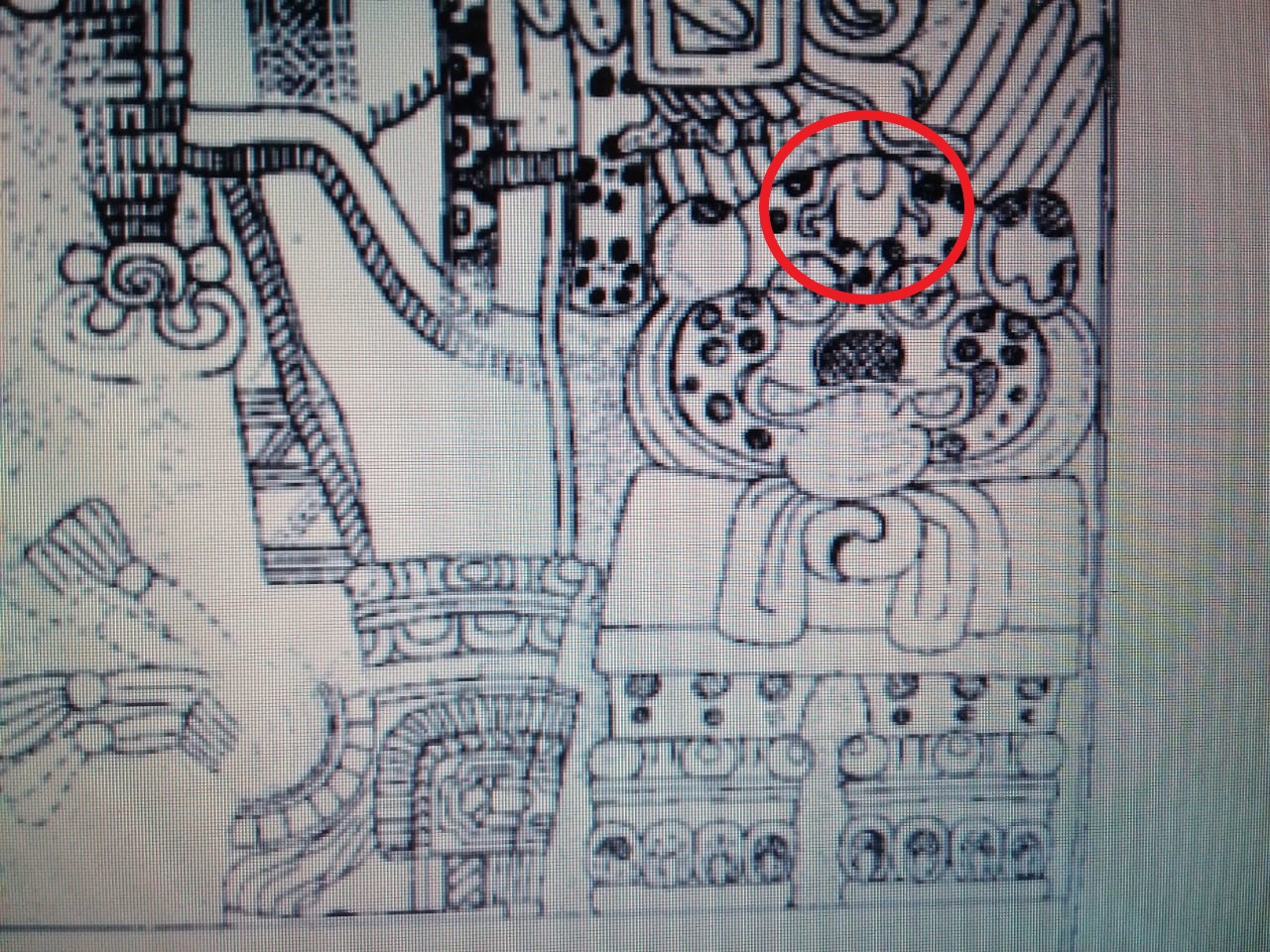

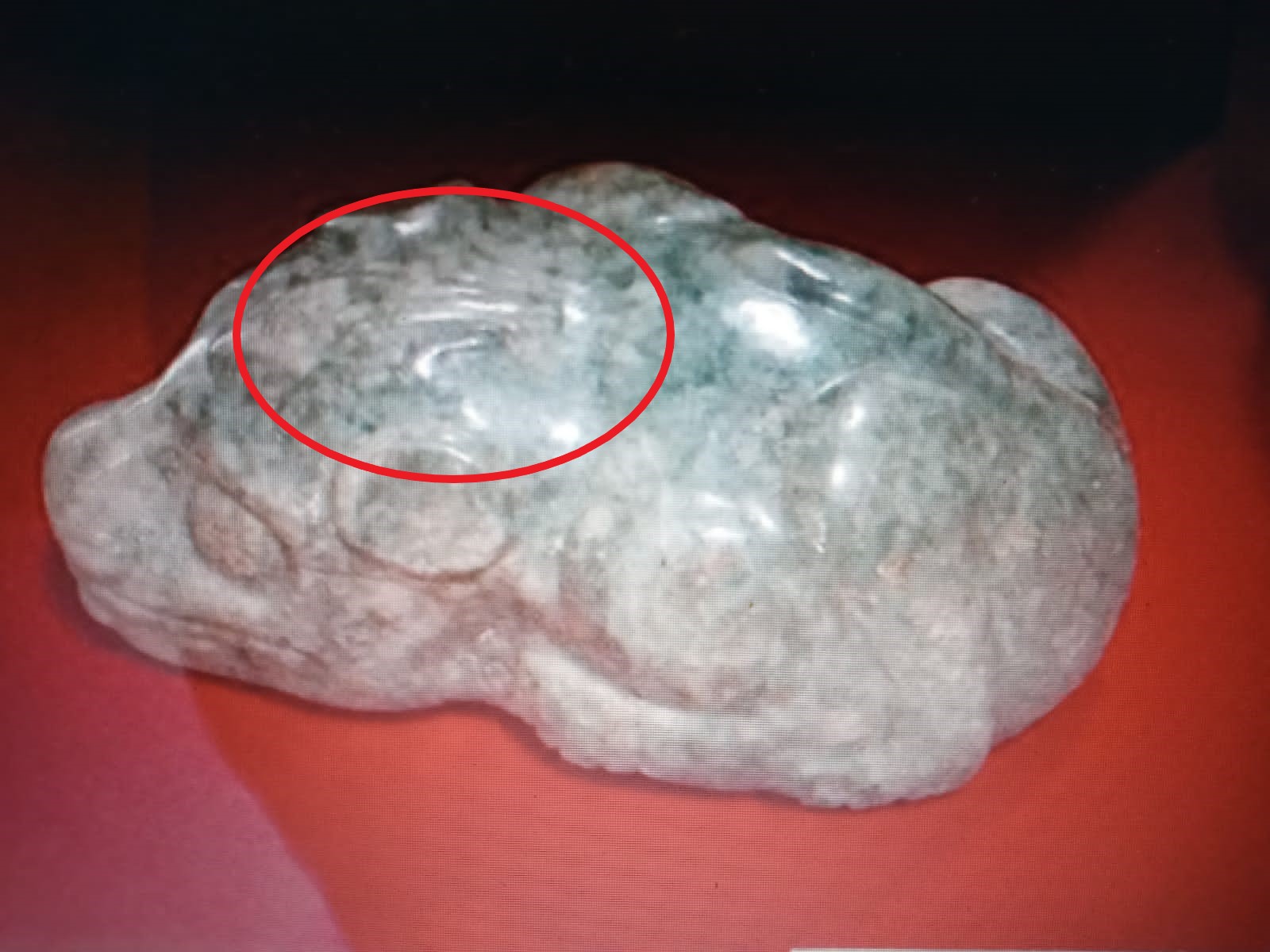
It is important to comment that the floral glyph is related to the jaguar as a deity of the vegetal world and food provison but also It closely resembles a glyph that appears on Stela 29 of Tikal:


13.- Another important indication that leads us to affirm that "The Great Jaguar of Tikal" comes from the Maya region, is that among the jade offerings dedicated to King Pakal, the Lord of Palenque allied with Tikal, we can observe at least one piece circular jade with the same apple green color of "The Great Jaguar of Tikal".
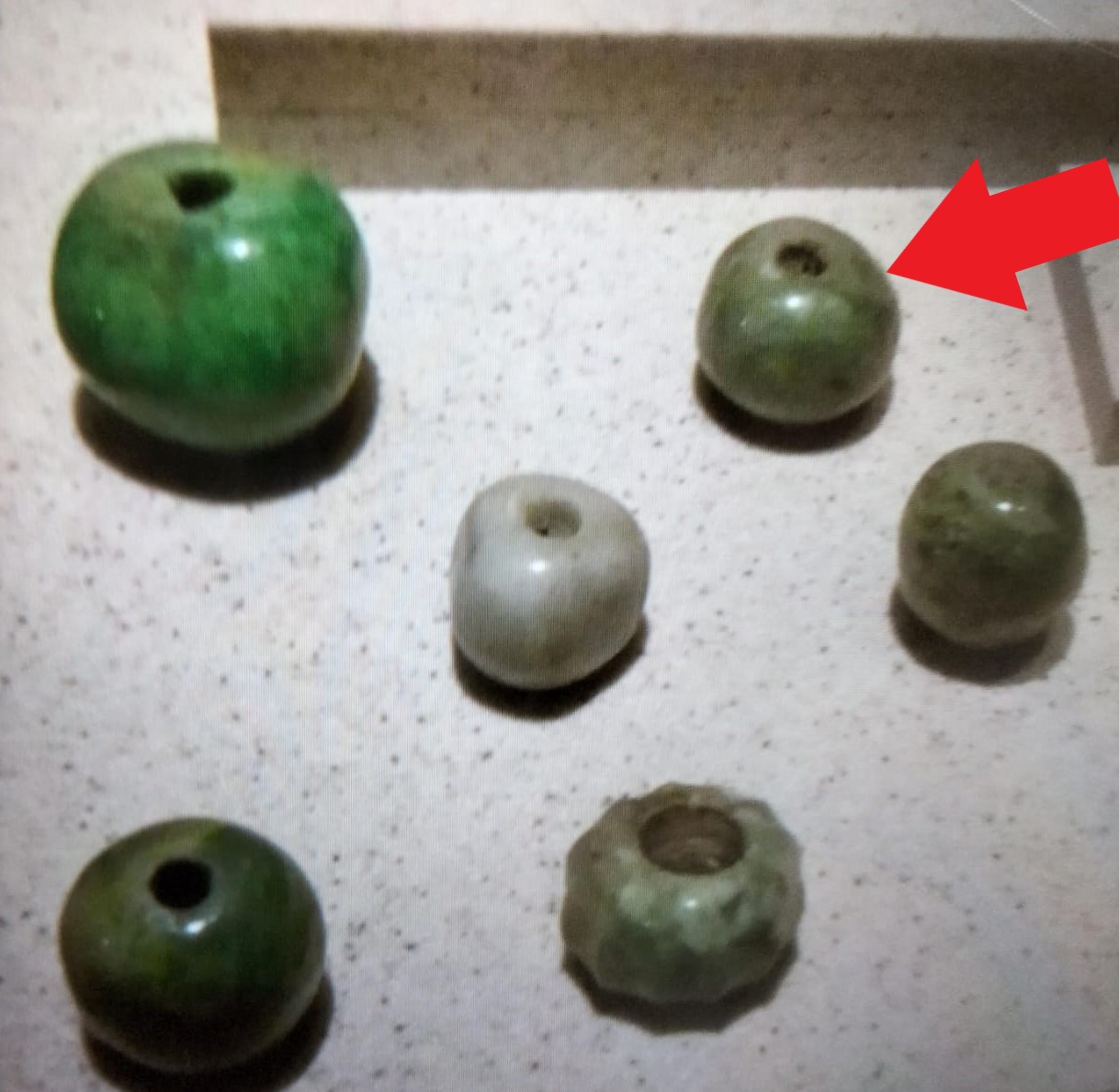
The size of the jade offerings, which do not exceed four centimeters, tell us about the rarity of jade; an exclusive product of royalty.

It is worth mentioning that the ruler of Tikal Nun Bak Chak (protective skull), visited his friend and ally "Pakal the Great" in Palenque in the year 659 A.D., and that the powerful Pakal died a year after Hasaw Chan K'aawil I ascended the throne of Tikal. Could it have been Hasaw Chan K'awiil I himself who personally carried that offering to Pakal's funeral?
14.- The preeminent place of the jaguar for the royalty of Tikal:
It is well known that the jaguar (Bahalam), the deity of the underworld and of the night of the Maya, takes on special importance in Tikal due to its emblematic significance of royal power.
The king identified as "Great Jaguar Claw" Chak Tok Ich 'aak I (360-378 A.D.), one of the early rulers of Tikal, would influence later rulers such as Hasaw chan K'awiil I, the Great Reformer of Tikal and his successors.
They used repeatedly the figure of the jaguar in their iconography as a symbol of their royal power, as we can see on Lintel 2 of Temple III of the Great Priest, as shown in the image below.
It is not by chance that in two of the most important burials in Tikal: the burial 196, the same one in which the jade jaguar from pre-classic times was found, and the burial 116, of Jasaw Chan K'awiil I, the bodies of the deceased were wrapped in jaguar skins, which identifies them as belonging to the dynasty that used the feline as a distinctive attribute.
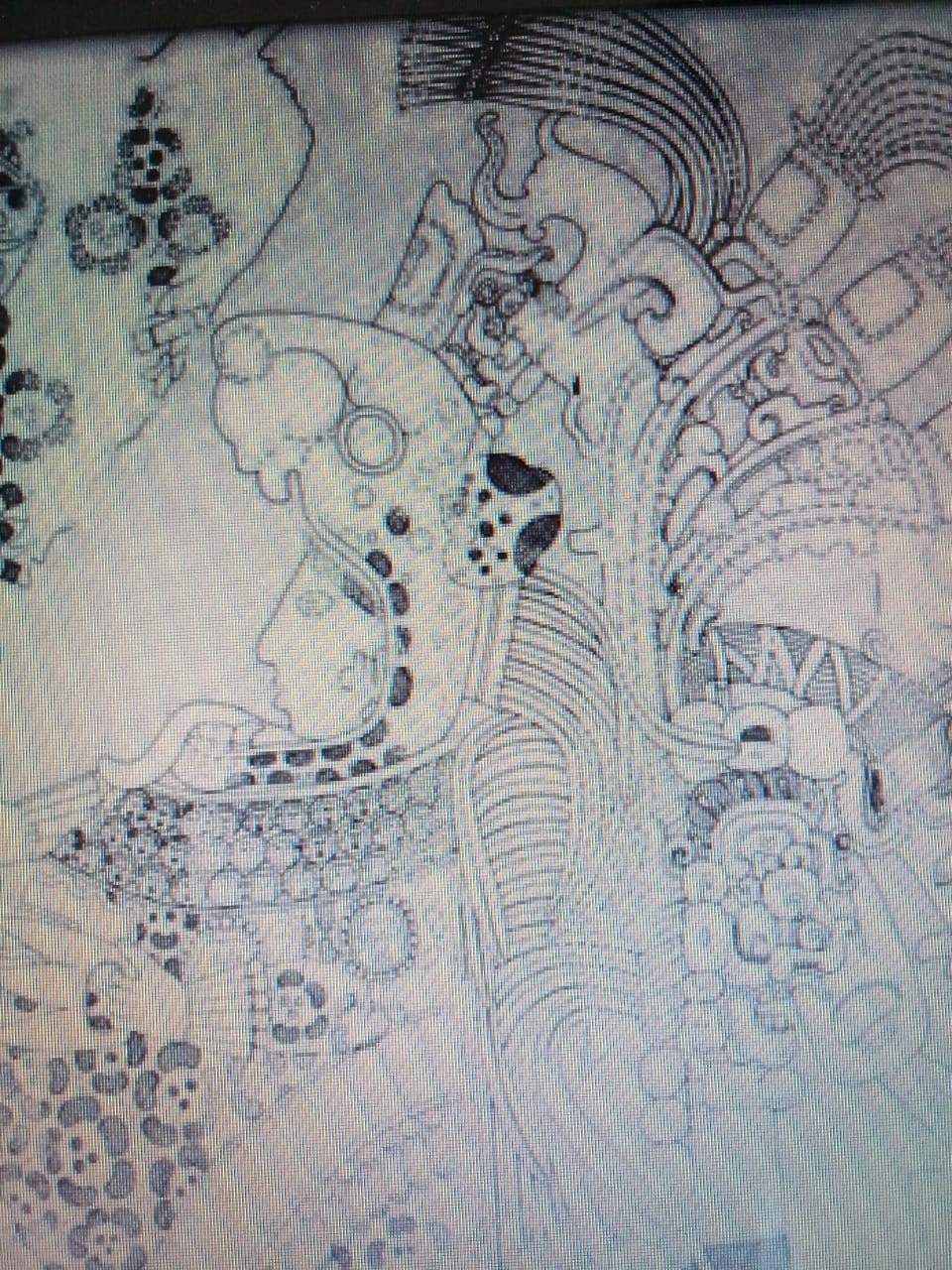
In accordance with above Dr. Ana María Orozco comments in her thesis "The Stylistic Evolution of Mayan Lettering at the Tikal Site" (2015), regarding the figures carved in sapodilla wood from Lintel 2 of Temple IV:
"Behind a second character perches... apparently he is offering a solar deity with jaguar claws. He has jaguar spots on his leg, arm and face... and a large jaguar ear"; highlighting the ritual importance of the jaguar for the ruling class of Tikal:
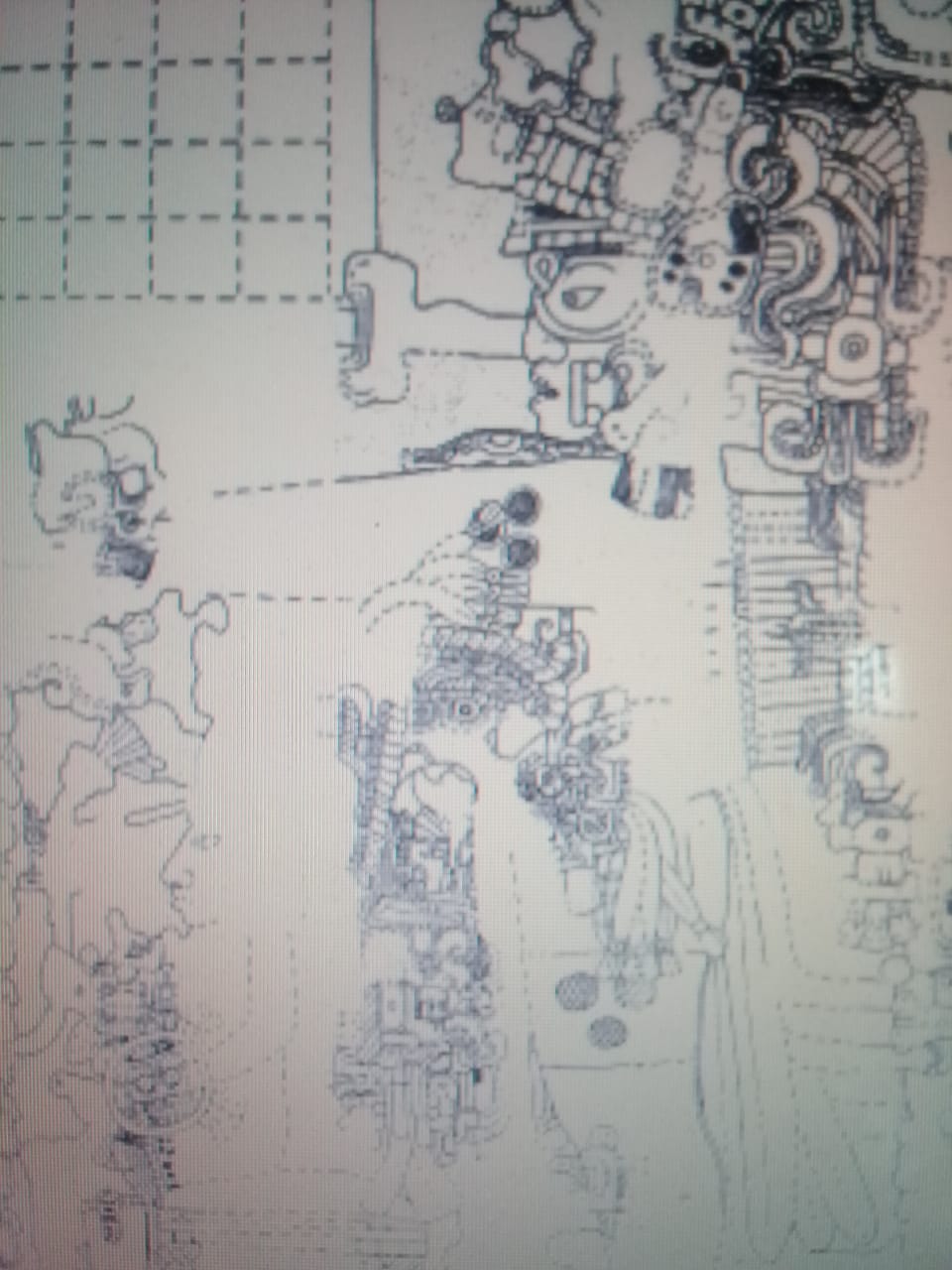
"The Sun turned black as the jaguar devoured it. The
empires declined as soon as it appeared. Being the master of
night, reigned in the primordial chaos, associated with the wild, the uncultivated,
to the untamed, to the terrible, to the forbidden, but also to the sacred.
Far from belonging to the lower reality of ordinary things, it was,
itself, the hierophany par excellence"
Heike Rosas-Müller
15.- We can see in ancient Tikal graffiti located in a royal tomb, glyphic figures that closely resemble the sketches of what could be a new jade Jaguar:
In the center of the North Acropolis, the ancient sacred site of Tikal, in Temple 33, the tomb of Siyaj Chan K'awiil II (411-456 A.D.), predecessor of Hasaw Chan K'awiil I, some murals were found with glyphs and primitive drawings alluding to the jaguar.

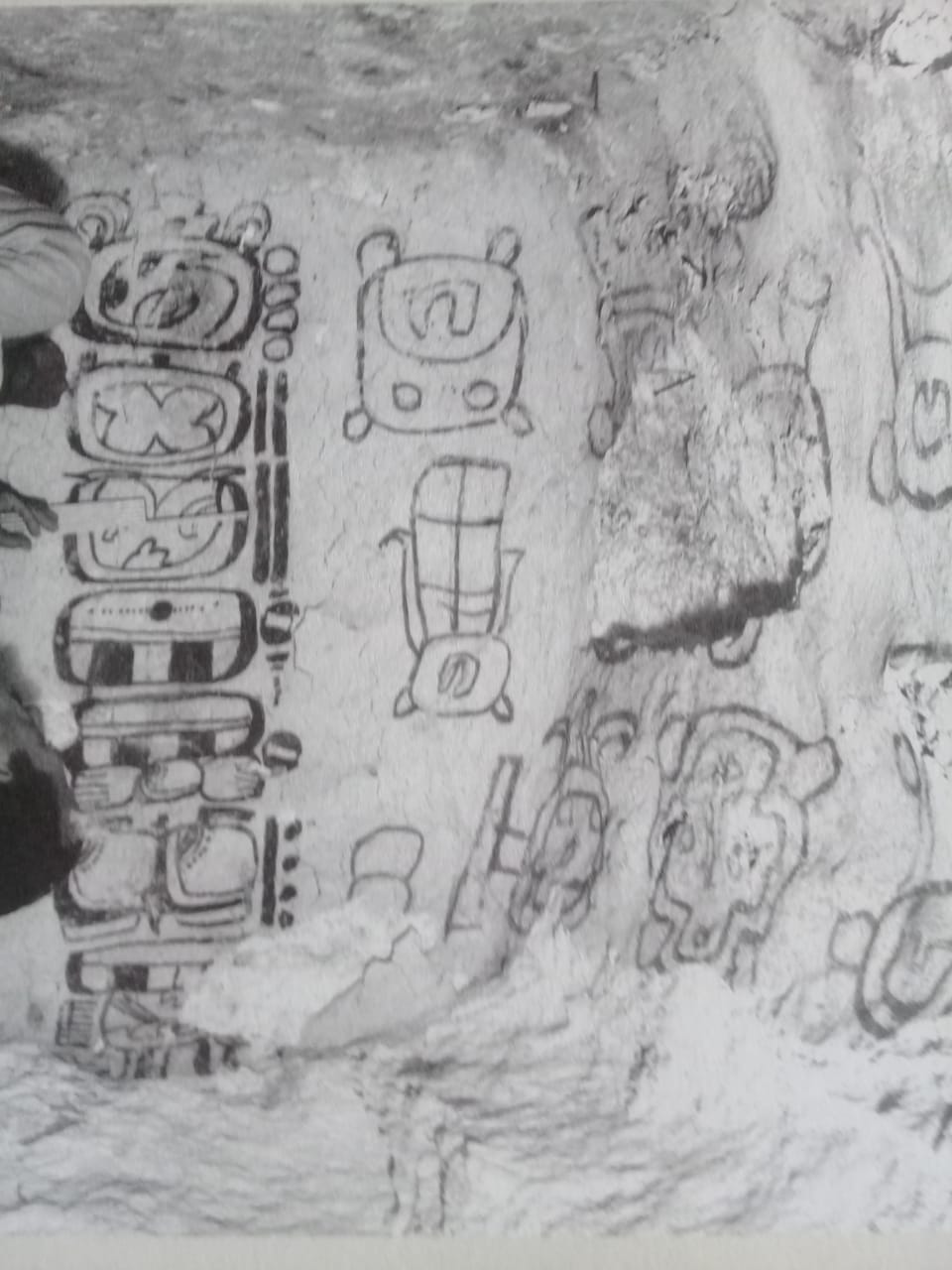
Although the oldest recorded date on Temple 33 was 457 A.D., we know that probably, as Harrison belives, was used for Nuun Ujol Chaak as a tomb, the father of Jasaw Chan K'awil I. This hyphotesis reinforces our theory that Jasaw Chan K'awil I at the time of burying his father (657 A.D.) was already thinking of making a new jade jaguar whose first sketches were embodied on the wall of the royal tomb thus establishing a direct relationship with the jade jaguars: the one of structure 5D-73, but also with "The Great Jaguar of Tikal"; note that in the mural drawing the jaguar appears with a kind of painted mouth, which corresponds to the remarkable jaws of "The Great Jaguar of Tikal".
16.- The discovery of an ancient tunnel in Teotihuacan provides notable evidence of the presence of "The Great Jaguar of Tikal" in this important mesoamerican city.
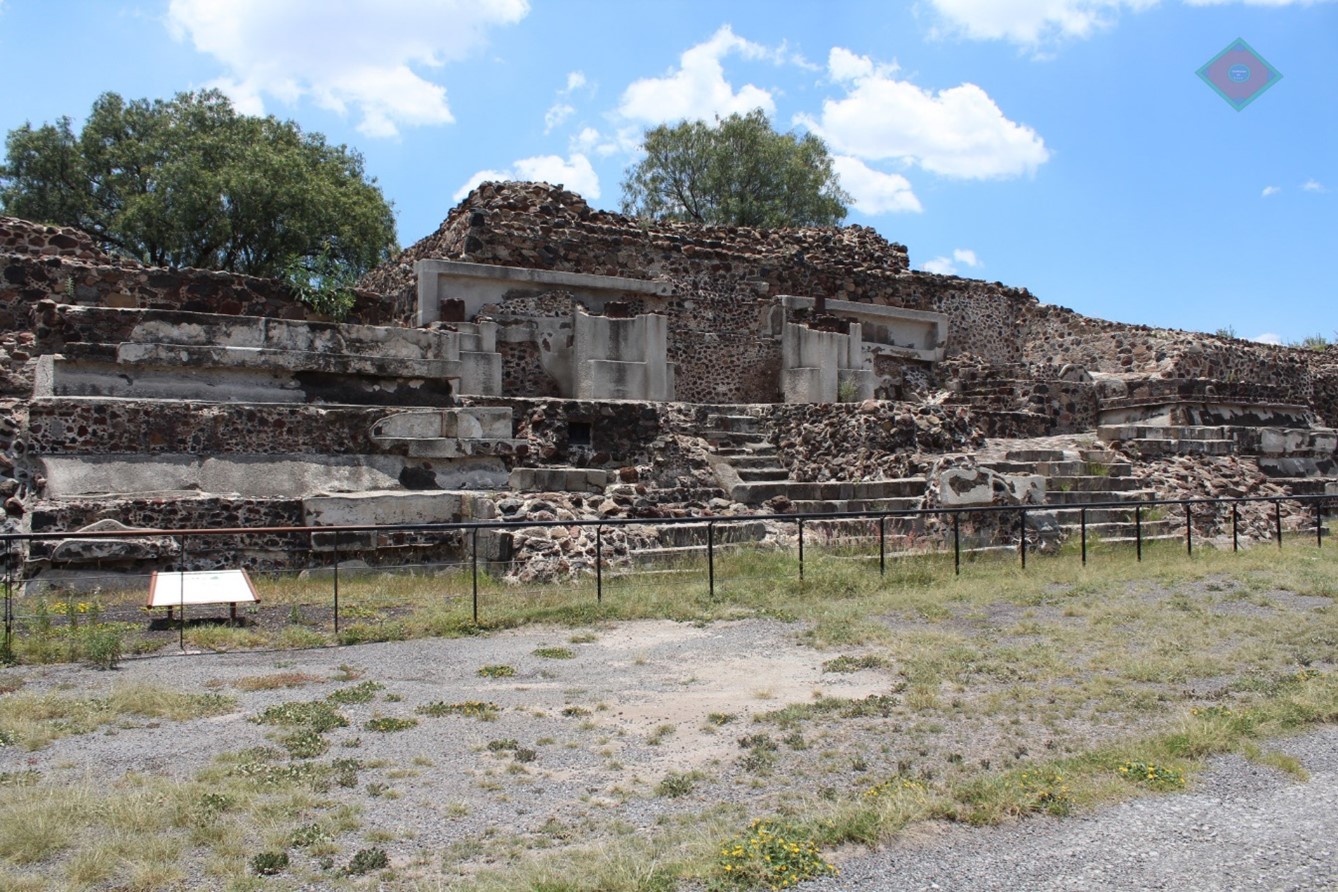
Teotihuacan was the most populated and cosmopolitan city in Mesoamerica; its maximum splendor was reached in the classical period and it had a great influence on the Mayan world, particularly in Tikal.
View of Teotihuacan, México:
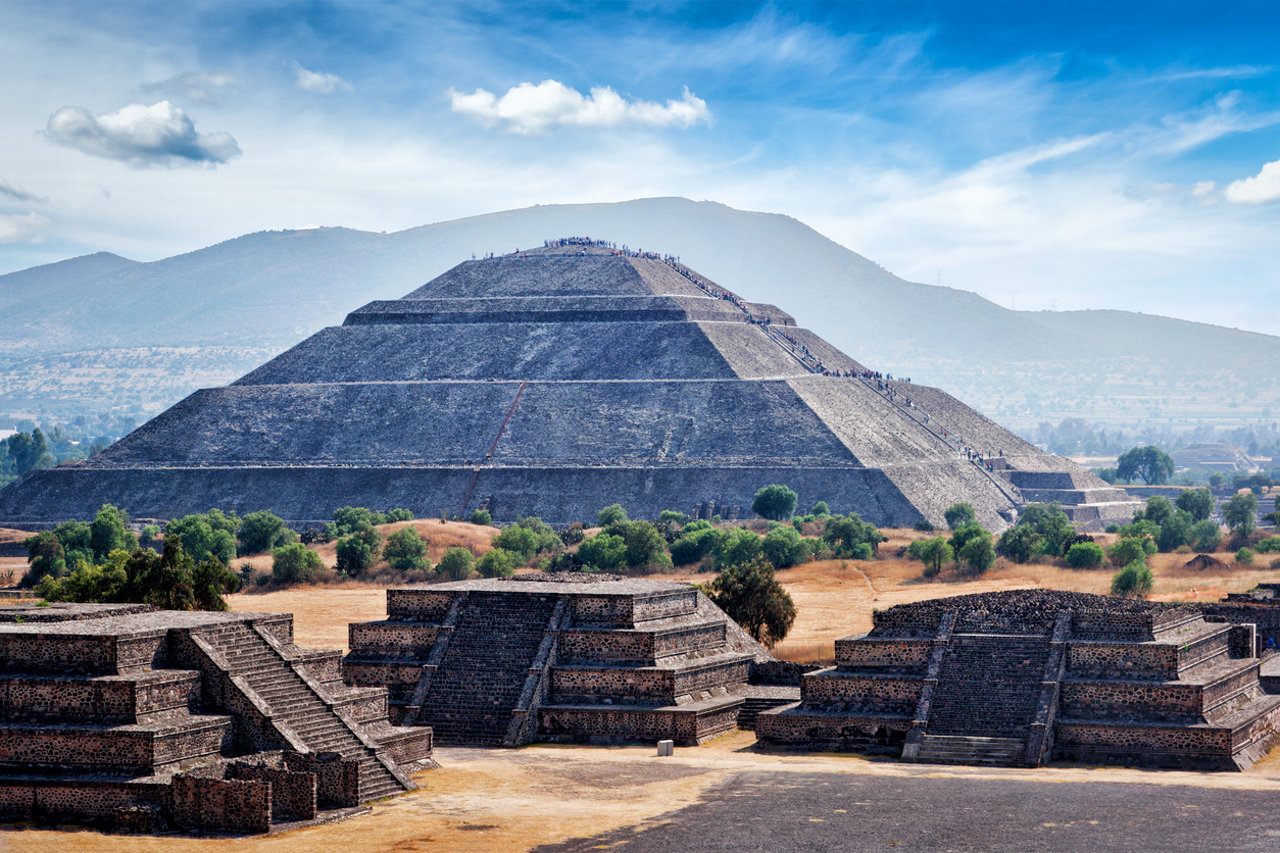
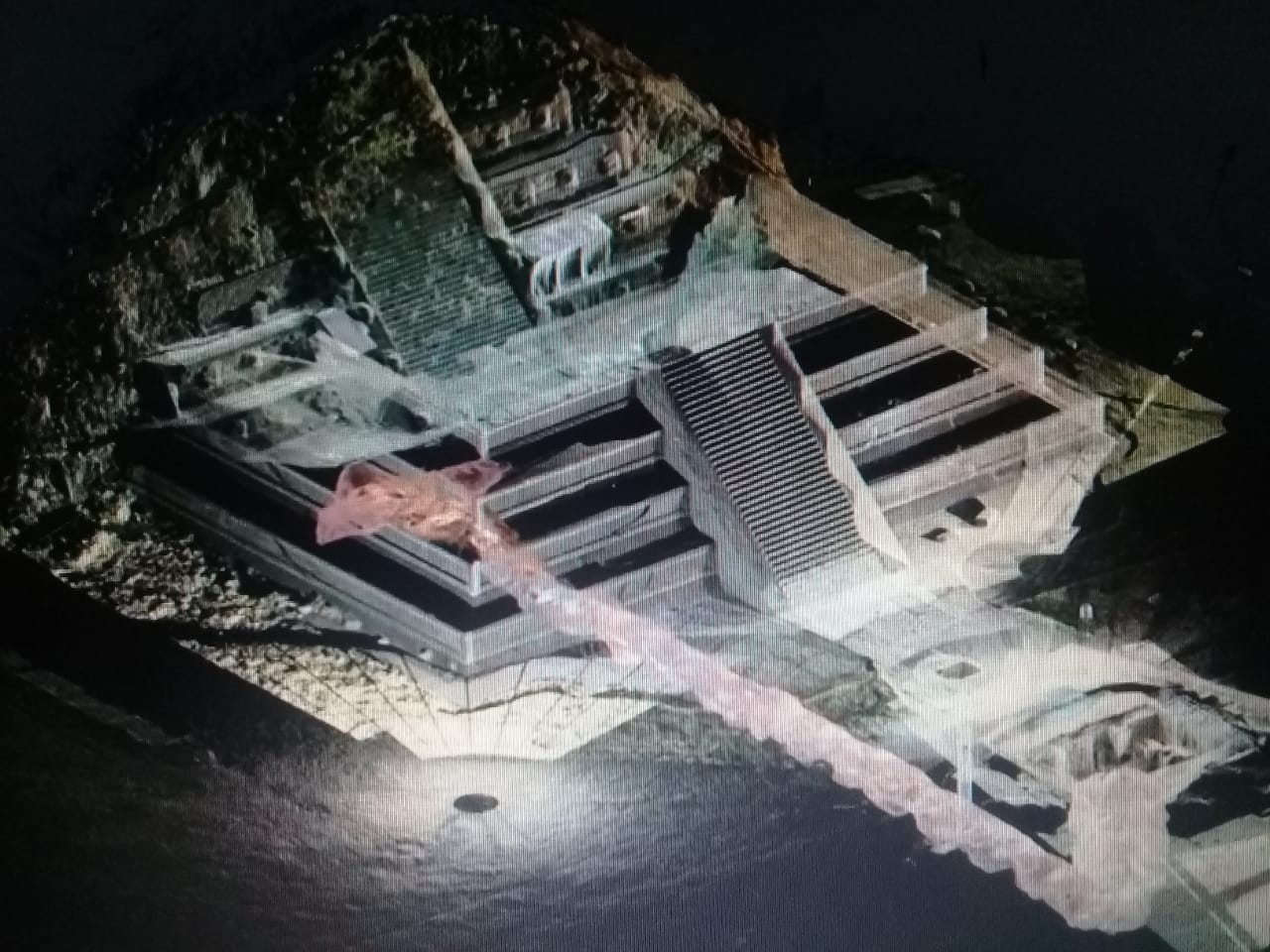
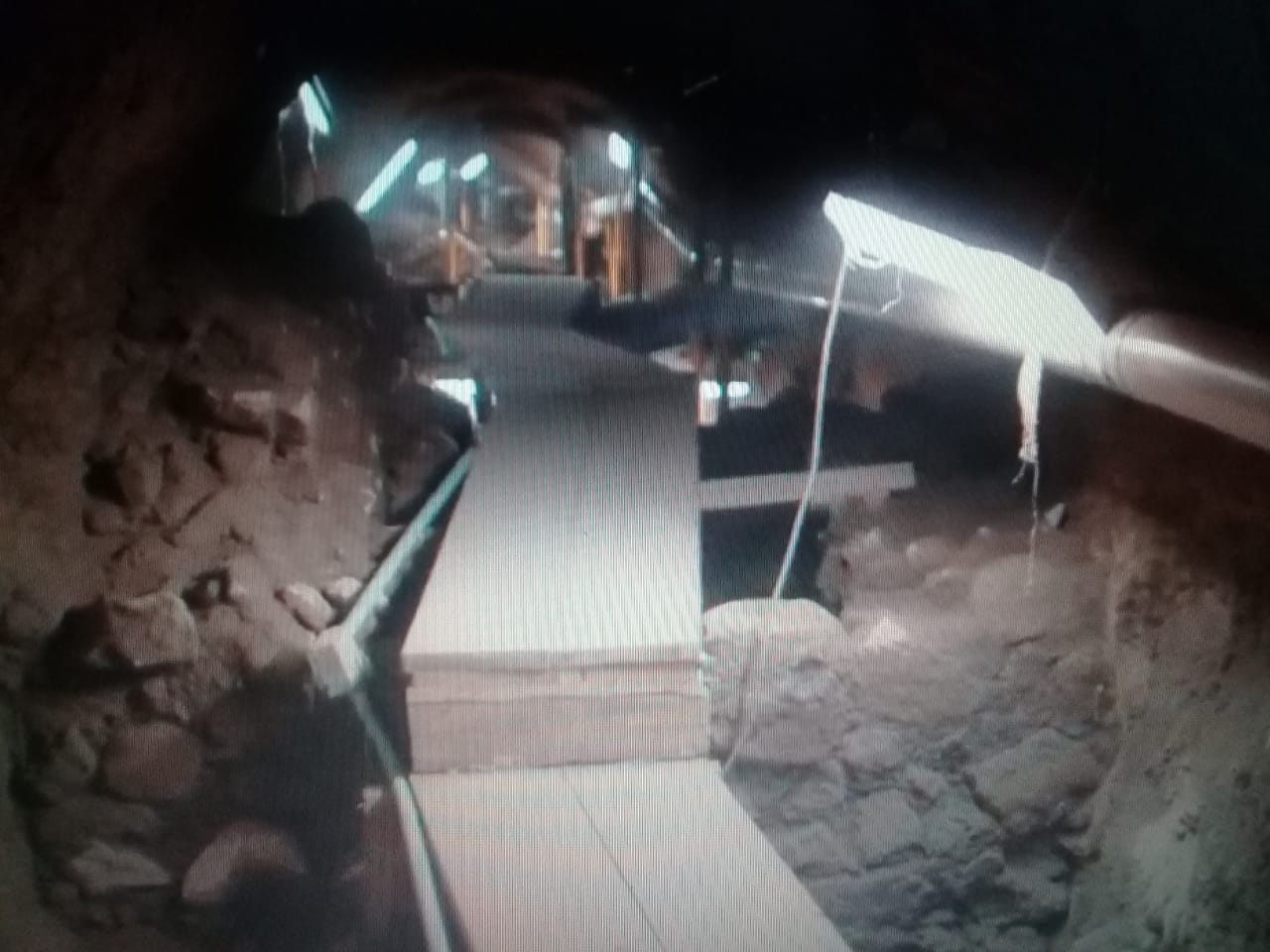
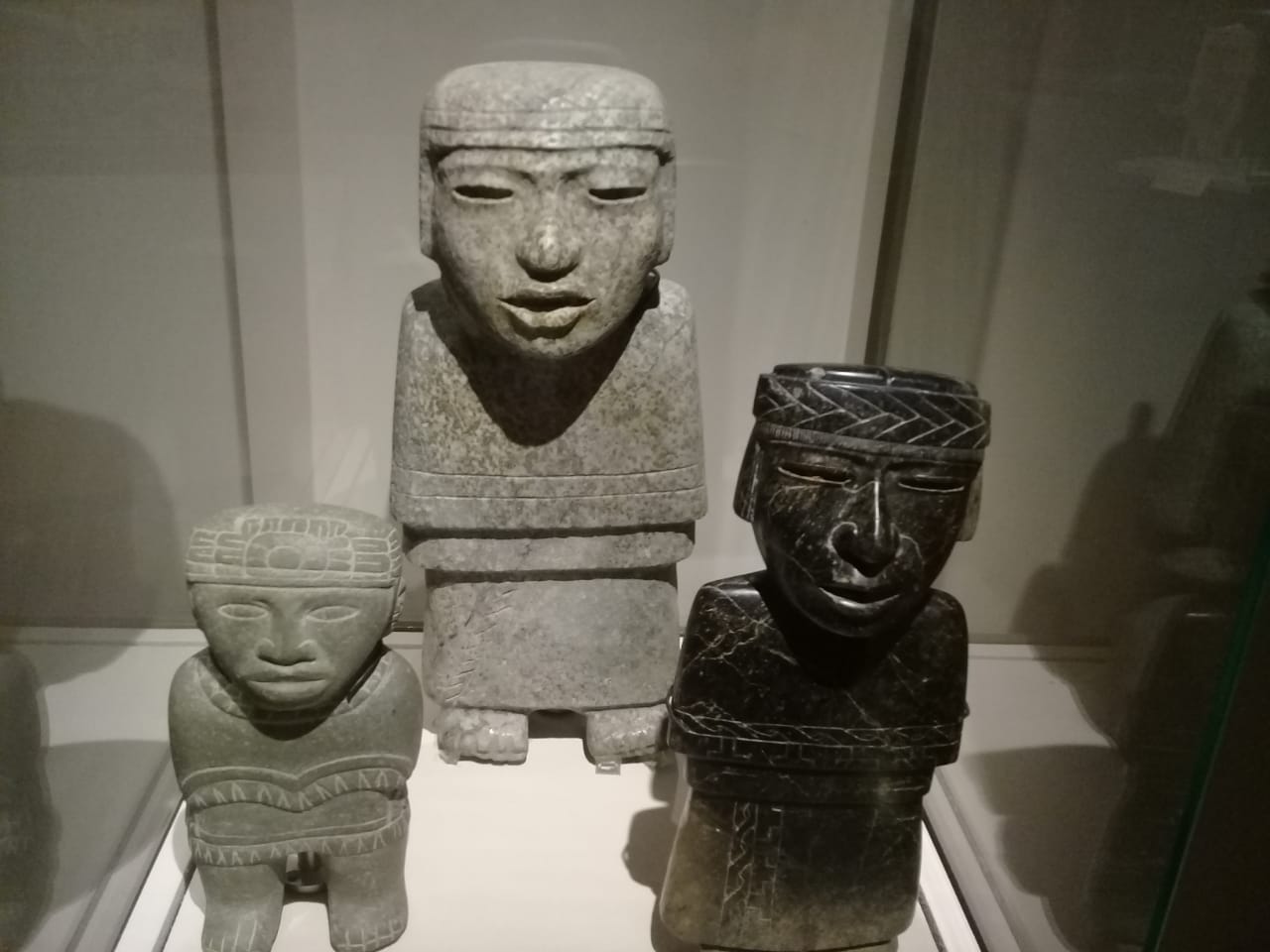
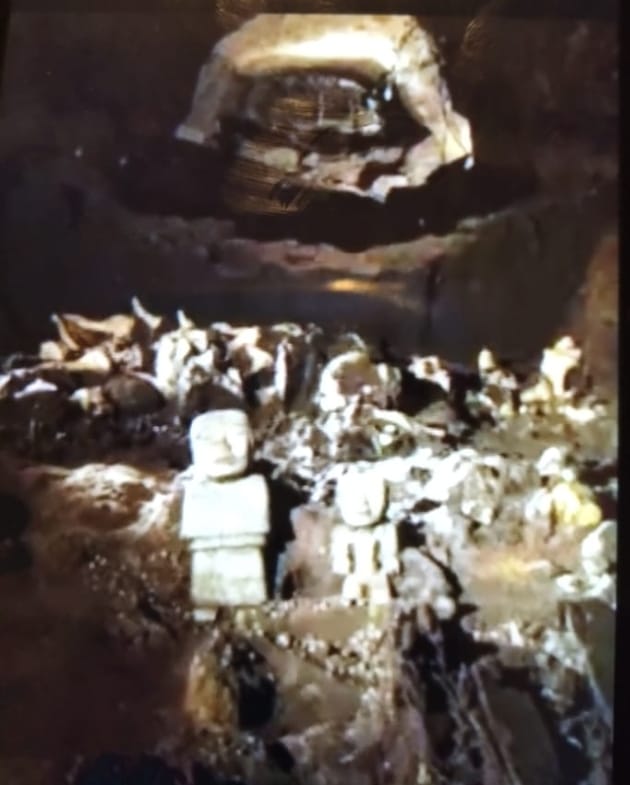
In 2009, more than 60 offerings were discovered in the tunnel of the pyramid of Quetzalcóatl in Teotihuacan, containing: stone sculptures, seeds, flowers, rubber balls, ceramics, Maya jade, shells with Mayan glyphs and even liquid mercury from the Maya region; this is particularly significant because they corroborate the Mayan influence in Teotihuacan.
The director of the Tlalocan project archaeologist Sergio Gómez Chávez declared that the Teotihuacans had broken down some walls to extract "something important"; "something that was very heavy and that they had dragged to the outside".
Coincidentally, jade is very heavy, and "The Great Jaguar of Tikal" weighs 57 pounds (27 kilograms), something not easy to carry, much less inside a tunnel.
Could have been that "something important" extracted, "The Great Jaguar of Tikal"?
Casually, we can see in one important mural of Teotihuacan found in "The agriculture Palace" a beautiful stylized apple-green jaguar; the same color as "The Great Jaguar of Tikal", with golden eyes and black spots, as we can see in this mural image:
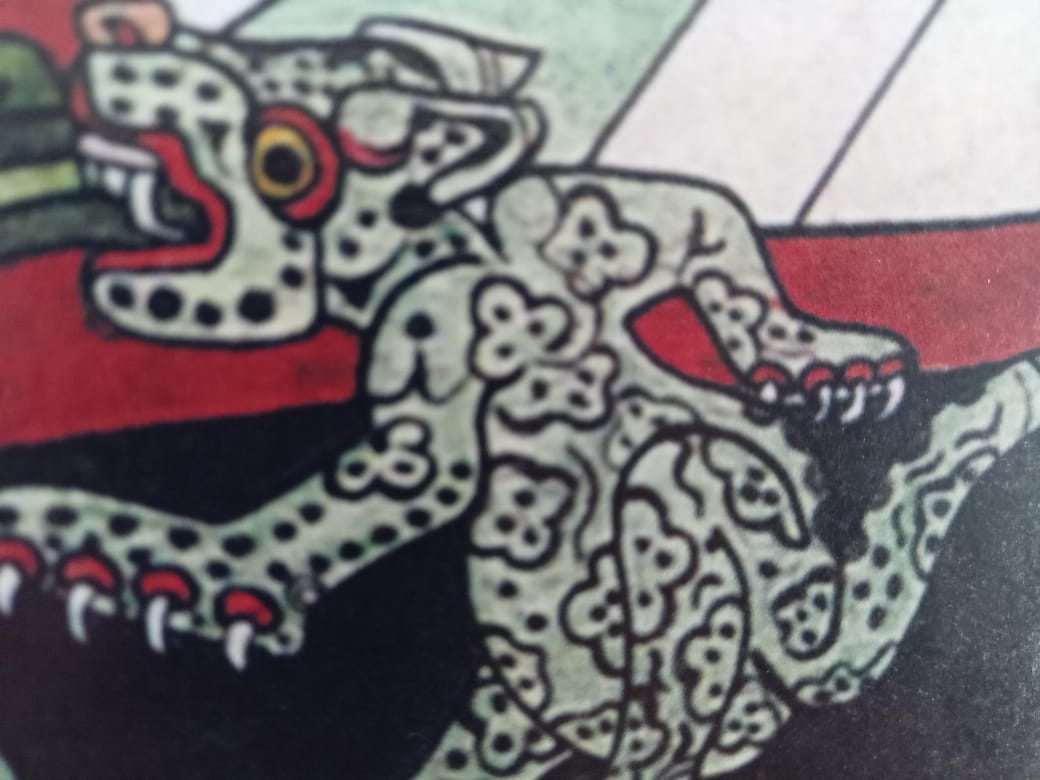
As Martha Foncerrada de Molina says:
"Some walls of Teotihuacán testify to the infiltration into the metropolis of artistic conceptions that modify the liturgical character, eminently symbolic of the official Teotihuacan pictorial expression."

 |
 |
 |
 |
With the burial findings of Maya jade, old rubber balls, shells with Mayan glyphs and liquid mercury, we can confirm the ancestral relationship between Teotihuacan and the mayan world, but we can verify the hypothesis that "The Great Jaguar of Tikal" was hidden under the Quetzalcoatl pyramid, the most sacred site in the ancient city of Teotihuacan, by WATCHING CAREFULLY THE SO CALLED...
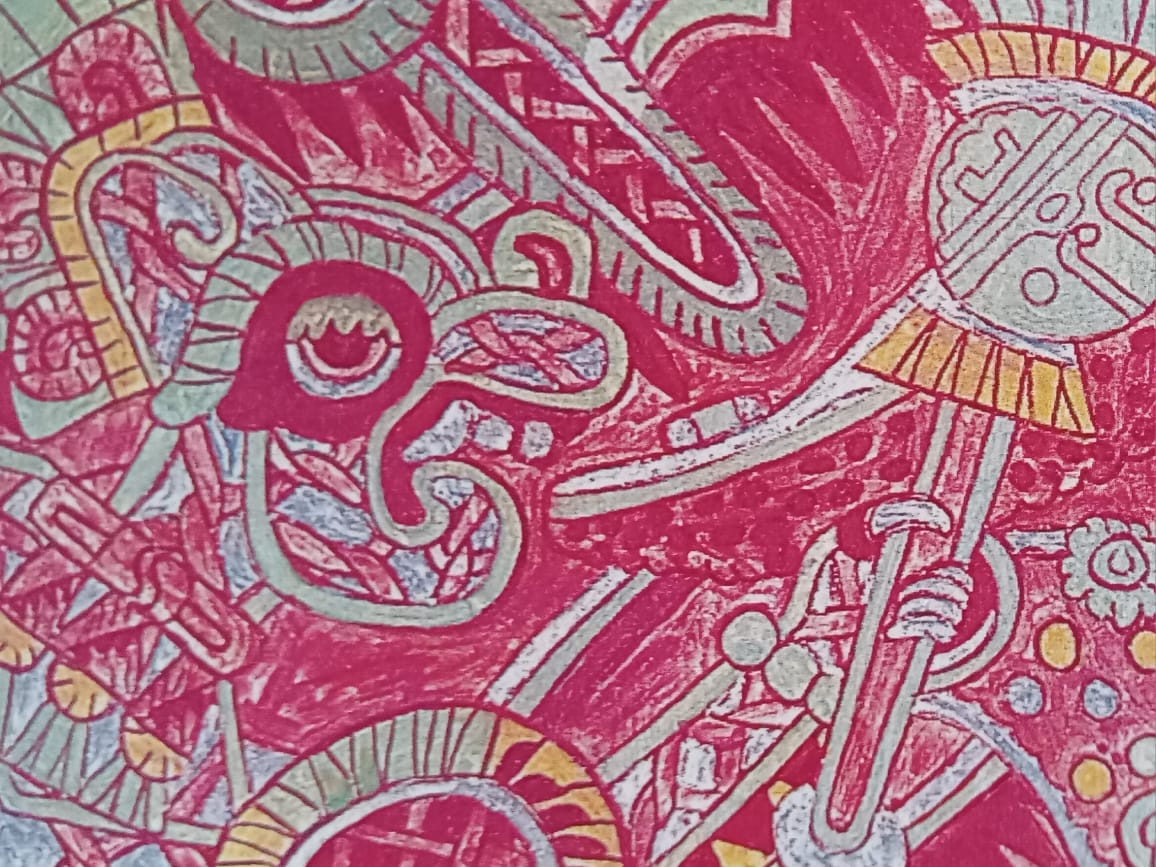
"MURAL OF MITHOLOGYCAL ANIMALS" FROM THE TEMPLE OF AGRICULTURE OF TEOTIHUACÁN:
As we can see, this mural is actually the graphic representation of a tunnel, along with its sacral divisions. This peinture represents the tunnel of the pyramid of Quetzalcoatl wich was discovered by archaeologist César Gómez in october the 2nd of 2003. It is clearly represented by the black color:
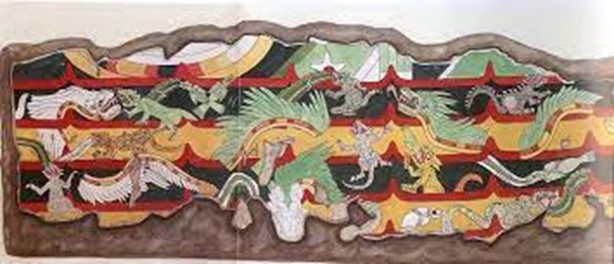
We believe that the "Great Jaguar of Tikal" was introduced into the tunnel, represented by the black color. It required a great effort of excavation to enter it; it was a long process that needed months of work; in the meantime the jaguar was absolutely covered with sand from the beginning with grey color and later on with sand of yellow color; the tepetate's color which proliferates in the deepest part of the tunnel. That explains the change of colors of jaguars on the mural. The jaguars sequence describes the ardous and strenous introductory process.
The mural also depicts a momentous event that culminates in the "encounter" with Quetzalcoatl; this happens when the jaguar reaches the central axis of the pyramid, which is where the tunnel ends; presumably, the underworld...
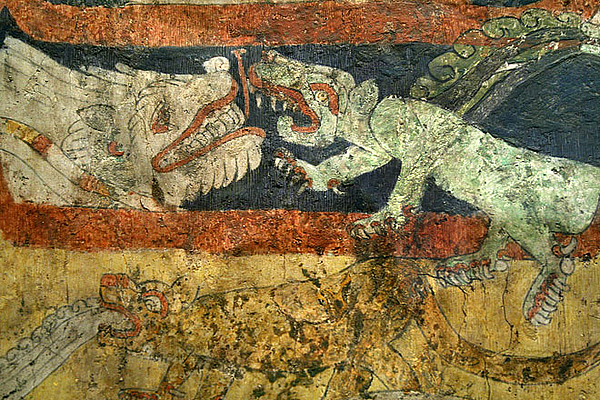
In fact, there is no warlike encounter between antagonistic political parties; what is really represented is a "friendly" encounter between the feathered serpent Quetzalcóatl and the Great jaguar of Tikal. Rather, it is a fusion that highlights the Tikal-Teotihuacan dynastic ancestry.
For more information please visit "Nueva propuesta interpretativa del mural de los animales mitológicos del Palacio de la Agricultura de Teotihuacán" at Academia .edu
Incredibly that symbolic integration between the Jaguar and the Feathered Serpent is represented in an important basalt sculpture found precisely in the Temple of Quetzalcóatl, where a jaguar appears assimilated with a serpent:

Furthermore:
There is a very interesting coincidence between the arrangement of the nails of the green jaguar of mural of mythological animals of teotihuacan, and the nails of the great jaguar of Tikal, which differ substantially from the jaguars of other murals of Teotihuacán, like one of Atetelco (next third image) for example, as we can see in next ilustrations:

There were very important reasons to preserve it in that very special place, the cave of pyramid of Quetzalcóatl, such an important religious asset. As the outstanding researcher Guilhem Olivier suggests:
"the Jaguar-Tepeyóllotl, Quetzalcóatl, is linked to the gods of rain and fertility, but there is also an important symbolic relationship between Quetzalcoatl and the jaguar in terms of the warrior function and political authority", in full agreement with our theory; furthermore, he finds an important correlation between the cave, Tlaloc and the jaguar; let's not forget that the Tlalocan in Mexica mythology is the paradise ruled by Tláloc; “While the caves lead to the abode of the god of rain, they are also the place where the Lord of animals reigns, the place where jaguars live.”
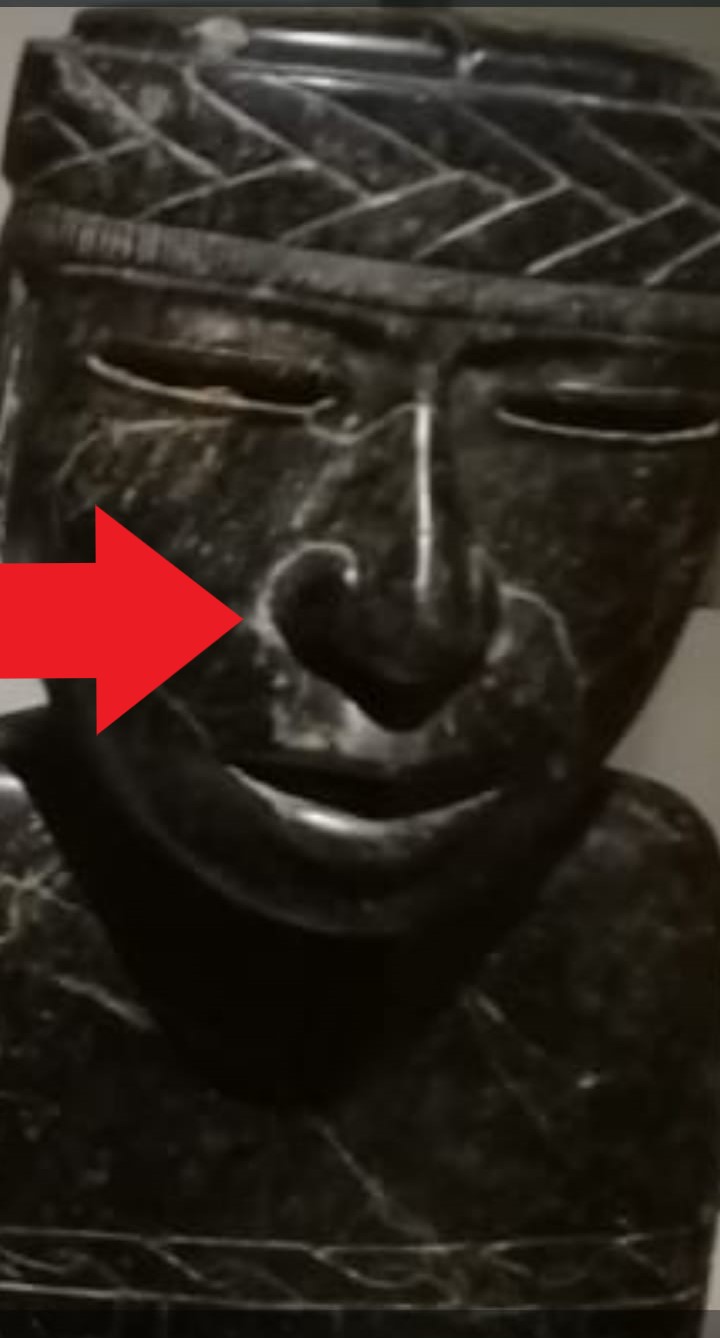
17.- Very important is to say that we can identify the glyph related to the jaguar on the Teotihuacan idols found beneath th piramid of Quetzalcóatl, wich is identical with the distinctive glyph of "The Great Jaguar of Tikal."
There is an enormous resemblance identified between the virgule of the nose of "The Great Jaguar of Tikal" with that one of the Jade Mask of Tikal (item 10), surprisingly, we also find that same glyph in one of the sculptures extracted from the tunnel of the pyramid of Quetzalcoatl in Teotihuacan, uniting symbolically the sacred representations of both important cities: Teotihuacan and Tikal.
18.- According to the evidence collected to date, the drawing that is barely visible on the crest of pyramid I of the Great Jaguar, is none other than the representation of "The Great Jaguar of Tikal."
Some people think they see a jaguar drawn on the crest of Temple I of the Great Jaguar at certain hours of the afternoon. Do you think the resemblance suggested in the following images has any credibility?:
Temple I of the Great Jaguar
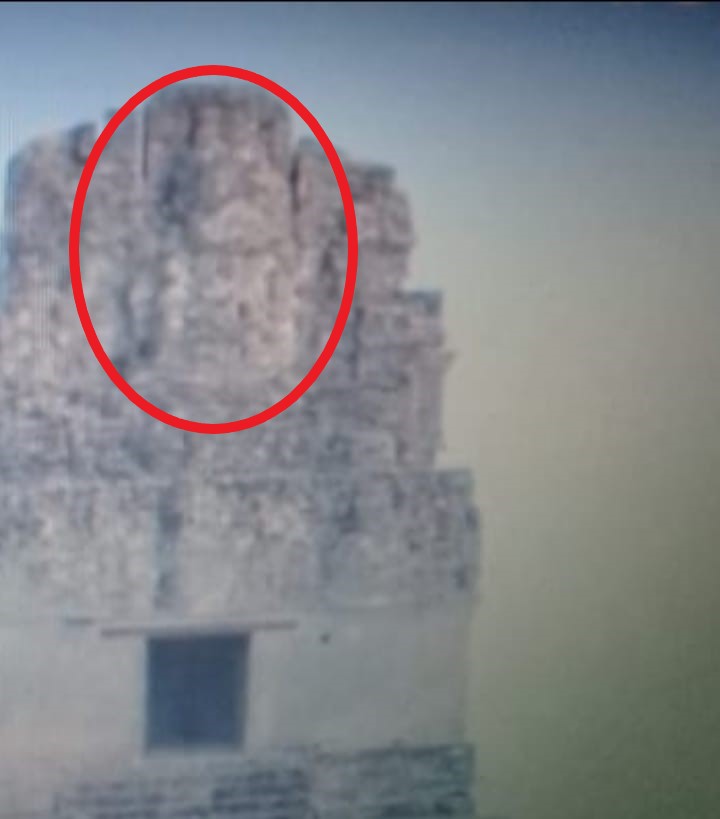
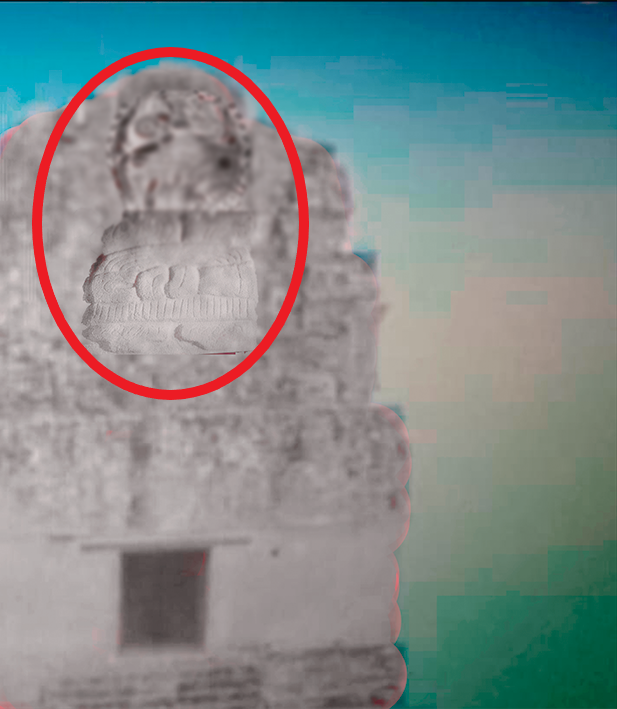
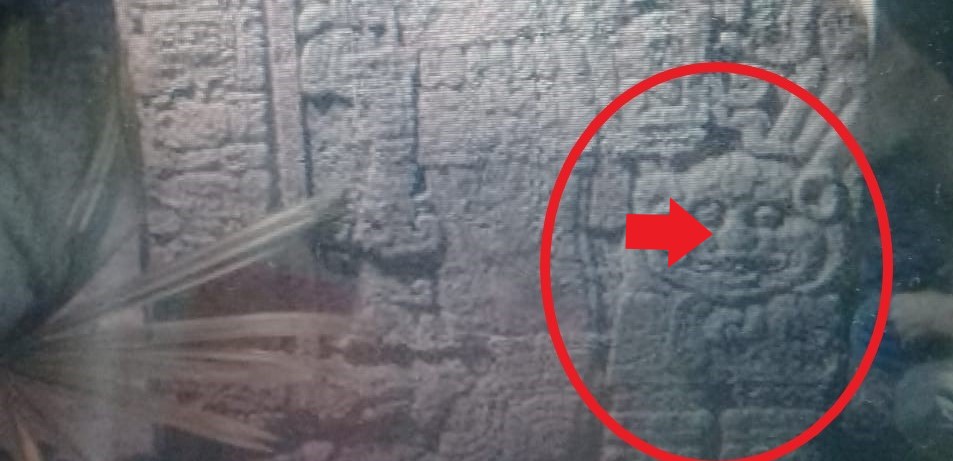
This suggested figure is not the result of simple imagery; we must remember that on Stela 20 of Tikal we find this same combination of a jaguar on top of the emblem glyph of Tikal, just like very probably looked in the inside of Temple I, of the Great Jaguar:

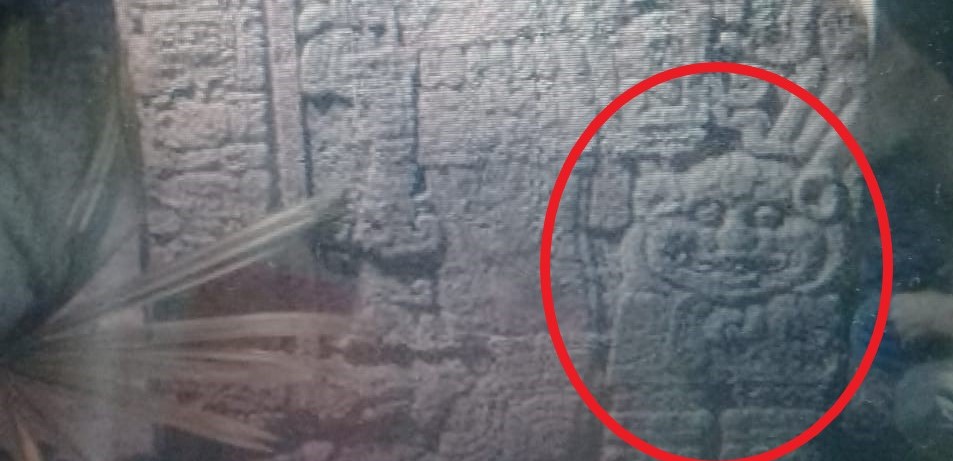
Besides the round eyes, the jaguar spots, and the exposed tongue, we can see in Stela 20 the same prominent nose with conical shape that we can see in "The Great Jaguar of Tikal" :

CONCLUSION
In the same way that we can identify important similarities between the jade mosaic vase from tomb 116, of Hasaw Chan K'awii l, and the one from tomb 196, where the ancient Preclassic jade jaguar was found, we can identify important similarities between both: the jade jaguar of tomb 116, the pre-clasic jade jaguar, and "The Great Jaguar of Tikal";which tells us about their common origin.
The rarity of the material: the jade, that was really scarce, proves by itself the authenticity and originality of "The Great Jaguar of Tikal". There is no piece of jade comparable to the Great Jaguar of Tikal in all of Mesoamerica, except the jade jaguar found in Structure 5D-73 burial 196 of Tikal. Its dimensions are absolutely unattainable for someone who had not belonged to royalty.
A proof of this is that Pakal II, the powerful King of Palenque, deploy his extraordinary wealth and power, dressed in necklaces,wrist straps, rings and bracelets that weighed 26 pounds (11.7 kilograms), which represents less than half the weight of the jade jaguars (57 pounds or 27 kilograms each one of them).
The absolutely unique design lopsided and unsymmetrical of both jaguars, and the identical size reinforce our theory; furthermore, obsidian which is an integral part of "The Great Jaguar of Tikal" is a perfectly identifiable element in the Mayan ritual and religious world.
The preeminence of the sites where the wood engraved jaguars were found: the lintels of Temple I of "The Great Jaguar", the Temple III of "The Great Priest" and of Temple IV, confirm the capital importance of the jaguar in the religious worldview of Tikal.
The novelty of discovering a resemblance of the theet of "The Great Jaguar of Tikal" in the drawing of the eyes of the ancient jade jaguar is absolutely surprising but also newfangled. It seems that for the most important deity of Tikal it was worthed to leave graphic evidence on the jaguar that had to be relieved.
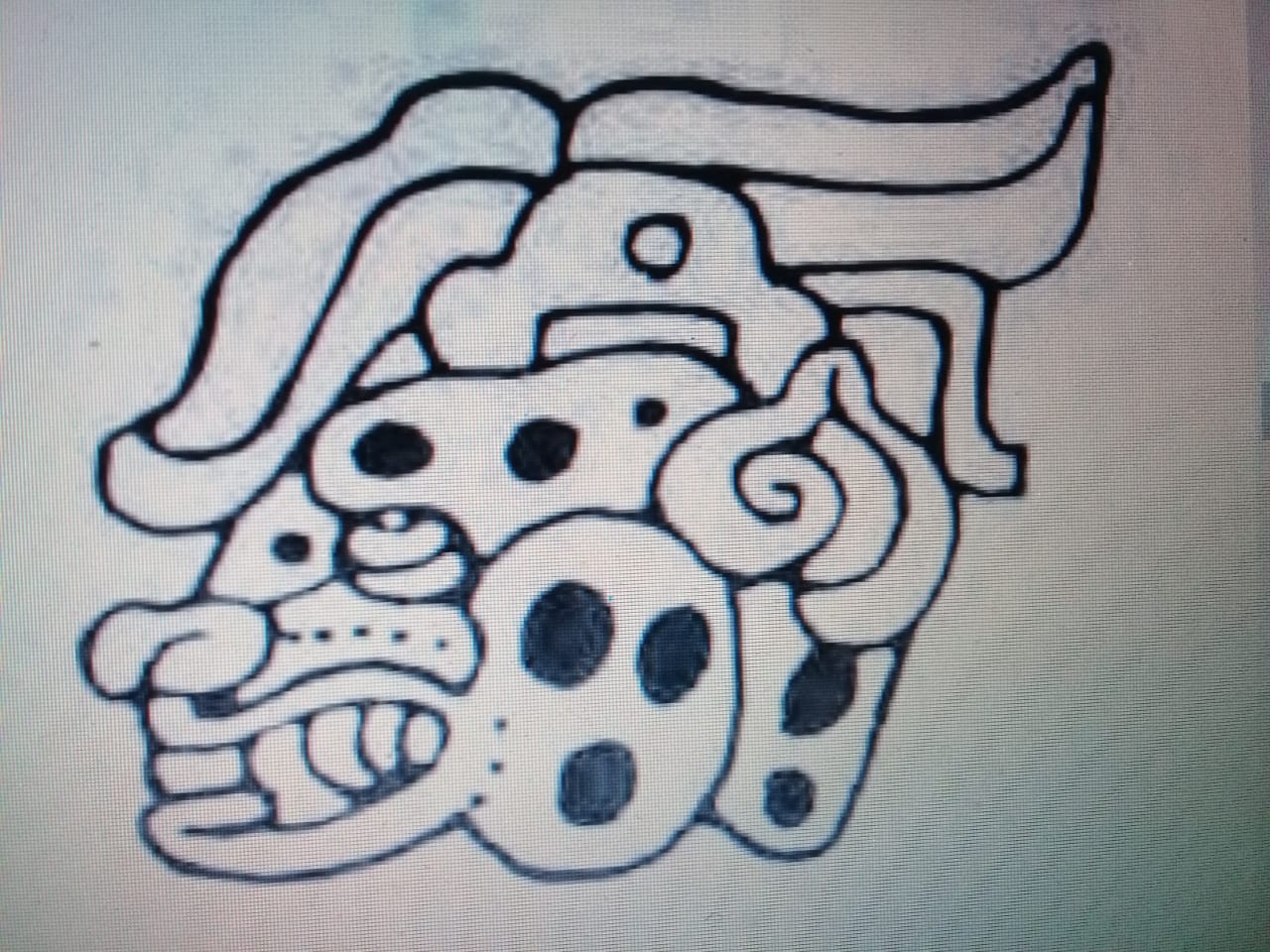
On the other hand, the jaguar shown on Stela 20 - seen in item No. 18 -, is related to the preclassic jade jaguar of tomb 196 due to the floral motif that it wears on its head as a mane, and also is related to "The Great Jaguar of Tikal" for its round eyes, prominent nose, and feline spots that remind us the emblem glyph of the ruler known as Jaguar Foliated:
If the king Jasaw Chan K'awiil I, the great transformer of Tikal (682-734 AD), built the Temple I of the Great Jaguar to celebrate Tikal's hegemony, it is possible that he himself had built Structure 5D-73 just a few years before, and that he personally had buried a distinguished nobleman, presumably a priest, along with the preclassic jade jaguar, and then placed a new jaguar in the newly built Temple I of the Great Jaguar, a brand new jaguar; more elaborate, with impressive sharp claws and beautiful rosettes, more imposing than the previous one, that might, literally, devour human hearts: "The Great Jaguar of Tikal".
It is not a coincidence that ancient jade jaguar from tomb 116 and "The Great Jaguar of Tikal" relate features such as those of the jade mask from Structure 34 of Tikal, and Stela 20, and Temple III "of the High Priest", or pyramid 33. All of them are located within the same perimeter in the very heart of Tikal: the Great Plaza. This becomes even more evident if we consider that there are more than 4,000 structures perfectly identified on the site.
The hypothesis that "the Great Jaguar of Tikal" had been transported centuries ago to Teotihuacan and later on had been part of Moctezuma's Treasure
is not unlikely at all. We must remember that the ruler of Teotihuacan "Buho Lanzadardos", the putschist, was the grandfather of the Tikal lineage. As the archaeologist Sergio Gómez Chávez says: "There is evidence that the Teotihuacans had very strong links with the entire Mayan area from very early stages".
The findings of the tunnel of the pyramid of Quetzalcoatl in Teotihuacan, México, draw particular attention for the fact that an empty chamber has been found in the north wing, this makes us to think about the possibility that "The Great Jaguar of Tikal", a treasure more than 1300 years old, could have been deposited there. The new interpretation of the mural of "Mythological Animals" from the Temple of Agriculture at Teotihuacan brings new evidence that strengthens and confirms our theory.
The fact that the nine bases of Temple I of the Great Jaguar of Tikal represent the nine levels that must be crossed to access the underworld, just like it was in the Teotihuacan underworld view, is a remarkable coincidence.
There is an important relationship between Kinich Ahau, the sun god, and the "Great Jaguar of Tikal," the nocturnal sun god of the underworld; the two of them complement each other, one appearing during the day and the other at night. It is not a coincidence that two of the most important carved jade figures correspond to these important complementary deities: the Belizean head of the god Kinich Ahau and the "Great Jaguar of Tikal". All others Maya jade objets: axes, pendants, ornaments, beads and masks are complementary assets of the main protagonists of the Mayan worldview.
Furthermore, there is a parallelism regarding the presence of Mayan jade, a material from which it was made the "Great Jaguar of Tikal", and the symbolism inherent to the cave; this consists in the fact that for the Mayans the jaguar represents the god of the underworld, as archaeologist Sergio Gómez Chávez affirms: "the Teotihuacan underworld is represented in the cave itself"; similarly, we can identify life, represented by the green color of jade, with the Teotihuacan worldview of the underworld, which represents life after death. All of this without forgetting that the feathered serpent, Quetzalcoatl, served as a god patron of the rulers.
Additionally, the text of a chronicler of the conquest of Mexico, Andrés de Tapia, gives us evidence not only of the ritual nature of the idols that made up Moctezuma's treasure, but also of their indubitable relationship with the mythical Quetzalcóatl, which evidently supports our theory:
"that a certain generation from which we descended came to this land very far from here, and they came in ships, and these have been gone for some time, and they left us populated, and they told them to return, and we have always believed that at some time they had to come to command and lord it over us; This has always been affirmed by our gods and our soothsayers, and I believe that it is now fulfilled”.
Saying of Moctezuma to Hernán Cortés.
“Relation of some things that happened to the very illustrious Mr. Don Hernán Cortés”, Andrés de Tapia; page 198 of Mexican Historical Readings
It is almost a miracle that after 500 years we can see the same basing where Cortés troops most likely found "The Great Jaguar of Tikal" before the fateful night of June 30, 1520 when they tried to flee with Moctezuma's Treasure:

"MY HYPOTHESIS AT THE BEGINNING IS THAT WE WERE GOING TO FIND A TOMB OF SOMEONE VERY IMPORTANT. BECAUSE OF THE SIGNIFICANCE THAT THE PLACE HAD OR A SPECTACULAR OFFERING"
ARCHAEOLOGIST SERGIO GOMEZ CHAVEZ
Last but not least:
The ancient jade jaguar found in Tikal in 1964 has been underestimated and even MARKEDLY IGNORED despite being the most voluminous and no less artistic piece of jade in the Mayan world. The most incredible thing is to see the indifference of many "scholars" who put their prejudices before scientific interest, forgetting that on more than one occasion archaeological experts are not the only ones who can perform great discoveries, just like the case of Yuri Knorosov, an ucranian student than in 1952 was able to decipher Mayan writing thousands of miles away. For this, and many other reasons, we should not refuse to envision realistic possibilities that help us to elucidate the rich history of our Mayan sites.
End of Conclusion.
Copyright text.
APPENDIX:
A.- Regarding the characteristic style of making the Tikal jaguar tail, we must say that this tail design can be traced to the proximity of other Maya sites:
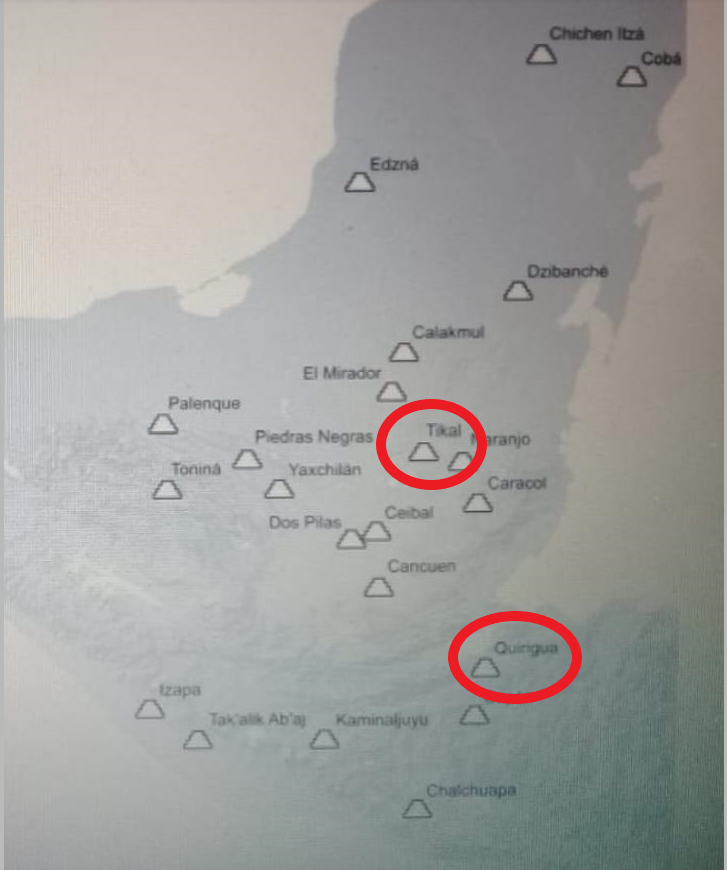
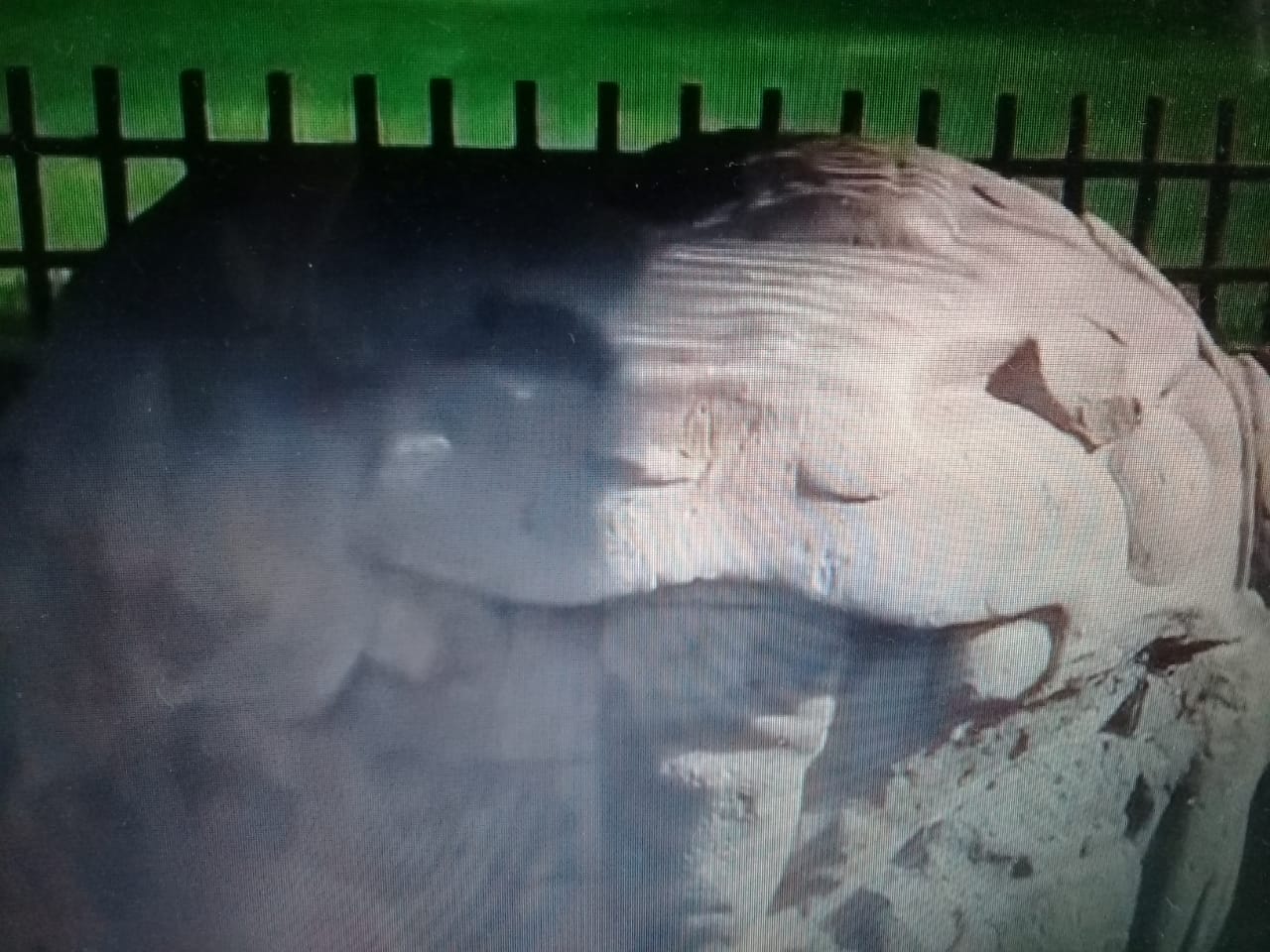
In the Mayan ruins of Quiriguá, department of Izabal, Guatemala, not too far from Tikal, which coincidentally flourished in the classical period (200 to 900 AD), in the oldest archaeological remains are important archaeological indications that tell us about the importance of the jaguar as a ruling deity directly related to royal power. One of them is the "Zoomorfo G", which in addition to having a monumental size in the shape of a jaguar, shows the open jaws presumably expelling the most important monarch of Quiriguá: K'naK Tiliw Chan Yopaat, who by the way, was a contemporary of the most prominent king of Tikal: Hasaw Chan K'awiil I. Coincidentally, it has been discovered that from its origin Quiriguá always had a close relationship with Tikal, since it was founded by settlers from Tikal's elites, up to its unquestionable political and commercial alliance that of course, included the jade trade.
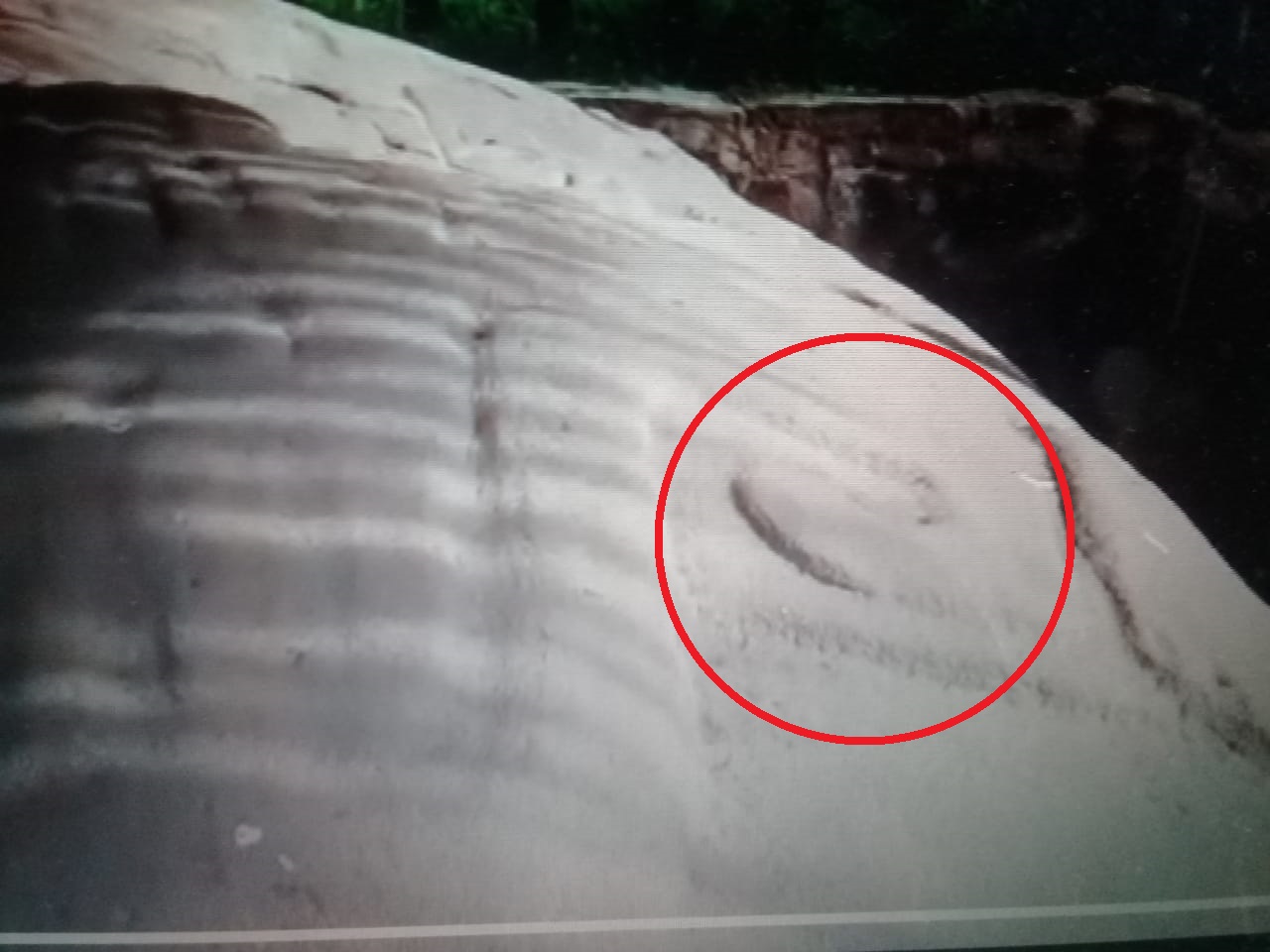
As we can see in the image on the right side above, on the back of "Zoomorfo G", we can see a very similar tail to that of "The Great Jaguar of Tikal" but not exactly the same.
So we can deduce that the Tikal artisans developed the same concept, adopting their own stylistic pattern of great aesthetic richness which we can call: "Tikaleño"; without excluding the other great stylistic current prevailing in Mesoamerica: the Teotihuacan style.
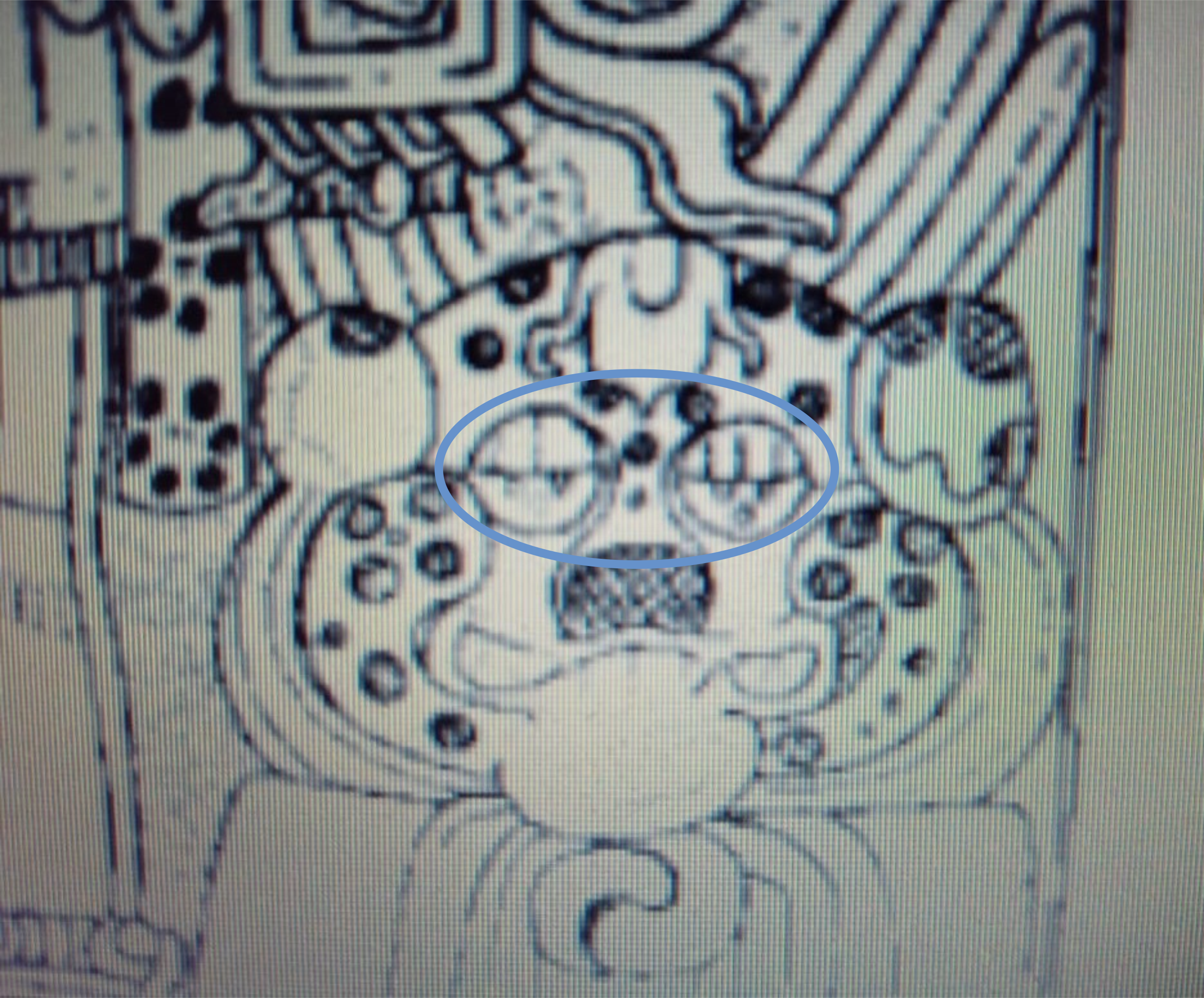
B.- In relation to the surprising discovery of the drawings of what appear to be the teeth of "The Great Jaguar of Tikal" in the eyes of the ancient jade jaguar, we have to say that Doctor William R. Coe registered on his drawings of Stela 20 some figures on the upper side of the jaguar eyes, but he did not saw teeth, just like we did, perhaps, because we have already seen the teeth of "The Great Jaguar of Tikal".
The surprising thing is that in this stela we find distinctive features of both: the ancient Jaguar of Structure 5D-73 and "The Great Jaguar of Tikal":
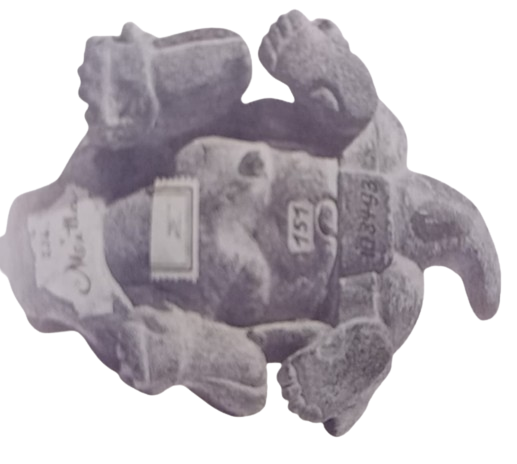
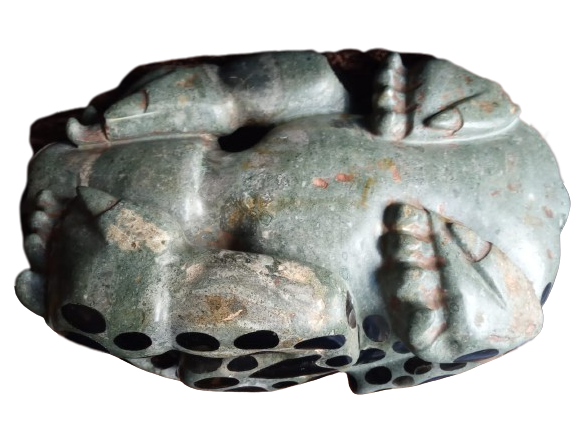
C.- There is an intersting ancient Human-jaguar of the Zapotec culture made of carved limestone representing a personage whose bottom side workmanship looks very similar to the one of "The Great Jaguar of Tikal" which in some way tells us about its ancient origin, as we can see in next images:

"The reason for this obscurity lies mainly in the fact that Spanish Conquistador was long on the acquisition of gold and the saving of souls, but extremely short on the conservation of ancient pagan learning"
Edward Hebert Thompson
"There are no indecipherable scripts, any writing system produced by man can be read by man"
Yuri Knorosov
"THERE IS NO THING SO FAR THAT IT CANNOT BE REACHED NOR SO HIDDEN THAT IT CANNOT BE DISCOVERED."
RENE DESCARTES
"CIVILIZATIONS PERISH, BUT THEIR ART ENDURES"
SERGIO PITOL
"Nothing of what is terrestrial, the Great ruler wants in divine things, whether they were jades, precious metals, or perhaps quetzal feathers, or any other valuable object..."
Fray Bernardino de Sahagún.
ADDENDA
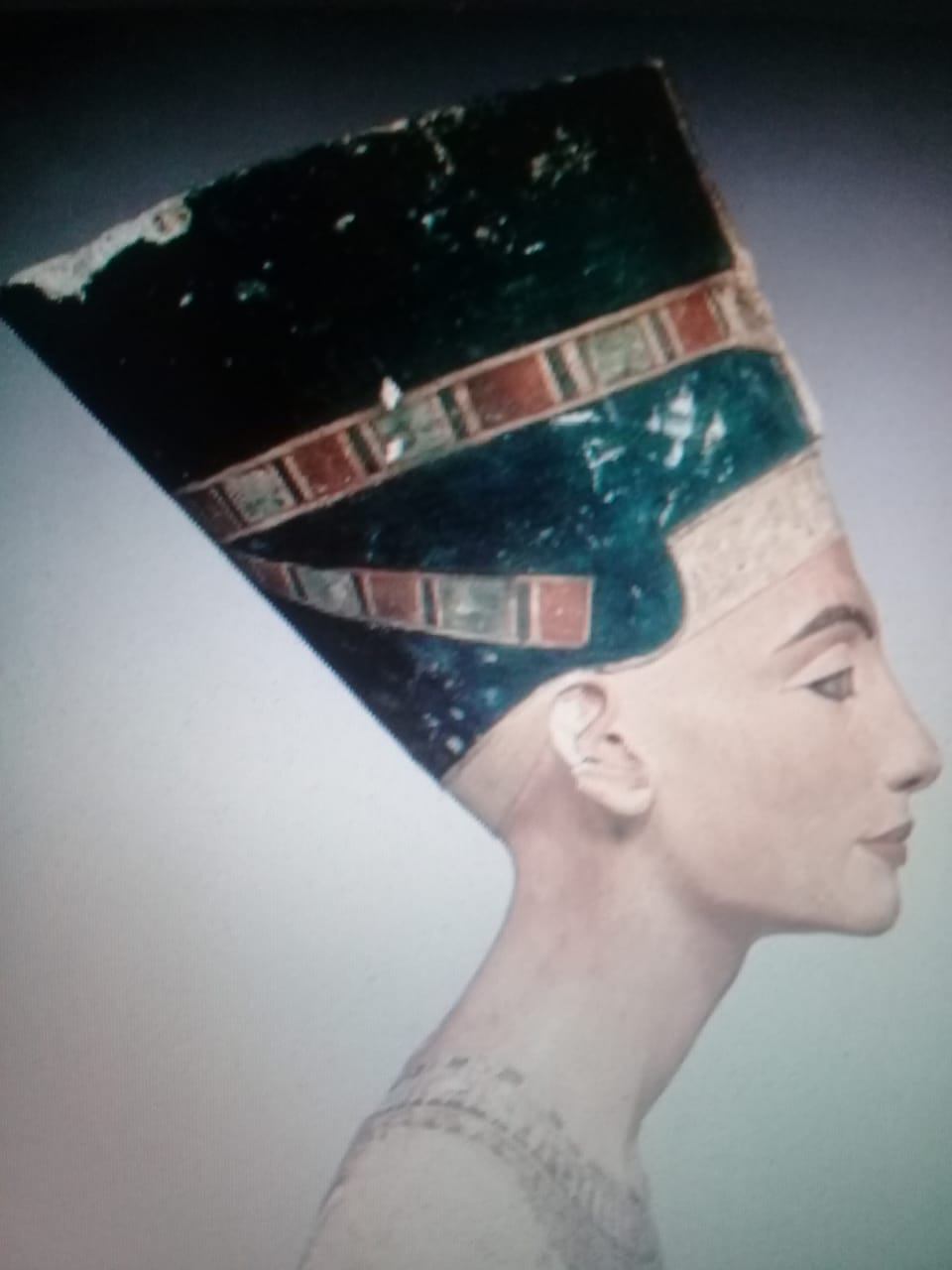
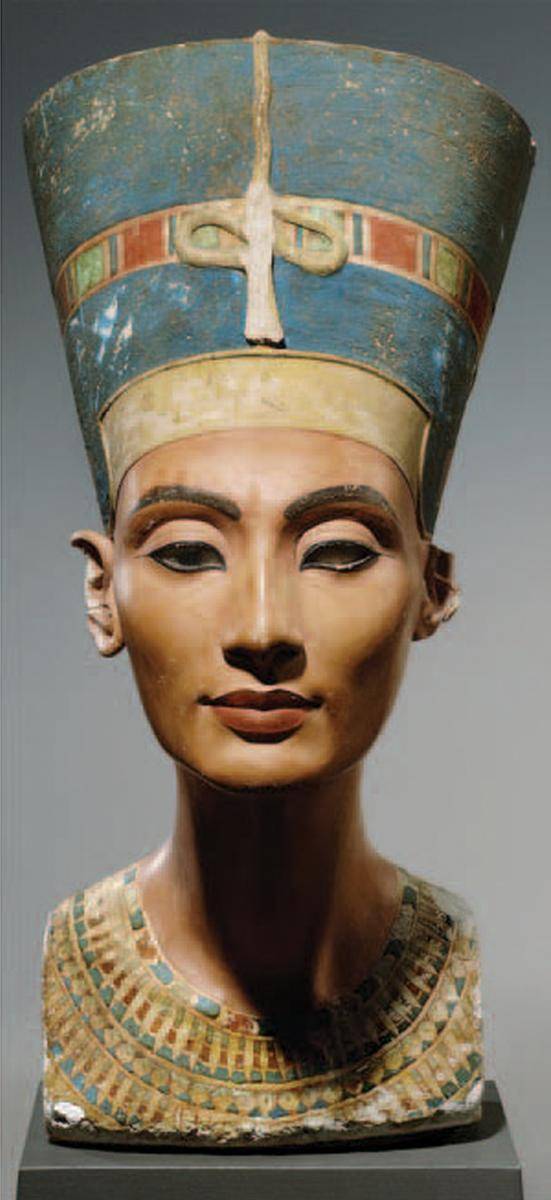
Due to the evident originality, beauty and dimensions of "The Great Jaguar of Tikal", we can affirm that it is tantamount in importance to the bust of Nefertiti (50 centimeters tall and 20 kilograms), the enigmatic queen of Egypt
that after being ignored for many years, and despite its not very good state of conservation,
became the star from the Neues Museum of Berlin:
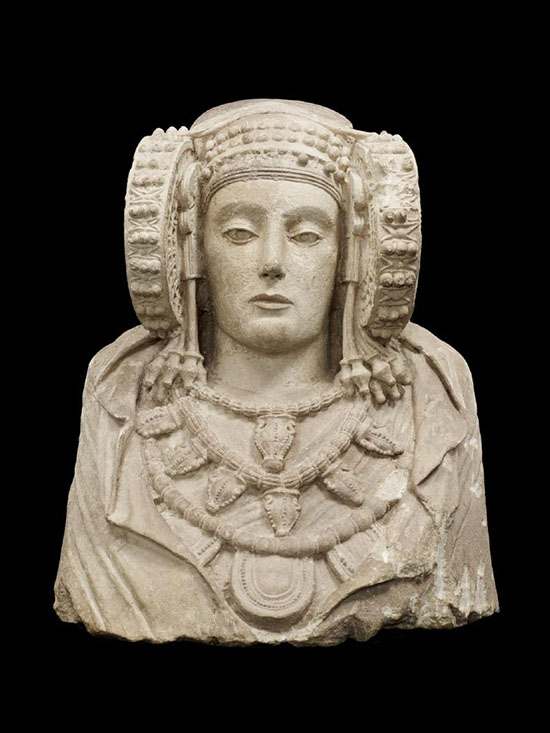
It is also comparable in importance to the "Lady of Elche", which after being sold for 4,000 francs, needed to be exhibited in the Louvre museum, so that finally,
the Spanish government considered it as a valuable piece of art, to later on become the most important archaeological piece of Spain:
Definitely it is also comparable to the Maquiscoatl of the London British Museum; an amazing Mexica Pectoral in the form of a double-headed serpent made of cedro wood (Cedrela odorata) and covered with hundreds of tiny mosaic pieces of turquoise and red thorny oyster shell (Spondylus princeps):

And finally, it is also equiparable to the Totankhamun Mask ( it weighs about eleven kilos and is 54 centimeters tall).
) It was made of gold because for the Egyptians, gold was the material of the gods, just as jade was for the Mayans.
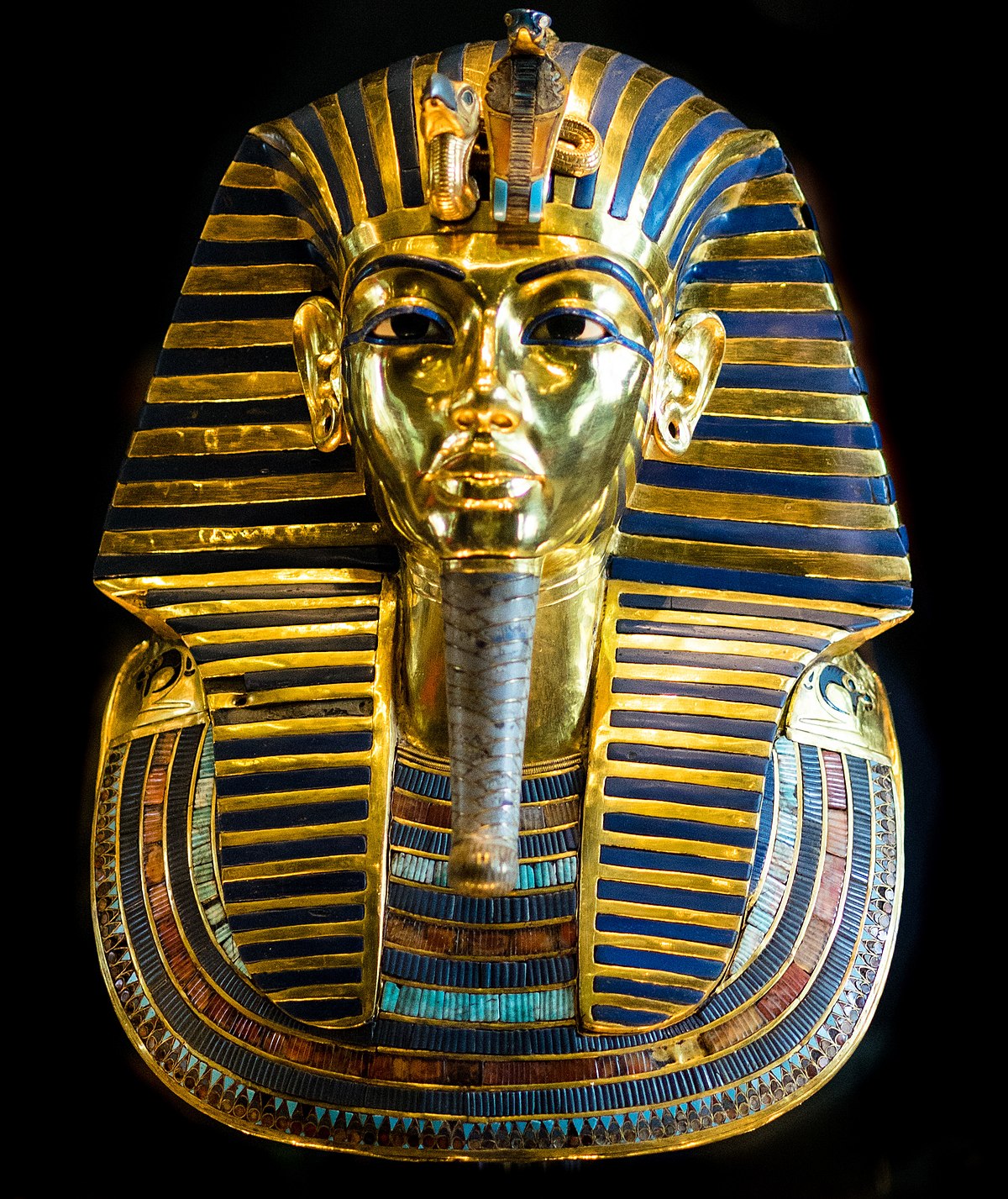
"Gold is valuable but jade is priceless"; chinese proverb
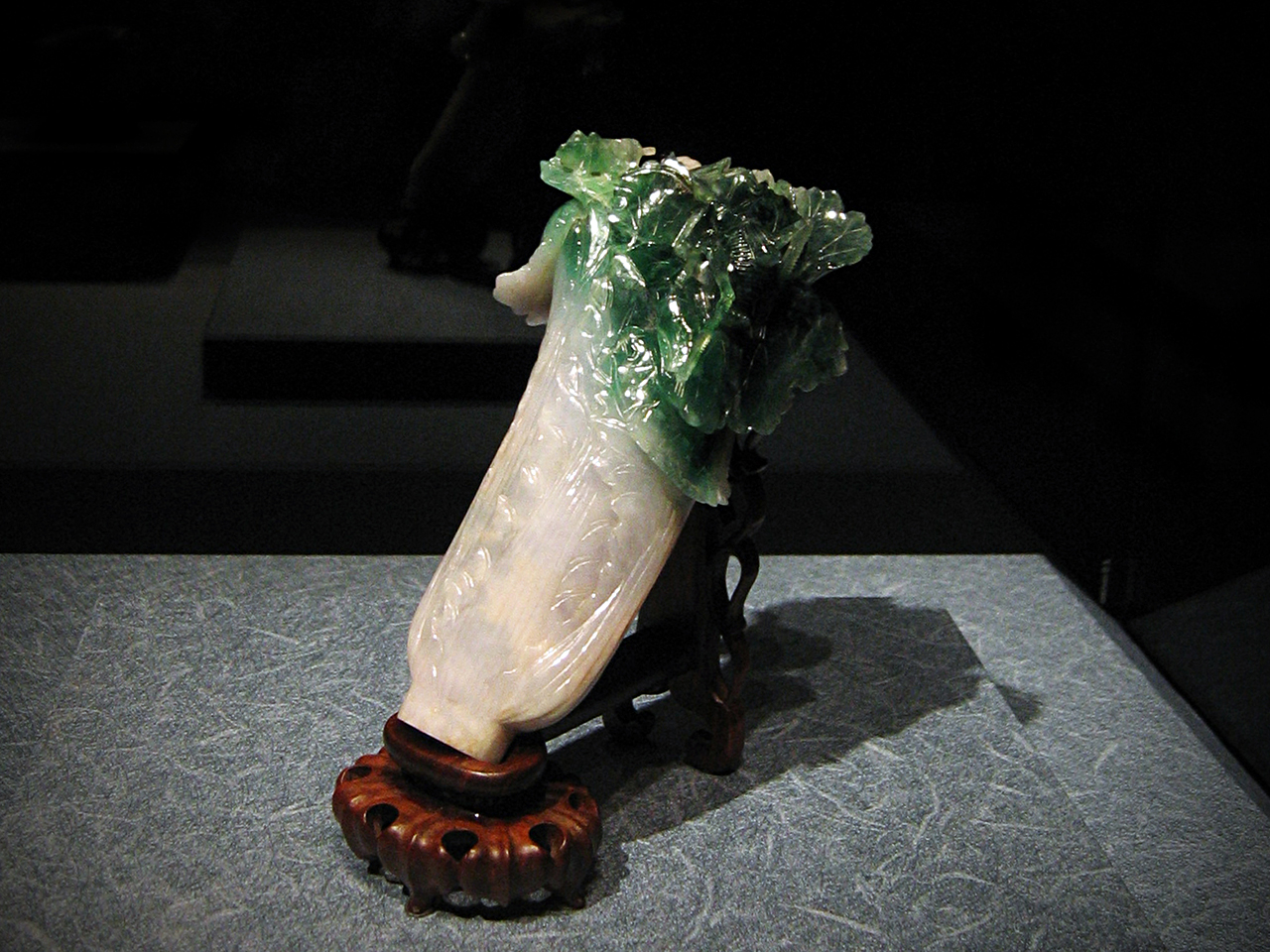
THE CHINESE JADEITE CABBAGE STATUE
(Quing Dynasty 1644-1911; Height 18.7 cm. Width 9.1 cm.) :
BASIC BIBLIOGRAPHY:
SPECIAL HISTORY ARCHEOLOGY; MAYAN CITIES FROM TIKAL TO PALENQUE
NATIONAL GEOGRAPHIC
TRAVEL INCIDENTS THROUGH CENTRAL AMERICA, CHIAPAS AND YUCATAN
JOHN LLOYD STEPHENS
SPECIAL EDITION ARQUEOLOGÍA MEXICANA
MAYA ROOM NATIONAL MUSEUM OF ANTROPOLOGY
LA CIVILIZACIÓN DE LOS ANTIGUOS MAYAS
ALBERTO RUZ L'HUILLIER
El JAGUAR EN EL MÉXICO PREHISPÁNICO
ARQUEOLOGÍA MEXICANA
"THE MAYA", MICHAEL D. COE
"PEOPLE OF THE SERPENT"; EDWARD HEBERT THOMPSON
For any matter related to this website, please contact José Cervantes:
jose1860cerv@gmail.com